Chanel No. 5: Why It Remains the World's Most Famous Fragrance
Anthology BeautyShare
In 1921, a Russian-born perfumer named Ernest Beaux presented Gabrielle Chanel with a series of numbered fragrance samples. She chose number five. Over a century later, a bottle of Chanel No. 5 is sold somewhere in the world every 30 seconds. It is the most famous fragrance in history — and understanding why requires looking beyond the marketing, the Marilyn Monroe quote, and the iconic bottle to the extraordinary composition itself.
The Revolutionary Idea
To understand what made Chanel No. 5 so radical in 1921, you need to understand what fragrance looked like before it. Perfumes of the early 20th century were largely soliflores — compositions built around a single flower, designed to smell as much like that flower as possible. They were beautiful but literal, naturalistic but limited.
Ernest Beaux had a different idea. He used a then-novel class of synthetic molecules called aldehydes — specifically aliphatic aldehydes — in an unprecedented concentration. These molecules don't smell like any specific flower or ingredient. They create a quality of brightness, abstraction, and lift that makes a fragrance smell like the idea of a flower rather than the flower itself. Combined with a rich floral heart of rose and jasmine, and a warm base of sandalwood, vetiver, and civet, the result was something that had never existed before: a fragrance that smelled unmistakably of luxury itself.
The Notes
Chanel No. 5 opens with aldehydes, neroli, ylang ylang, and bergamot — a bright, slightly soapy, luminous opening that is immediately distinctive. The heart is a rich bouquet of rose, jasmine, iris, and lily of the valley — the great flowers of fine perfumery, woven together with extraordinary skill. The base is sandalwood, vetiver, oakmoss, civet, and vanilla — warm, animalic, and deeply sensual, providing the foundation that gives the fragrance its legendary longevity and depth.
The genius of the composition lies in its balance. The aldehydes lift and abstract the florals, preventing them from being merely pretty. The animalic base notes give the fragrance a warmth and intimacy that makes it feel alive on skin. And the whole is greater than the sum of its parts — a fragrance that smells like nothing else, before or since.
The Cultural Moment
Chanel No. 5 arrived at a moment of profound cultural change. The 1920s were a decade of liberation — women were cutting their hair, shortening their skirts, and redefining femininity on their own terms. Gabrielle Chanel understood this instinctively. She wanted a fragrance that smelled like a woman, not a flower — something abstract, modern, and entirely new. No. 5 was that fragrance.
Its association with Marilyn Monroe — who famously said she wore nothing to bed but a few drops of Chanel No. 5 — cemented its status as the fragrance of desire and glamour. Andy Warhol's silkscreen prints of the bottle in the 1980s elevated it to the status of cultural icon. Today it exists simultaneously as a fragrance, a symbol, and a piece of art history.
Why It Still Matters
A century of imitation has not diminished Chanel No. 5. Its aldehyde-floral structure has been endlessly referenced, homaged, and copied — but never surpassed. It remains the benchmark against which all abstract floral fragrances are measured, and its longevity on skin — often 12 hours or more — is a testament to the quality of its construction.
It is also, simply, beautiful. Strip away the history and the mythology and what remains is a fragrance of extraordinary elegance and complexity — one that rewards wearing and rewards attention in equal measure.
If You Love the World of Chanel No. 5
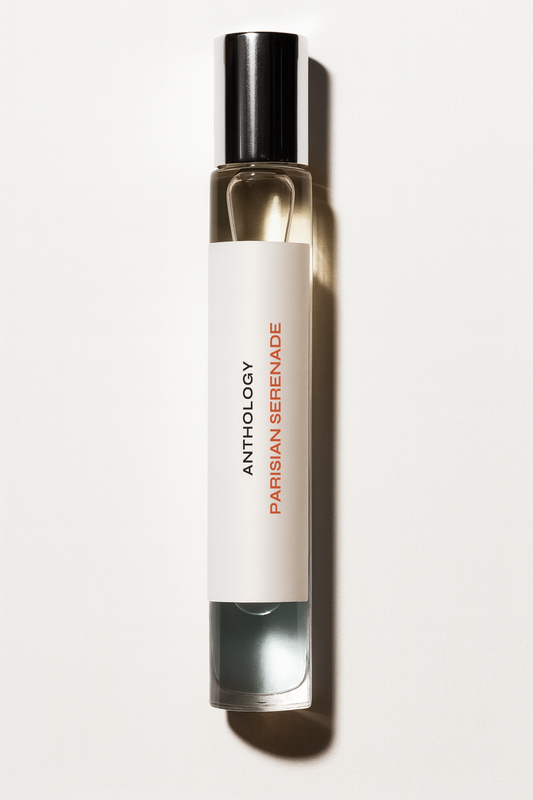
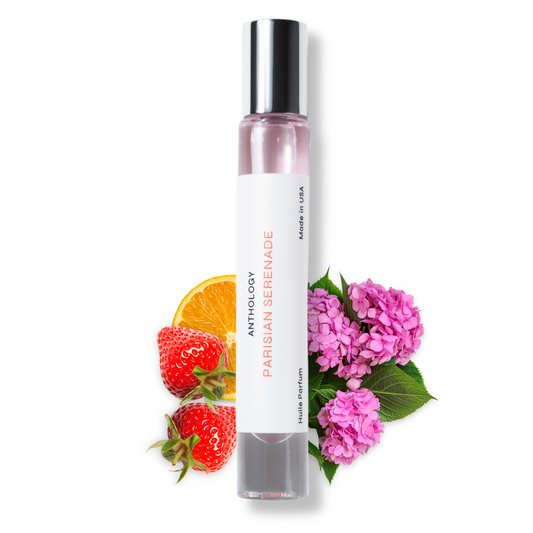
If the abstract, luminous floral world of Chanel No. 5 speaks to you — that quality of flowers lifted into something almost architectural — our Parisian Serenade Perfume Oil explores similar territory with its own distinct personality: sophisticated, romantic, and deeply elegant. Our Viva La Rose Perfume Oil captures the rich rose-jasmine heart that defines the No. 5 aesthetic, while our Serene Bloom Perfume Oil offers a softer, more contemporary take on the luminous white floral.
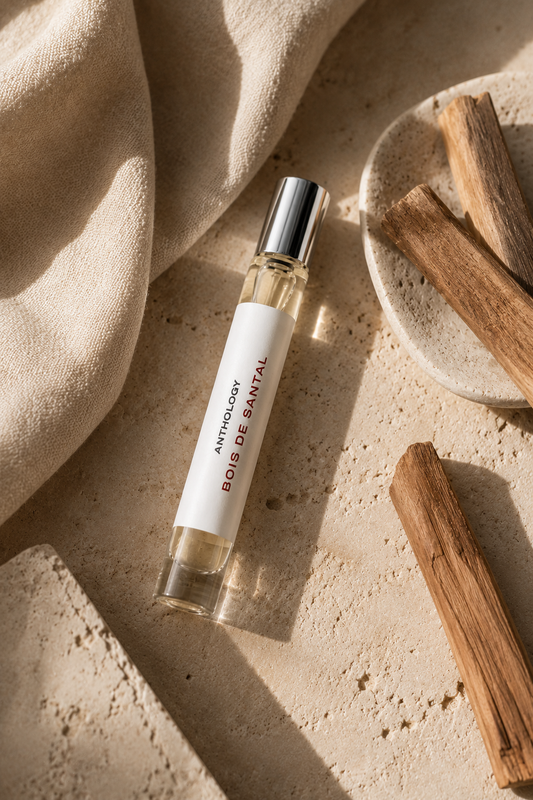
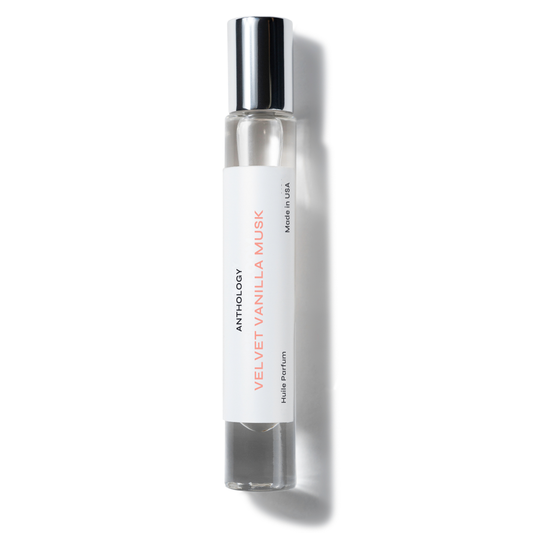
For those drawn to the warm, sandalwood-and-musk base that gives No. 5 its legendary longevity, our Velvet Vanilla Musk Perfume Oil and Bois De Santal Perfume Oil offer that same quality of warm, skin-close depth.
Explore our full Anthology Perfume Oils collection and find your own timeless signature.