Maison Francis Kurkdjian: The Perfumer Who Became a House
Anthology BeautyShare
In the world of fine fragrance, the perfumer is almost always invisible. The great fragrances of history are known by their house names — Chanel No. 5, Guerlain Shalimar, Dior Miss Dior — not by the names of the perfumers who created them. Ernest Beaux, who created No. 5, is known to fragrance historians but not to most of the people who wear the fragrance he made one of the most famous objects in the world. This invisibility of the creator is one of the defining features of commercial perfumery — and it is one of the things that Maison Francis Kurkdjian, founded in Paris in 2009, was created to challenge.
The Perfumer: Francis Kurkdjian
Francis Kurkdjian was born in Paris in 1969 to Armenian parents — the heritage that gives him his distinctive surname and, he has said, a particular sensitivity to the role of fragrance in cultural and personal identity. He trained at the ISIPCA perfumery school in Versailles and launched his professional career with one of the most remarkable debuts in the history of commercial perfumery: in 1994, at the age of 25, he created Jean Paul Gaultier Le Male — a fragrance that became one of the best-selling masculine fragrances in the world and that remains in that position three decades later.
Over the following fifteen years, Kurkdjian built a reputation as one of the most technically accomplished and most creatively ambitious perfumers of his generation, creating fragrances for virtually every major luxury house — Dior, Burberry, Elie Saab, Narciso Rodriguez (he was responsible for For Her, which we have explored on these pages), Paco Rabanne, and many others. He also developed a parallel practice as a creator of bespoke and site-specific fragrance works — scenting the Palace of Versailles, creating olfactory installations for museums and cultural events — that established his identity as a fragrance artist as well as a commercial creator.
The Foundation of the Maison
In 2009, Kurkdjian founded Maison Francis Kurkdjian in partnership with business partner Marc Chaya — a decision that was, at the time, genuinely unusual. Commercial perfumers of Kurkdjian's stature worked for fragrance creation companies (IFF, Givaudan, Firmenich, Symrise) and created fragrances for client brands; they did not typically found their own houses. The founding of MFK represented a statement that the perfumer's creative vision was worthy of a house bearing his name — a statement that has been comprehensively vindicated by the house's subsequent success.
The house was founded on a clear aesthetic philosophy: absolute quality of ingredients, compositional clarity and refinement, and a preference for beauty over challenge. MFK fragrances are not difficult. They do not demand that you do the work of understanding them. They are created to be immediately and unambiguously beautiful — and the skill required to create something that is both immediately appealing and deeply sophisticated is, Kurkdjian has argued, at least as great as the skill required to create something challenging.
Baccarat Rouge 540: The Phenomenon
MFK's global reputation rests significantly on a single fragrance: Baccarat Rouge 540, created in 2015 as a limited edition for the crystal house Baccarat's 250th anniversary and subsequently released as a permanent addition to the MFK line. Baccarat Rouge 540 — a composition built around ambergris, cedar, jasmine, and saffron, with a distinctive woody-sweet amber character created by the aroma molecule Ambroxan combined with Clearwood — became one of the most discussed, most imitated, and most coveted fragrances of the 2010s.
Its rise was driven primarily by social media — TikTok and Instagram users discovering the fragrance, filming their reactions to it, and creating a viral conversation around its distinctive character and its extraordinary compliment-generating properties. The fragrance's warm, sweet, slightly metallic-woody character proved to have an almost universal appeal across demographics, and its high price point (significantly above most mainstream luxury fragrances) paradoxically amplified rather than limited its desirability. Baccarat Rouge 540 is now one of the most imitated fragrances in the world, with dozens of 'inspired by' versions available at every price point — a form of flattery that Kurkdjian has noted with a mixture of pride and ambivalence.
The LVMH Acquisition
In 2017, LVMH acquired a majority stake in Maison Francis Kurkdjian — a development that might have been expected to compromise the house's independence and creative integrity, as similar acquisitions have done with other niche houses. In practice, the acquisition appears to have provided MFK with the resources and distribution to grow significantly while maintaining its creative direction and quality standards. Kurkdjian has continued as creative director, and the house's aesthetic has remained consistent with its founding vision.
In 2021, Kurkdjian was additionally appointed as in-house perfumer at Christian Dior — the first time the house has had an in-house perfumer since the era of Edmond Roudnitska — bringing one of the most celebrated niche perfumers of his generation into the heart of one of the most important mainstream luxury houses. The appointment was widely interpreted as evidence of mainstream luxury's growing respect for niche perfumery's creative standards.
What MFK Teaches Us
Maison Francis Kurkdjian's story is one of the most instructive in contemporary fragrance. It demonstrates that beauty and accessibility are not compromises but achievements — that creating something immediately compelling requires at least as much skill as creating something challenging. It shows that the perfumer's name and creative identity can be a brand in themselves, commanding loyalty and trust from consumers who care about who made what they are wearing. And it illustrates that the line between niche and mainstream is ultimately less important than the quality of the creative vision and the integrity with which it is expressed.
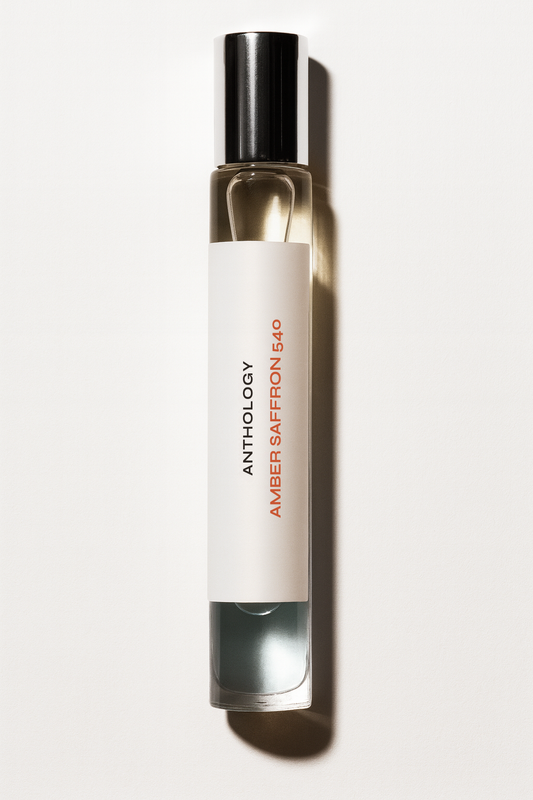
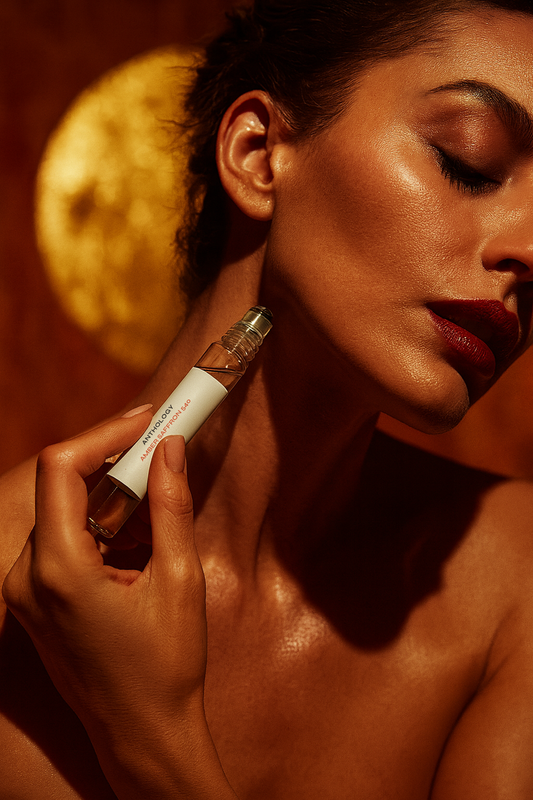
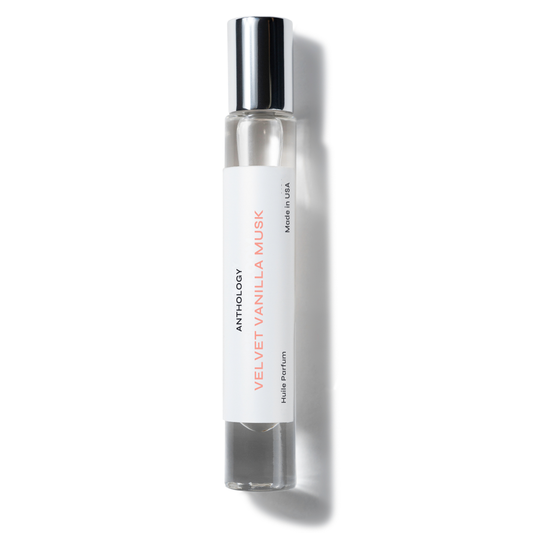
For those drawn to the MFK aesthetic of refined, beautiful, immediately compelling luxury, our Amber Saffron 540 Perfume Oil shares the warm, ambered saffron character that defines Baccarat Rouge 540's extraordinary appeal. Our Serene Bloom Perfume Oil captures a similar quality of luminous, refined floral beauty, while our Velvet Vanilla Musk Perfume Oil shares that quality of warm, skin-close beauty that makes MFK fragrances so universally compelling.
Explore our full Anthology Perfume Oils collection — created in the spirit of the great niche houses, for those who believe that beauty is the highest ambition in fragrance.