Natural vs Synthetic Fragrance: What's the Difference?
Anthology BeautyShare
Few debates in the fragrance world are as spirited as the one between natural and synthetic ingredients. Purists swear by the complexity of naturals. Modernists champion the precision and sustainability of synthetics. The truth, as with most things in perfumery, is beautifully nuanced.
What Are Natural Fragrance Ingredients?
Natural fragrance ingredients are derived directly from plants, flowers, resins, woods, and animal sources. Rose absolute, extracted from thousands of rose petals. Sandalwood, steam-distilled from the heartwood of the tree. Oud, harvested from infected agarwood. These materials carry the full complexity of their natural origins — subtle variations, impurities, and all — which is precisely what makes them so captivating.
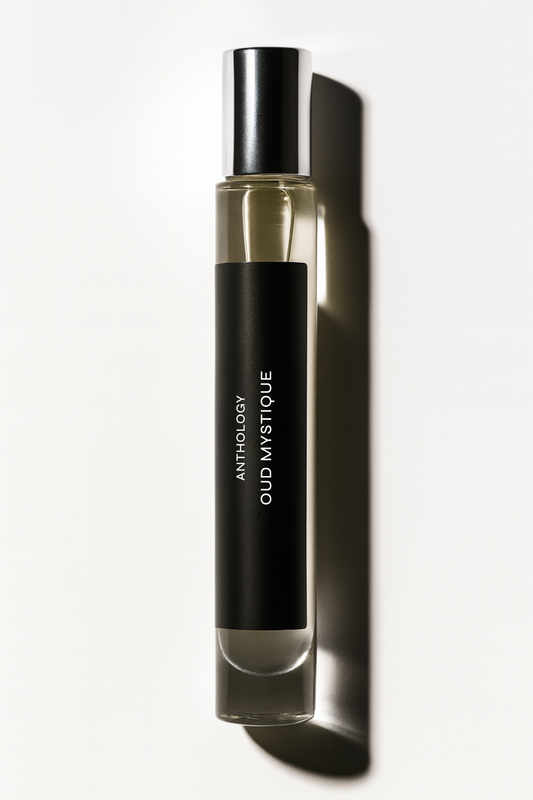
Natural ingredients tend to have a warmth and depth that is difficult to replicate. They evolve on the skin in unpredictable, beautiful ways. Our Oud Mystique Perfume Oil showcases the extraordinary complexity that only a natural ingredient like oud can deliver.
What Are Synthetic Fragrance Ingredients?
Synthetic ingredients are created in a laboratory — either by isolating specific molecules from natural sources or by constructing entirely new aroma molecules that don't exist in nature. Far from being inferior, many synthetics are marvels of modern chemistry. Iso E Super, for example, creates a velvety, woody sensation that no natural ingredient can replicate. Ambroxan delivers a skin-close, musky warmth that has become a signature of modern luxury fragrance.
The Case for Synthetics
Synthetics offer consistency, affordability, and sustainability. Natural rose absolute requires an enormous quantity of petals to produce a tiny amount of oil — making it extraordinarily expensive and resource-intensive. A synthetic rose molecule can capture the essence of the flower at a fraction of the environmental cost.
Synthetics also allow perfumers to create scents that would be impossible with naturals alone — the clean ozonic freshness of a sea breeze, the crystalline clarity of a mountain air accord.
The Best Fragrances Use Both
The most celebrated perfume oils in the world are neither purely natural nor purely synthetic — they are masterful blends of both. Natural ingredients provide soul and complexity; synthetics provide structure, longevity, and innovation. Together, they create something greater than either could achieve alone.
Explore our Anthology Perfume Oils collection — each fragrance thoughtfully composed to balance the best of both worlds.