Note Deep Dive: Amber — The Warmest Note in Perfumery
Anthology BeautyShare
Amber is the great paradox of perfumery — one of the most widely used and universally beloved notes in fragrance, and yet one that doesn't technically exist as a single natural ingredient. It is a construction, a concept, an accord rather than an extract — and yet its warmth, its depth, and its extraordinary ability to make a fragrance feel luxurious and enveloping have made it indispensable to perfumers for centuries. This is the story of the note that defines warmth itself.
What Is Amber in Perfumery?
Here is the essential truth about amber in fragrance: there is no single ingredient called 'amber.' The amber note in perfumery is an accord — a combination of ingredients that together create a warm, resinous, slightly sweet quality that evokes the fossilised tree resin known as amber. The classic amber accord is built from three primary ingredients: labdanum, benzoin, and vanilla, often supported by additional resins, musks, and woods.
Labdanum is a dark, sticky resin extracted from the rockrose plant (Cistus ladanifer), native to the Mediterranean. It has a warm, animalic, slightly leathery quality that forms the backbone of most amber accords. In ancient times, labdanum was collected from the beards and fleeces of goats that had grazed on rockrose bushes — a harvesting method that speaks to its extraordinary stickiness and tenacity.
Benzoin is a balsamic resin extracted from the Styrax tree, native to Southeast Asia. It has a warm, sweet, slightly vanilla-like quality that adds softness and sweetness to the amber accord. It is also one of the great fixatives in perfumery, helping to anchor lighter notes and extend their life on skin.
Vanilla — or more precisely, vanillin, the primary aroma molecule of vanilla — adds the sweet, creamy warmth that makes amber accords so immediately appealing and universally wearable.
Ambergris: The Original Amber
The name 'amber' in perfumery originally referred to ambergris — a waxy substance produced in the digestive system of sperm whales and found floating in the ocean or washed up on beaches. Ambergris has been one of the most prized fragrance ingredients in history, used in perfumery since the Middle Ages for its extraordinary fixative properties and its warm, animalic, slightly marine quality.
Today, genuine ambergris is rarely used in commercial perfumery due to its rarity and cost. It has been largely replaced by synthetic alternatives — most notably Ambroxan, a molecule derived from ambrein (the primary component of ambergris) that captures its warm, woody, slightly animalic quality with remarkable fidelity. Ambroxan is now one of the most widely used molecules in modern luxury fragrance.
The Many Faces of Amber
Amber is not a single smell — it is a family of related warmths, each with its own character depending on the ingredients used and the proportions in which they are combined.
Soft amber is gentle, powdery, and slightly sweet — the amber of comfort and intimacy. It is the amber of skin-close fragrances that feel like the most beautiful version of your own warmth.
Golden amber is luminous and rich — warm and enveloping without being heavy, with a quality of radiance that makes it feel genuinely luxurious.
Dark amber is deeper and more resinous — closer to labdanum and benzoin in character, with a slightly animalic quality that gives it depth and complexity.
Spiced amber adds pepper, cardamom, or saffron to the classic accord, creating something more exotic and dramatic — the amber of oriental compositions and evening wear.
Amber's Role in Perfumery
Amber is almost always a base note — its heavy, complex molecules evaporate slowly and provide extraordinary longevity and depth to any composition. It is one of the great fixatives in perfumery, anchoring lighter notes and extending their life on skin. It is also one of the most versatile ingredients — it can be paired with almost anything and will adapt its character accordingly, adding warmth and depth without dominating.
Amber is also one of the most universally appealing notes in perfumery. Its warmth, sweetness, and depth create a quality of comfort and luxury that resonates across cultures, genders, and ages. It is the note that makes a fragrance feel like a warm embrace.
Amber at Anthology
Our Amber Gold Perfume Oil is our most complete expression of amber — luminous, golden, and deeply warm, it captures the note's most beautiful and universally appealing face. It is amber as it should always be: radiant, enveloping, and deeply satisfying.
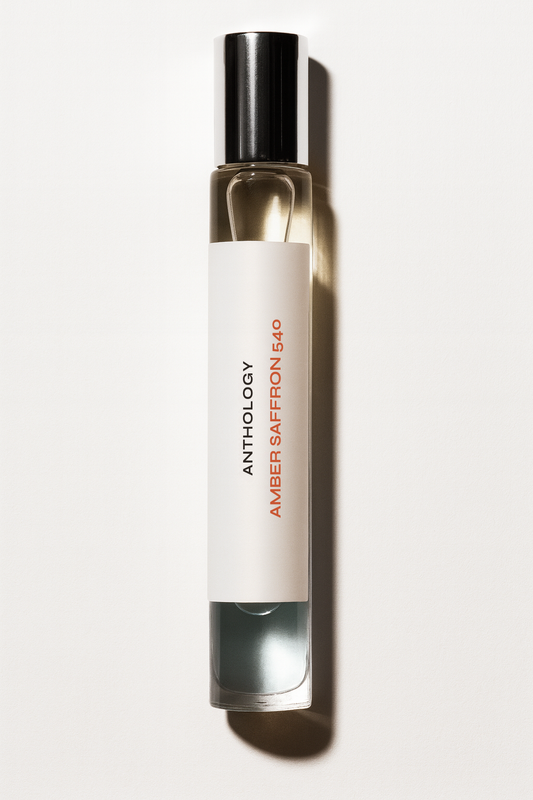
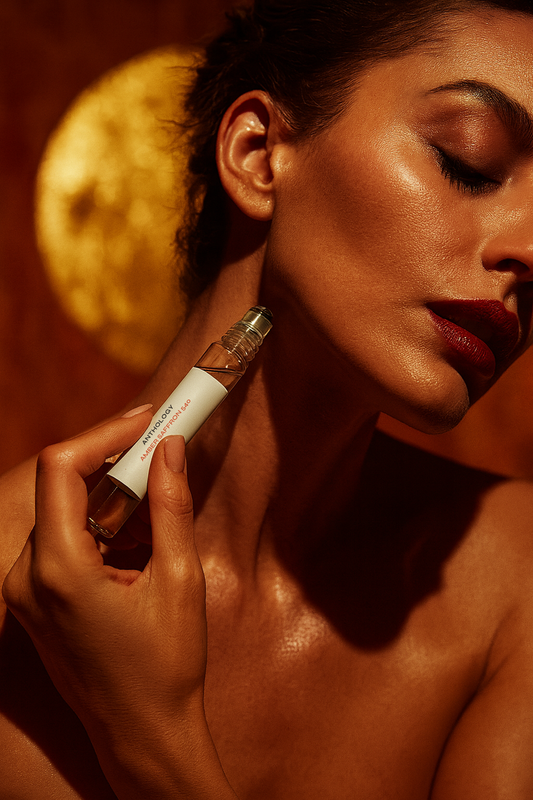
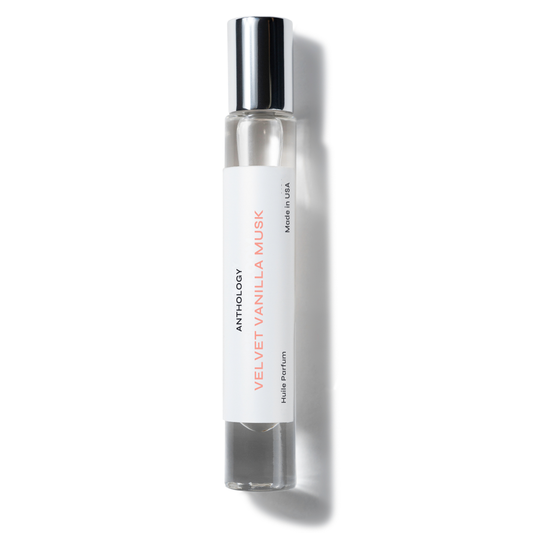
Our Amber Saffron 540 Perfume Oil takes amber into more exotic territory, pairing it with saffron and jasmine to create a spiced amber composition of extraordinary richness and presence. Our Angels Elixir Perfume Oil explores the gourmand-amber territory — warm, sweet, and deeply addictive. And our Velvet Vanilla Musk Perfume Oil uses amber's warmth as the foundation for a soft, skin-close composition of extraordinary comfort and beauty.
Explore our full Anthology Perfume Oils collection and discover amber in all its warm, luminous, endlessly beautiful dimensions.