Note Deep Dive: Bergamot — The Brightest Note in Perfumery
Anthology BeautyShare
If there is a single ingredient that appears more consistently across the history of fine perfumery than any other, it is bergamot. From the opening of Chanel No. 5 to the heart of Earl Grey tea, from the top note of Dior Sauvage to the defining character of the entire eau de cologne tradition, bergamot is everywhere — and for very good reason. It is the most versatile, most universally appealing, and most technically indispensable top note in the perfumer's palette. This is its story.
What Is Bergamot?
Bergamot (Citrus bergamia) is a small, pear-shaped citrus fruit grown almost exclusively in the Calabria region of southern Italy — specifically along a narrow coastal strip between Reggio Calabria and Locri, where the unique combination of climate, soil, and sea air creates conditions that cannot be replicated anywhere else in the world. The fruit is inedible and largely unknown outside the fragrance and food industries, but its cold-pressed peel oil is one of the most important aromatic ingredients on earth.
Bergamot oil is produced by cold-pressing the peel of the ripe fruit — a process that preserves the volatile aromatic compounds responsible for its distinctive character. Approximately 100 kilograms of fruit are required to produce one kilogram of oil, and the harvest season runs from November to February. Genuine Calabrian bergamot oil is a protected designation of origin product, and its quality is strictly regulated by Italian authorities.
The Smell of Bergamot
Bergamot's aroma is one of the most distinctive and immediately recognisable in the natural world. It is citrus — bright, fresh, and slightly sparkling — but with a complexity that sets it apart from lemon, orange, or grapefruit. It has a floral quality (from the linalool and linalyl acetate in its composition) that gives it a softness and elegance that other citrus notes lack. And it has a slightly bitter, almost tea-like quality that gives it sophistication and keeps it from being merely sweet.
The primary aroma molecules responsible for bergamot's character include linalyl acetate (floral, slightly fruity), linalool (fresh, slightly spicy and floral), limonene (clean, citrus), and bergaptene (a furocoumarin responsible for bergamot's photosensitising properties and the characteristic slightly bitter quality).
Bergamot's Role in Perfumery
Bergamot is almost always a top note — its volatile molecules evaporate quickly, creating the opening impression of a fragrance and setting the emotional tone for the composition that follows. But its influence extends far beyond its brief time at the top of the fragrance pyramid. As it fades, it leaves behind a quality of brightness and lift that shapes the development of the heart notes, making them feel fresher and more luminous than they would without bergamot's opening contribution.
Bergamot is also one of the great blenders in perfumery. It has an extraordinary ability to harmonise disparate ingredients, softening harsh edges and creating a sense of cohesion that makes a fragrance feel like a unified whole. This is why it appears so consistently across all fragrance families — in florals, orientals, chypres, and aquatics alike. It is the ingredient that makes everything else work together.
Bergamot and Earl Grey
Bergamot's most famous non-fragrance application is as the defining flavour of Earl Grey tea — black tea scented with bergamot oil, a combination that has been enjoyed since at least the 1820s. The association between bergamot and Earl Grey is so deeply embedded in the cultural consciousness that the bergamot note in a fragrance often triggers tea-related associations — a quality of refinement, warmth, and afternoon pleasure that is entirely distinct from its purely citrus character.
The Photosensitivity Question
Raw bergamot oil contains bergaptene, a furocoumarin that can cause photosensitisation — an increased sensitivity to UV light that can lead to skin darkening or burning when bergamot-treated skin is exposed to sunlight. For this reason, most bergamot used in leave-on fragrance products (including perfume oils) is bergaptene-free (FCF — furanocoumarin-free) bergamot, from which the bergaptene has been removed. This process does not significantly alter the fragrance character of the oil but eliminates the photosensitisation risk.
Bergamot at Anthology
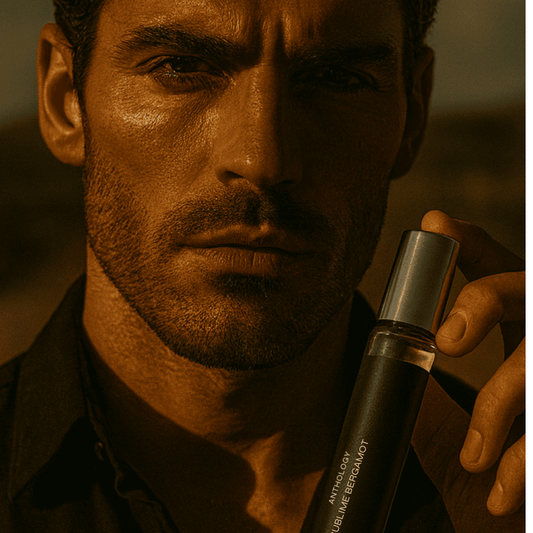
Our Sublime Bergamot Perfume Oil is our most complete celebration of this extraordinary ingredient — a composition that places bergamot at its centre and allows its full brightness, elegance, and warmth to unfold on skin. It is bergamot at its most beautiful: fresh without being sharp, bright without being fleeting, and complex enough to reward hours of wear.
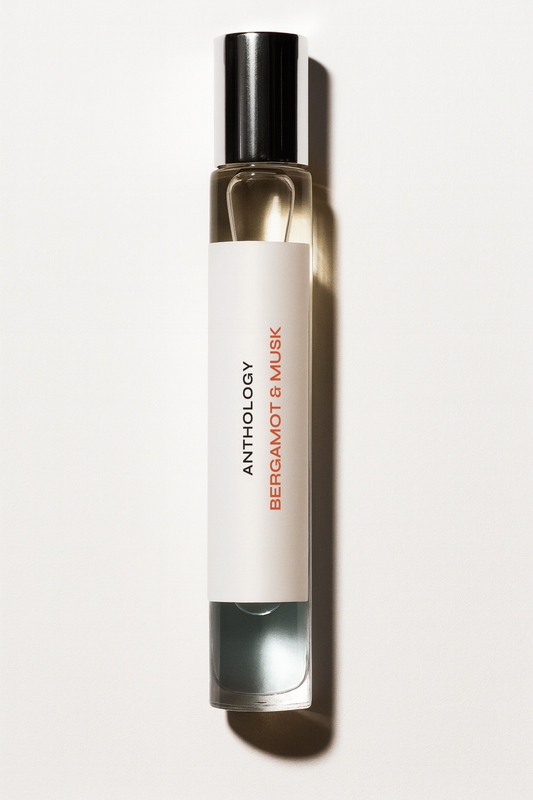
Our Bergamot & Musk Perfume Oil pairs bergamot's brightness with the intimate warmth of white musk — a combination of extraordinary simplicity and elegance that wears beautifully from morning to evening. And our Citrus Matcha Perfume Oil uses bergamot's slightly tea-like quality as a bridge between its citrus brightness and the cool, earthy depth of matcha.
Bergamot's brightening and harmonising influence also runs through many of our other compositions as a supporting top note, contributing the lift and freshness that makes our oils feel so immediately appealing from the first moment of application.
Explore our full Anthology Perfume Oils collection and experience bergamot in all its extraordinary, luminous dimensions.