Note Deep Dive: Frankincense — The Sacred Resin of Perfumery
Anthology BeautyShare
Of all the ingredients used in fine fragrance, frankincense carries perhaps the most profound cultural and spiritual weight. Burned in temples and churches for thousands of years, carried by the Magi in the Biblical nativity, traded across ancient caravan routes from Arabia to Rome, frankincense has been humanity's most sacred aromatic material for at least five millennia. And yet its qualities as a fragrance ingredient go far beyond its remarkable history — frankincense is also one of the most complex, most beautiful, and most versatile resins in the modern perfumer's palette.
What Is Frankincense?
Frankincense is the dried resin of trees of the genus Boswellia, tapped by making incisions in the bark and allowing the resin to harden in the air into the distinctive translucent 'tears' that have been traded since antiquity. The primary frankincense-producing species are Boswellia sacra (Omani frankincense, considered the finest quality), Boswellia carterii (Somali frankincense), Boswellia serrata (Indian frankincense), and Boswellia papyrifera (Ethiopian frankincense). Each species produces resin with a distinctly different aromatic character.
Boswellia trees are slow-growing and remarkably resilient, surviving in the harsh, rocky, semi-arid environments of Oman, Yemen, Somalia, Ethiopia, and India where few other trees can thrive. The harvesting of frankincense — a practice unchanged in its essentials for thousands of years — involves making careful incisions in the bark three times per year and collecting the hardened resin tears approximately two weeks after each tapping. Sustainable harvesting is critical to the tree's health — over-tapping, which has become a serious problem due to increased global demand, can weaken and eventually kill the tree.
The Smell of Frankincense
Frankincense's aroma is one of the most complex and most difficult to describe in the aromatic world. At its core, it is resinous — warm, slightly balsamic, and deeply comforting. But within this resinous character there are layers of remarkable subtlety: a bright, almost citrus-like freshness (from the terpene alpha-pinene and limonene in the resin), a slightly woody, pencil-shaving quality, a cool, slightly medicinal dimension that is almost camphoraceous, and a deep, sweet warmth underneath that gives frankincense its quality of spiritual solemnity and comfort.
Different origins produce frankincense with meaningfully different characters. Omani frankincense (Boswellia sacra) is considered the finest quality — bright, slightly citrus-forward, and extraordinarily clean, with a clarity that is almost meditative. Somali frankincense is richer and more resinous, with a deeper, slightly darker character. Indian frankincense (Boswellia serrata) is the most accessible and most widely used in contemporary fragrance, with a warm, slightly spicy character that blends beautifully with a wide range of other ingredients.
Frankincense in Religious and Cultural History
Frankincense has been burned as an offering to the divine in virtually every major religious tradition that has existed in the regions where it grows. In ancient Egypt, it was used in temple ceremonies, in the embalming of the dead, and in the production of kohl eye cosmetics. In ancient Rome, it was burned on every altar and at every important civic ceremony. In Judaism, it was one of the four ingredients of the sacred Temple incense ketoret. In Christianity, it has been burned in churches as a symbol of prayer rising to heaven since the earliest centuries of the faith. In Islam, it is used to purify spaces and as a component of traditional Arabian incense blends.
This extraordinary religious universality — a single ingredient revered across cultures, continents, and millennia — speaks to something in frankincense's aroma that seems to resonate with the deepest human experiences of the sacred, the transcendent, and the eternal.
Frankincense in Modern Perfumery
In contemporary fine fragrance, frankincense is used both as a resinous base note and as a middle note that adds depth, complexity, and a quality of meditative calm to a composition. It pairs beautifully with rose (the combination is a cornerstone of Middle Eastern attar perfumery), with oud (where it adds a bright, slightly citrus-resinous counterpoint to oud's darkness), with citrus (where it grounds and deepens the brightness of bergamot or lemon), and with amber (where it contributes complexity and a slight coolness to amber's warmth).
Frankincense is also widely used in natural and clean fragrance formulations due to its entirely natural origin and its extraordinary aromatic complexity — a single ingredient that can do the work of many synthetic molecules in adding depth, resinous warmth, and spiritual quality to a composition.
Frankincense at Anthology
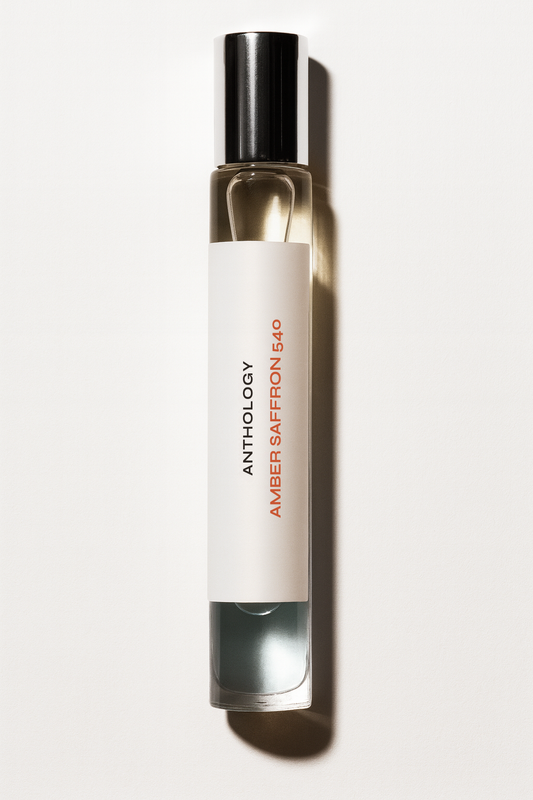
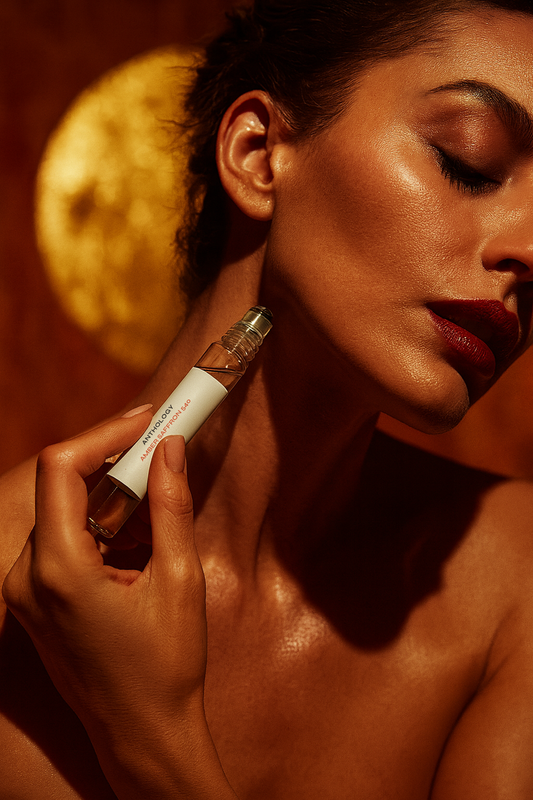
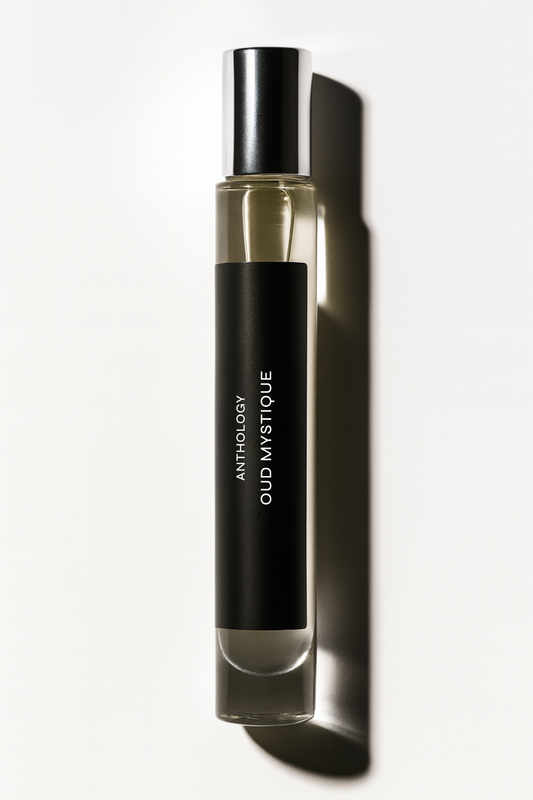
Frankincense's sacred, resinous depth runs through several of our most complex and spiritually resonant compositions. Our Oud Mystique Perfume Oil uses frankincense to add a bright, slightly citrus-resinous counterpoint to its deep oud heart — a combination that is a cornerstone of the great Arabic fragrance tradition. Our Amber Saffron 540 Perfume Oil incorporates frankincense's warm resinous depth into its amber-saffron accord, adding complexity and a quality of ancient wisdom to its exotic warmth.
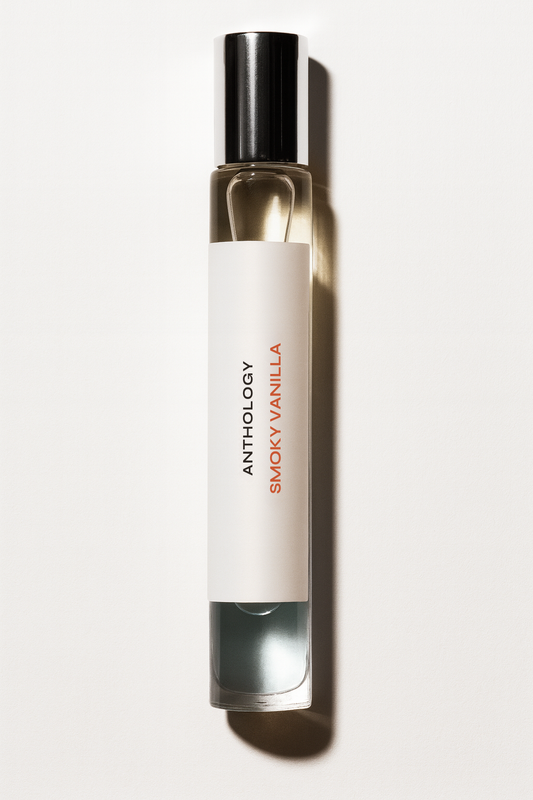
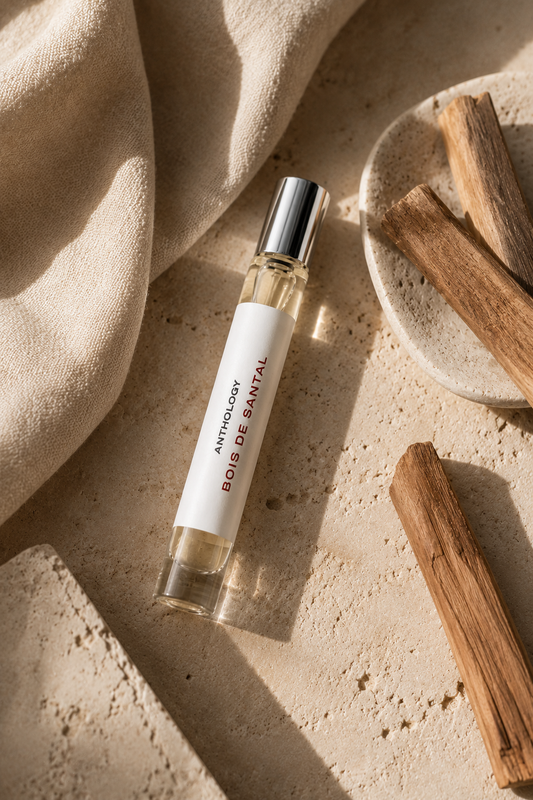
Our Smoky Vanilla Perfume Oil shares frankincense's quality of warm, slightly smoky resinous depth, while our Bois De Santal Perfume Oil uses resinous depth to ground and enrich its sandalwood heart in a way that echoes frankincense's role in traditional attar perfumery.
Explore our full Anthology Perfume Oils collection and encounter the sacred resin that has captivated humanity for five thousand years.