Note Deep Dive: Jasmine — The Most Seductive Note in Perfumery
Anthology BeautyShare
If rose is the queen of fragrance notes, jasmine is its shadow — darker, more complex, and considerably more dangerous. It is the note that perfumers reach for when they want to create something genuinely seductive, something that operates below the level of conscious thought and leaves an impression that is almost impossible to articulate. This is a deep dive into the most intoxicating ingredient in the perfumer's palette.
What Is Jasmine?
Jasmine is a flowering plant of the genus Jasminum, with over 200 species found across tropical and subtropical regions of Asia, Africa, and Europe. In perfumery, two species dominate: Jasminum grandiflorum (Spanish or Royal jasmine), grown primarily in Grasse, Egypt, and India, and Jasminum sambac (Arabian jasmine), native to South and Southeast Asia. Each has a distinct character — grandiflorum is more refined and floral, sambac is richer, more indolic, and more intensely heady.
The flowers are tiny, white, and extraordinarily fragrant — and they must be harvested by hand, at night or in the early morning hours before the heat of the day diminishes their scent. A single kilogram of jasmine absolute requires approximately 8 million hand-picked flowers. This extraordinary labour is reflected in jasmine absolute's position as one of the most expensive natural ingredients in perfumery.
The Chemistry of Seduction
What makes jasmine so uniquely seductive is its chemical composition. The primary aroma molecules include benzyl acetate (sweet, floral, slightly fruity), linalool (fresh, slightly spicy), and — most significantly — indole. Indole is a molecule that, in high concentrations, smells animalic and almost faecal. In the tiny quantities present in jasmine absolute, it creates a quality of warmth and depth that is almost skin-like — an intimacy that makes jasmine feel less like a flower and more like a person.
This indolic quality is what gives jasmine its reputation for seductiveness. It operates on a primal level, creating a sense of closeness and warmth that purely 'clean' floral notes cannot achieve. It is the difference between a flower in a vase and a flower worn on skin.
Jasmine in Perfumery: A Brief History
Jasmine has been used in fragrance since antiquity. In ancient India, jasmine garlands were worn at weddings and religious ceremonies — a tradition that continues today. In the Islamic world, jasmine water was used to scent mosques and palaces. In 17th-century Grasse, jasmine cultivation became central to the French perfume industry, and it has remained so ever since.
In modern fine perfumery, jasmine is the heart note of some of the most celebrated fragrances ever created. Chanel No. 5 is built on a foundation of jasmine and rose. Dior's J'adore is essentially a jasmine soliflore. Joy by Jean Patou — once the most expensive perfume in the world — required 10,600 jasmine flowers per bottle. The note's centrality to the Western fine fragrance canon is absolute.
The Different Faces of Jasmine
Like rose, jasmine is not a single smell. It changes dramatically depending on the species, the origin, the extraction method, and the supporting ingredients around it.
Jasmine grandiflorum from Grasse is considered the finest expression — refined, luminous, and beautifully balanced between sweetness and depth. Egyptian grandiflorum is slightly more intense and honeyed. Indian grandiflorum is richer and more animalic. Sambac jasmine from India and China is the most intensely heady of all — almost narcotic in its richness, with a green, slightly tea-like quality that makes it particularly beautiful in oriental compositions.
How Jasmine Behaves in a Fragrance
Jasmine is almost always a heart note, emerging after the top notes have settled and forming the emotional core of the composition. It is one of the most versatile ingredients in perfumery — it can be paired with almost anything and will adapt its character accordingly. Jasmine with rose becomes deeply romantic. Jasmine with oud becomes dark and opulent. Jasmine with citrus becomes fresh and modern. Jasmine with musk becomes intimate and skin-close.
It is also one of the great fixatives — its complex molecular structure helps anchor lighter notes and extend their life on skin, making it invaluable in the construction of long-lasting compositions.
Jasmine at Anthology
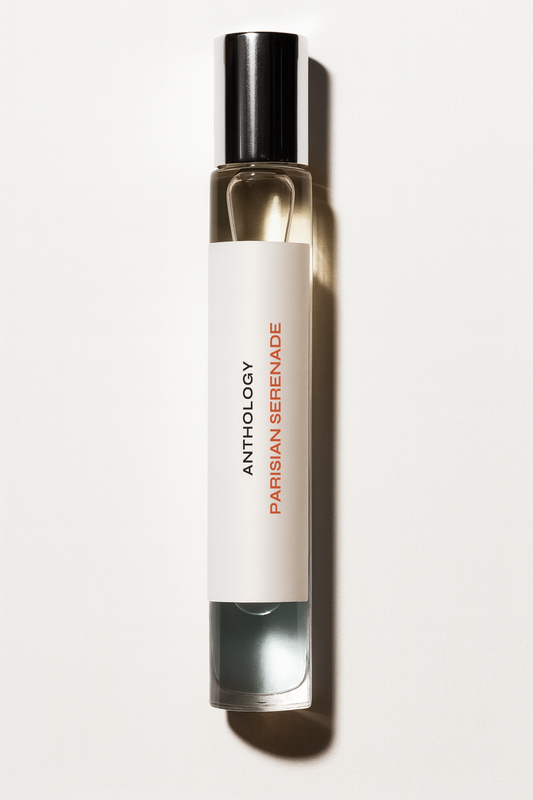
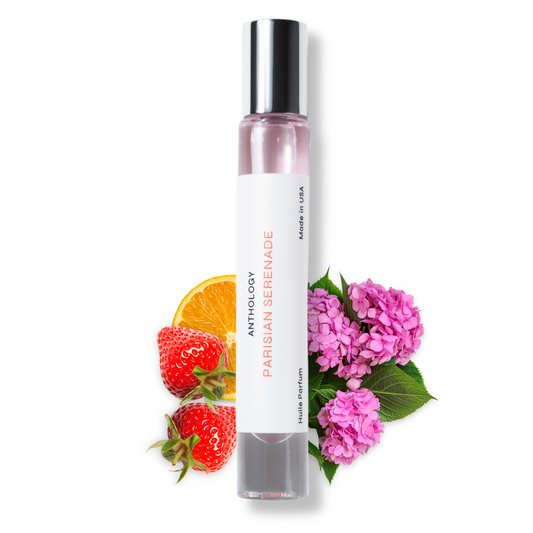
Jasmine weaves through several of our most beloved compositions, lending its seductive depth and warmth to fragrances that wear beautifully across all occasions. Our Parisian Serenade Perfume Oil places jasmine at its heart — a sophisticated, romantic composition where the note's full beauty is allowed to unfold slowly and luxuriously on skin.
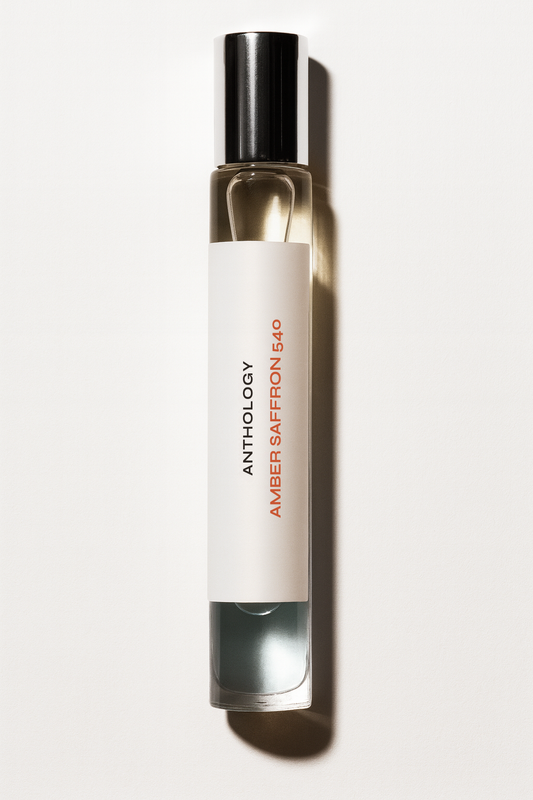
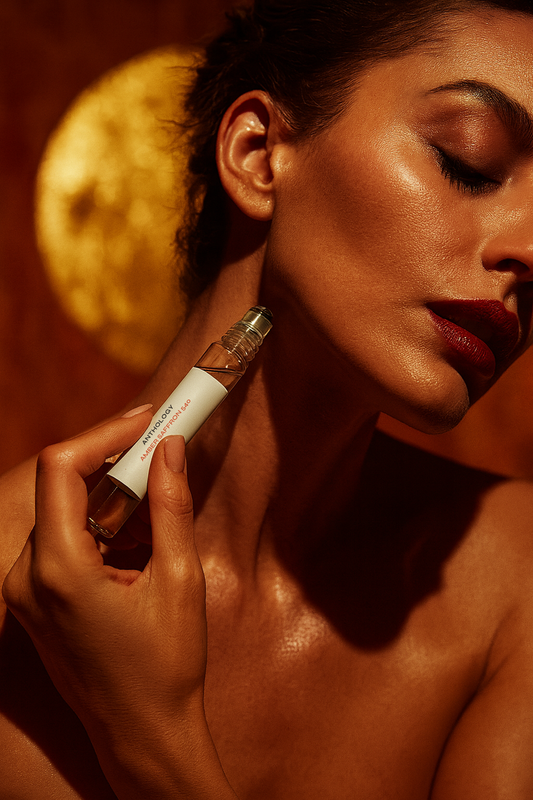
Our Amber Saffron 540 Perfume Oil uses jasmine as a floral bridge between the exotic warmth of saffron and the depth of amber — a role it performs with extraordinary elegance. And our Whispering Petals Perfume Oil captures jasmine in its most delicate, luminous expression — soft, skin-close, and deeply beautiful.
Explore our full Anthology Perfume Oils collection and discover jasmine in all its extraordinary, seductive dimensions.