Note Deep Dive: Patchouli — The Most Misunderstood Note of the 20th Century
Anthology BeautyShare
No fragrance ingredient carries more cultural baggage than patchouli. For many people, the word alone conjures images of incense shops, tie-dye, and the 1960s counterculture — a smell associated with a specific era and aesthetic that feels either nostalgic or off-putting depending on your perspective. And yet patchouli is also one of the most widely used ingredients in modern luxury fragrance, present in some of the most celebrated and commercially successful perfumes of the past three decades. The gap between patchouli's reputation and its reality is one of the great misunderstandings in fragrance.
What Is Patchouli?
Patchouli (Pogostemon cablin) is a bushy herb in the mint family, native to tropical Asia — primarily Indonesia, India, and the Philippines. The leaves are harvested, dried, and steam-distilled to produce patchouli essential oil: a thick, dark brown liquid with a complex, earthy, slightly sweet, and deeply distinctive aroma.
The smell of raw patchouli oil is intense and polarising — earthy, slightly musty, with a sweetness underneath and a quality that some find deeply appealing and others find overwhelming. But patchouli in a fragrance composition is a very different thing from patchouli in isolation. In the hands of a skilled perfumer, it becomes one of the most versatile and beautiful ingredients available.
The Chemistry of Patchouli
Patchouli oil contains over 40 identified aroma compounds, the most significant of which is patchoulol — a sesquiterpene alcohol responsible for the note's characteristic earthy, woody quality. Norpatchoulenol contributes the slightly musty, animalic quality that makes raw patchouli so distinctive. And pogostol adds a sweeter, slightly floral dimension that becomes more prominent as the oil ages.
One of patchouli's most remarkable qualities is that it improves dramatically with age. Fresh patchouli oil has a sharp, slightly harsh quality that can be challenging. Aged patchouli — particularly oil that has been stored for several years — becomes smoother, sweeter, and more complex, losing its harsh edges and developing a richness that is deeply beautiful. This is why aged patchouli is significantly more expensive than fresh, and why the finest patchouli-based fragrances often use aged oil.
Patchouli's Cultural History
Patchouli's association with the 1960s counterculture is real but historically shallow. The note had been used in fine perfumery for over a century before Woodstock. In the 19th century, patchouli was used to scent cashmere shawls imported from India to Europe — the smell became so associated with genuine Indian cashmere that European manufacturers began using patchouli to make their imitations smell authentic. This is how patchouli first entered the Western fragrance vocabulary.
In the 20th century, patchouli became a cornerstone of oriental and chypre fragrance construction — used as a base note and fixative in some of the most celebrated fragrances of the era. Its association with the counterculture came later, when the note's earthy, slightly transgressive quality made it appealing to those who wanted to reject mainstream aesthetics. But this association was always a cultural overlay on an ingredient with a much longer and more sophisticated history.
Patchouli in Modern Perfumery
Today, patchouli is one of the most widely used base notes in luxury fragrance. It appears in Chanel No. 5, Angel, Black Orchid, La Vie Est Belle, and hundreds of other celebrated compositions. It is used not for its raw, earthy character but for its extraordinary fixative properties, its ability to add depth and longevity to any composition, and its subtle sweetness that makes other notes bloom more beautifully.
The patchouli in a modern luxury fragrance is typically used in small quantities, carefully balanced against other ingredients, and often aged to remove its harsher qualities. The result is an ingredient that you may not consciously identify but whose absence you would immediately feel — a depth, a warmth, and a staying power that no other ingredient quite replicates.
Patchouli at Anthology
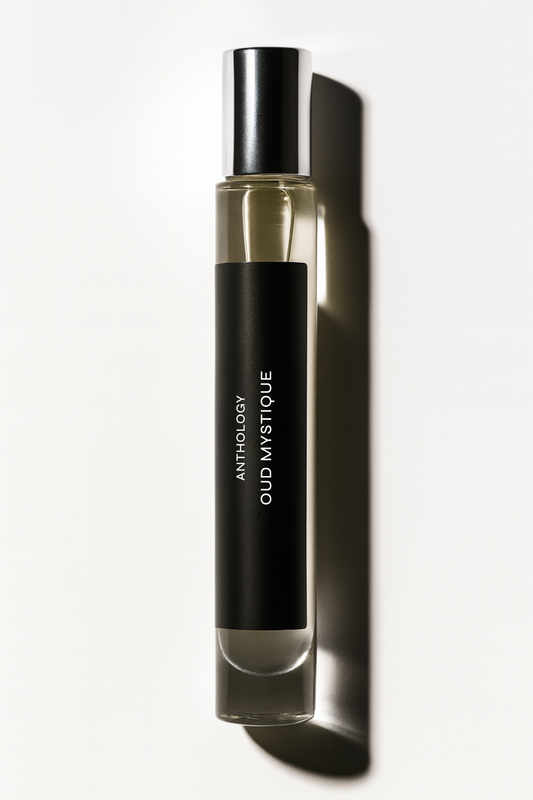
Patchouli's grounding, fixative qualities run through several of our most complex and long-lasting compositions, providing the depth and staying power that makes our oils perform so beautifully on skin. Our Oud Mystique Perfume Oil uses patchouli to deepen and ground its resinous oud heart, while our Angels Elixir Perfume Oil employs it to add earthy complexity to its warm gourmand character.
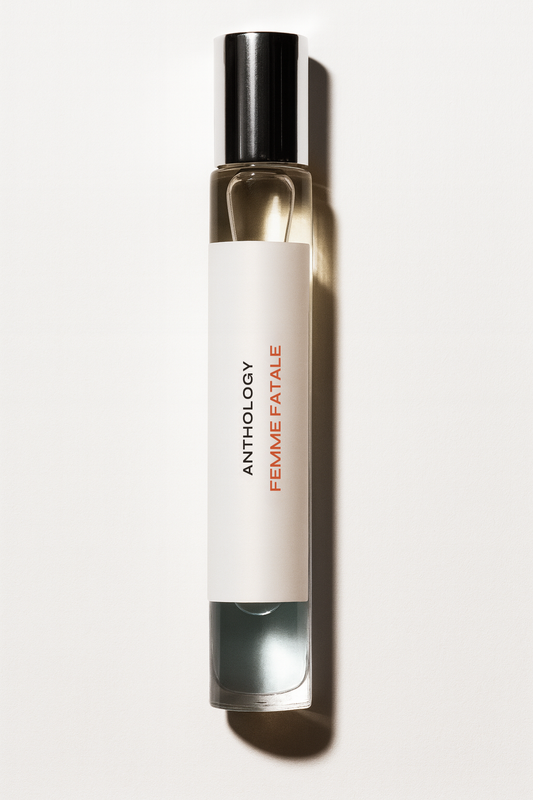
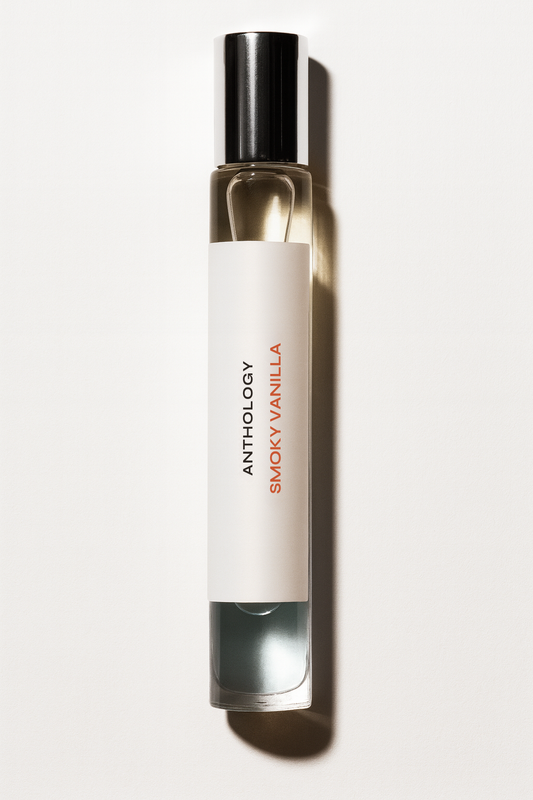
Our Femme Fatale Perfume Oil uses patchouli's slightly animalic quality to give its dark floral heart an edge of danger and seduction, while our Smoky Vanilla Perfume Oil pairs patchouli's earthiness with vanilla's sweetness in a combination that is deeply compelling and endlessly wearable.
Explore our full Anthology Perfume Oils collection and discover patchouli as it was always meant to be experienced — not as a statement, but as a foundation.