Note Deep Dive: Saffron — The Most Exotic Spice in Perfumery
Anthology BeautyShare
Saffron is the most expensive spice in the world by weight — more costly than gold at equivalent quantities — and in perfumery, it is one of the most transformative and distinctive ingredients available. Its arrival in mainstream Western fine fragrance over the past two decades has changed the vocabulary of luxury scent in ways that are still unfolding. This is the story of the ingredient that smells like nothing else on earth.
What Is Saffron?
Saffron consists of the dried stigmas of the Crocus sativus flower — the three tiny thread-like filaments at the centre of each bloom. Each flower produces only three stigmas, and they must be harvested by hand during the brief flowering season, typically in autumn. It takes approximately 150,000 flowers — and 400 hours of hand labour — to produce a single kilogram of saffron. This extraordinary labour is why saffron has been more valuable than gold throughout much of human history.
The primary saffron-producing regions are Iran (which produces approximately 90% of the world's supply), Kashmir, Spain, and Morocco. Each origin produces saffron with slightly different character — Iranian saffron tends to be the most intensely flavoured and aromatic, while Kashmiri saffron is often considered the most complex and nuanced.
The Smell of Saffron
Saffron's aroma is one of the most distinctive and difficult to describe in the natural world. It is simultaneously warm and metallic, honeyed and slightly leathery, floral and earthy. There is a quality to it that is almost medicinal in isolation — a sharp, slightly bitter edge — but in the context of a fragrance composition, this edge becomes a quality of exotic complexity that is deeply compelling.
The primary aroma molecule responsible for saffron's distinctive character is safranal, which is formed during the drying process from a precursor compound called picrocrocin. Safranal has a warm, slightly hay-like, honeyed quality that is the backbone of saffron's fragrance profile. It is supported by isophorone (a slightly woody, violet-like quality) and 2,6,6-trimethyl-2-hydroxycyclohex-2-enone, which contributes the metallic, slightly sharp edge that makes saffron so immediately recognisable.
Saffron in History and Culture
Saffron has been used in fragrance, medicine, and cuisine since antiquity. Ancient Egyptians used saffron-infused oils in religious ceremonies. Cleopatra reportedly bathed in saffron-infused water before meetings with Roman leaders. In ancient Persia, saffron was woven into royal robes and scattered on the floors of palaces. In the Islamic world, saffron has been a cornerstone of attar perfumery for centuries — combined with rose, oud, and musk to create compositions of extraordinary richness and complexity.
In Western fine perfumery, saffron was used sparingly for much of the 20th century — its intensity and distinctiveness made it a challenging ingredient to incorporate into mainstream compositions. But the rise of niche perfumery in the 2000s and 2010s, and the growing Western appetite for Middle Eastern fragrance aesthetics, brought saffron to the forefront. Today it is one of the most fashionable and sought-after notes in luxury fragrance.
How Saffron Behaves in a Fragrance
Saffron is typically used as a top or heart note — its volatile molecules evaporate relatively quickly, making it most prominent in the opening and early development of a fragrance. But its influence lingers in the dry-down, where its warmth and complexity continue to shape the character of the base notes long after the saffron itself has faded.
Saffron is a remarkably versatile ingredient. It pairs beautifully with rose — the combination is a cornerstone of Middle Eastern attar perfumery and has been used for centuries. With amber, it creates a warm, honeyed richness that is deeply luxurious. With oud, it adds an exotic, slightly metallic edge that gives the composition extraordinary presence. With jasmine, it creates a floral-spice accord of great beauty and complexity.
Saffron at Anthology
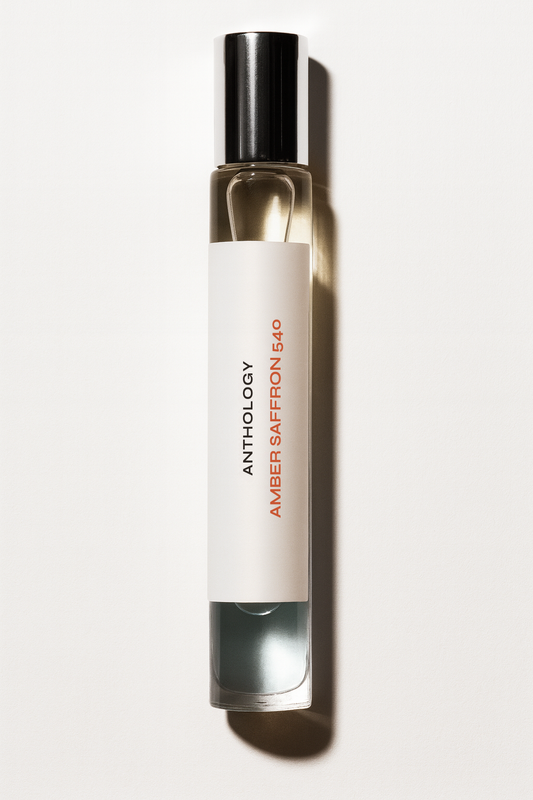
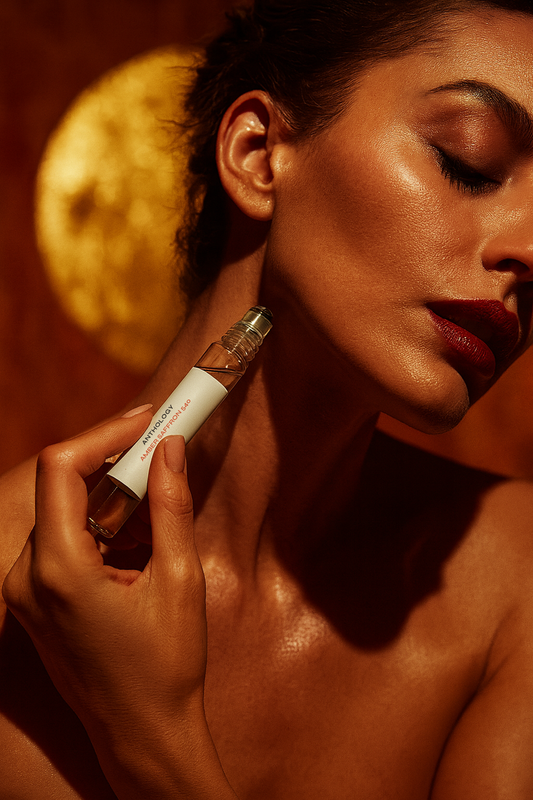
Our Amber Saffron 540 Perfume Oil places saffron at the very heart of its composition — the note's warm, metallic, honeyed character woven through a rich amber base to create something of extraordinary depth and presence. It is saffron at its most beautiful and most wearable — exotic without being challenging, complex without being difficult.
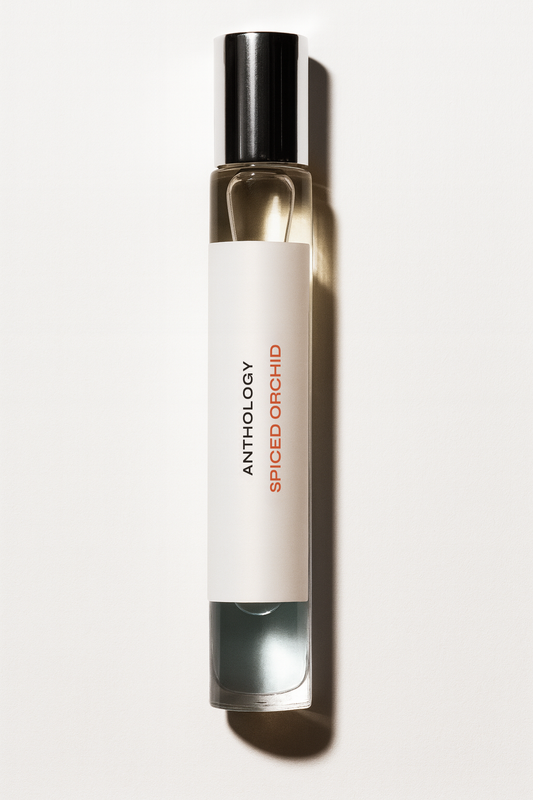
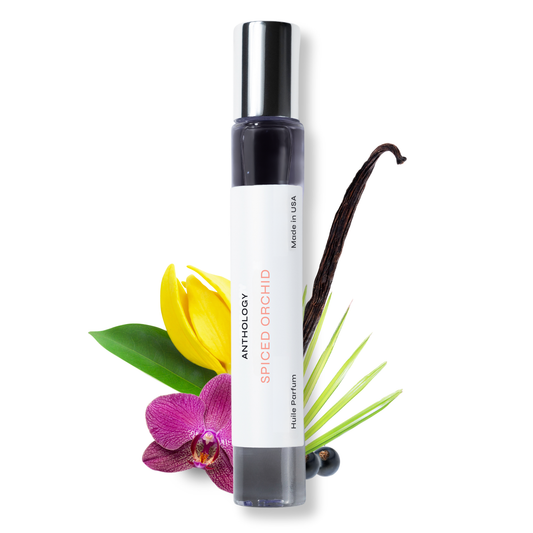
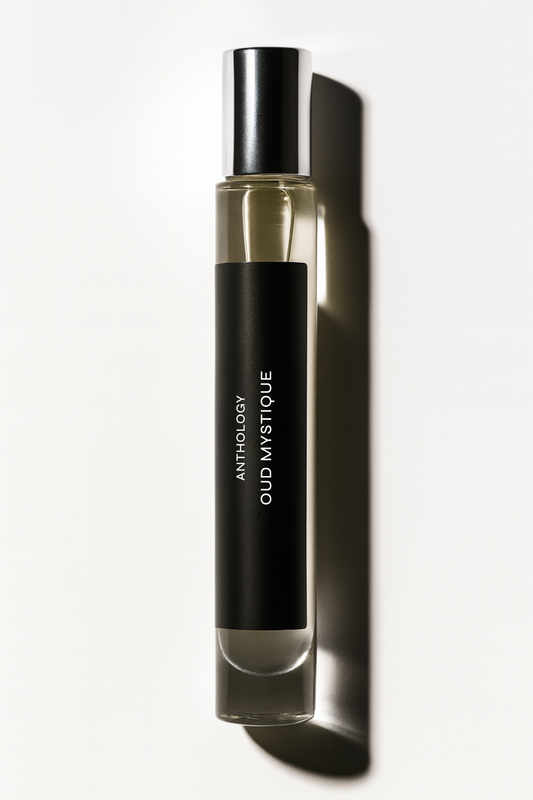
Saffron's influence also runs through our Oud Mystique Perfume Oil, where it adds an exotic, slightly metallic edge to the oud's resinous depth, and our Spiced Orchid Perfume Oil, where it contributes warmth and complexity to the spiced floral heart.
Explore our full Anthology Perfume Oils collection and discover the ingredient that has captivated the world for four thousand years.