Note Deep Dive: Vanilla — The Orchid That Took Centuries to Tame
Vandana MagnaniShare
As the evenings draw in and the air turns crisp, the fragrances we reach for begin to change. The bright citruses and airy aquatics of summer give way to something warmer, softer, and more enveloping — and at the centre of almost every great cold-weather fragrance sits one note above all others. Vanilla is the most beloved, most comforting, and quietly most complex ingredient in modern perfumery. It is also one of the most misunderstood: dismissed by some as simply "sweet," when in truth a well-composed vanilla can be smoky, boozy, woody, floral, or deeply sensual.
What Is Vanilla?
Vanilla comes from the cured seed pods of a climbing orchid, Vanilla planifolia, native to the tropical forests of Mexico. The Totonac people of the Gulf Coast were cultivating it long before the Aztecs — and later the Spanish — carried it to the wider world. Today the great majority of the world's natural vanilla is grown in Madagascar, alongside smaller harvests from Mexico, Tahiti, Indonesia, Uganda, and India.
Remarkably, the green vanilla pod has almost no scent at all. Its famous aroma develops only through curing — a slow, painstaking process of blanching, sweating, sun-drying, and conditioning that can take many months. It is during curing that vanillin, the molecule we most associate with the smell of vanilla, is released alongside hundreds of other aromatic compounds that give real vanilla its depth.
The Twelve-Year-Old Who Changed Perfumery
For centuries, vanilla could only fruit in Mexico, where native bees pollinated its flowers. Plants carried to other tropical colonies grew beautifully but produced no pods. The breakthrough came in 1841 on the island of Réunion, when Edmond Albius — an enslaved twelve-year-old boy — devised a quick, delicate method of hand-pollinating the vanilla flower with a thin stick and his thumb. His technique is still used on vanilla farms around the world today, and nearly every vanilla pod harvested outside Mexico owes its existence to him. It is one of the most important — and least-told — stories in the history of fragrance.
The Smell of Vanilla
Natural vanilla absolute is far richer than the vanilla of baking. Alongside its creamy sweetness, it carries facets that are smoky, leathery, slightly woody, faintly boozy like rum or bourbon, and even a little animalic. This complexity is why perfumers prize it: vanilla does not simply sweeten a composition — it gives it warmth, roundness, and a skin-like softness that makes a fragrance feel intimate.
In 1874, German chemists first synthesised vanillin, making the vanilla effect affordable and consistent for the first time. Guerlain was among the first houses to embrace it, and in 1925 created Shalimar — the legendary oriental built on a lavish vanilla accord, which we explored in our piece on Guerlain Shalimar: The Original Oriental. Later came ethyl vanillin, a related molecule several times more powerful than vanillin, with a sweeter, more gourmand character. Today most vanilla fragrances blend natural vanilla with these molecules — natural material for depth and nuance, synthetics for radiance and staying power.
Vanilla's Role in Perfumery
Vanilla is almost always a base note. Its molecules are large and slow to evaporate, which is why a vanilla fragrance lingers on skin, clothing, and hair long after the brighter opening notes have faded. It is also the backbone of the amber accord — typically vanilla blended with resins such as labdanum and benzoin — which sits at the heart of the oriental family (see our guide to oriental fragrances). And it is the foundation of the gourmand family, which our gourmand fragrance guide explores in depth.
Vanilla is one of perfumery's great partners. With sandalwood and cedar, it becomes creamy and grown-up. With smoke, incense, and tobacco, it turns dark and mysterious. With white florals like jasmine and tuberose, it becomes luminous and romantic. With musk, it melts into a soft, second-skin warmth. And with amber, rum, or coffee, it becomes indulgent and addictive.
Why Vanilla Shines in Perfume Oil
Vanilla is especially well suited to the perfume oil format. Without alcohol to lift it off the skin, vanilla sits close and unfolds slowly, revealing its creamy, woody, and smoky facets over many hours rather than all at once. It also warms beautifully with body heat — which is exactly why vanilla oils feel so right on a cool autumn evening, dabbed on the wrists, the base of the throat, or even a scarf.
Vanilla at Anthology
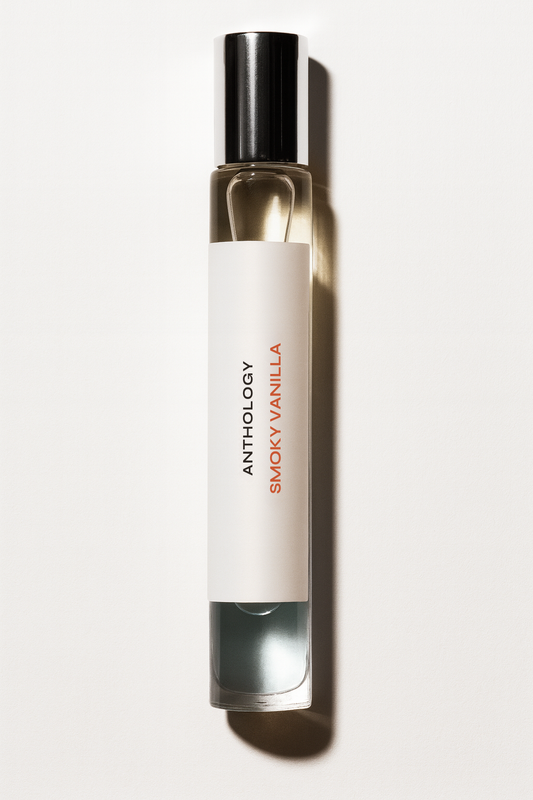
Vanilla runs through some of our most loved compositions, each showing a different side of this remarkable note. Our Vanilla Woods Perfume Oil wraps rich vanilla in warm spices and dark, resinous tones — a deep, smoky sweetness made for autumn. For something more mysterious, our Smoky Vanilla Perfume Oil opens with a spark of black pepper and warm resins before melting into a heart of rich vanilla.
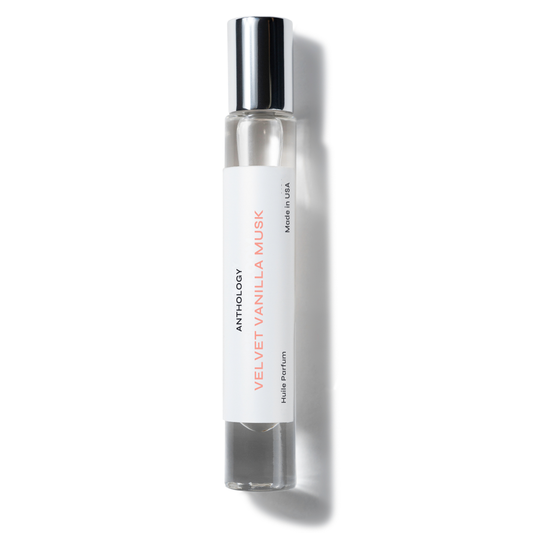
If you prefer your vanilla soft and skin-close, our Velvet Vanilla Musk Perfume Oil pairs it with sensual musk for a classic, intimate warmth. Our Vanilla White Flowers Perfume Oil brings vanilla together with delicate white florals for a luminous, romantic take, while our Angels' Elixir Perfume Oil shows vanilla's indulgent side in a warm, boozy amber gourmand. And for those who love it in spray form, our Amber Vanille Eau de Parfum offers a soft, elegant glow of vanilla and amber.
Explore our full Anthology Perfume Oils collection and discover vanilla — the orchid that took centuries to tame — in all its warm, comforting, and quietly complex glory.