What Is the Difference Between a Fragrance Note and an Accord?
Anthology BeautyShare
If you've spent any time reading fragrance descriptions, you'll have encountered both 'notes' and 'accords' — sometimes used interchangeably, sometimes as distinct concepts. Understanding the difference between them is one of the most useful things you can learn about how fragrance works, and it will transform the way you read and interpret fragrance descriptions.
What Is a Fragrance Note?
A fragrance note is a single identifiable scent element within a composition — the smell of a specific ingredient or aroma molecule that can be perceived as a distinct presence in the fragrance. Notes are the building blocks of perfumery, the individual ingredients from which a perfumer constructs a composition.
Notes are typically described in terms of the fragrance pyramid — top notes (the first impressions that evaporate quickly), heart notes (the core character of the fragrance that emerges after 20 to 30 minutes), and base notes (the deep, long-lasting foundation that remains on skin for hours). When a fragrance description lists 'bergamot, rose, and sandalwood,' it is listing notes — individual ingredients that contribute their distinct character to the composition.
A note can be a natural ingredient (rose absolute, sandalwood oil, vetiver), a synthetic molecule (Ambroxan, Iso E Super, ethyl maltol), or a combination of both used to represent a specific smell (a 'sea salt' note, for example, is typically a synthetic accord designed to evoke the smell of the ocean).
What Is a Fragrance Accord?
An accord is a combination of two or more ingredients that together create a new, unified smell — one that is distinct from any of its individual components. The word comes from the musical term for a chord: just as three musical notes played simultaneously create a chord that is more than the sum of its parts, a fragrance accord combines multiple ingredients to create a new olfactory identity.
The classic example is the amber accord: labdanum, benzoin, and vanilla combined in specific proportions create the warm, resinous, sweet quality we recognise as 'amber' — a smell that doesn't exist in nature as a single ingredient but is created through the combination of several. Similarly, a 'leather' accord might combine birch tar, castoreum, and various synthetic molecules to create the smell of leather without using actual leather.
Accords are the perfumer's most powerful tool. They allow the creation of smells that don't exist in nature, the replication of natural smells that are impossible or impractical to extract, and the construction of complex olfactory identities that form the emotional core of a fragrance.
How Notes and Accords Work Together
In a finished fragrance, notes and accords work together at every level. A perfumer might use a rose note (rose absolute) alongside a rose accord (a synthetic combination designed to enhance and extend the natural rose) to create a rose heart that is richer and more complex than either could achieve alone. The amber base of a fragrance might be built from an amber accord (labdanum, benzoin, vanilla) supported by additional base notes (sandalwood, musk, vetiver) that add depth and longevity.
When you read a fragrance description, the listed notes are a simplified representation of a much more complex reality. A fragrance described as having 'rose, oud, and amber' might actually contain dozens of individual ingredients — natural extracts, synthetic molecules, and proprietary accords — all working together to create those three perceived qualities.
Why This Matters for Choosing a Fragrance
Understanding the difference between notes and accords helps you interpret fragrance descriptions more accurately. When a fragrance lists 'amber' as a note, it is describing an accord — a constructed warmth rather than a single extracted ingredient. When it lists 'rose,' it may be referring to natural rose absolute, a synthetic rose accord, or a combination of both.
This knowledge also helps explain why the same 'note' can smell very different in different fragrances. The 'rose' in our Viva La Rose Perfume Oil is a different construction from the 'rose' in our Rose on Fire Perfume Oil — the same note, expressed through different accords and supported by different ingredients, creating entirely different olfactory experiences.
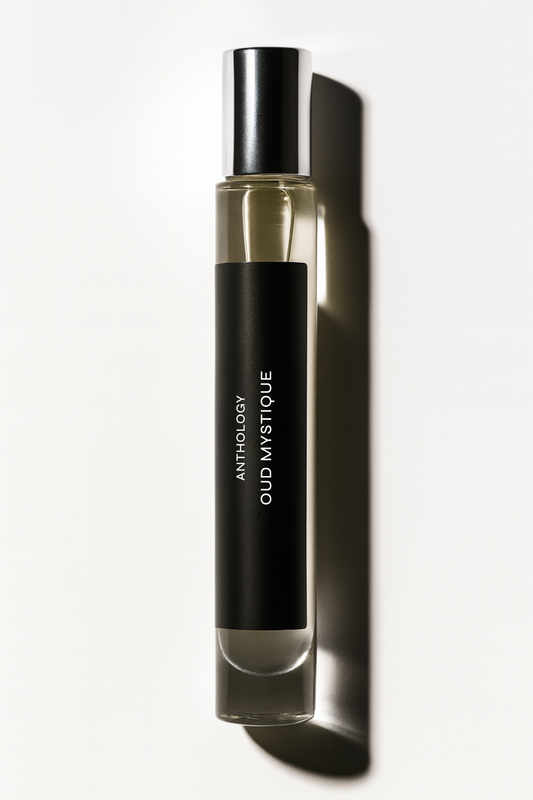
Our Amber Saffron 540 Perfume Oil demonstrates the power of accords beautifully — its amber base is a carefully constructed accord of warmth and depth, while its saffron note adds an exotic, metallic quality that transforms the entire composition. And our Oud Mystique Perfume Oil shows how a single dominant note (oud) can be supported by a complex web of accords that give it extraordinary depth and longevity.
Explore our full Anthology Perfume Oils collection and listen more closely to the notes and accords that make each oil uniquely beautiful.