Can Fragrance Change Your Mood? The Science of Scent and Emotion
Anthology BeautyShare
Yes — fragrance really can change how you feel, though not quite in the way the marketing on a candle box suggests. Scent travels a uniquely short road to the parts of the brain that handle emotion and memory, and most of its power comes from what you have learned to associate with a smell rather than from any magic in the molecule itself. Understand that, and you can choose and wear perfume far more deliberately: not just to smell beautiful, but to feel a certain way.
The Shortest Road to Feeling
Every other sense makes a stop on the way in. Sight, sound, taste and touch are first relayed through the thalamus, the brain's sorting office, before reaching the areas that interpret them. Smell is different. Odour molecules bind to receptors high in the nose, and the signal passes to the olfactory bulb, which feeds directly into the piriform cortex, the amygdala — central to emotional response — and the entorhinal cortex, the gateway to the hippocampus, where memories are formed.
In other words, a smell arrives in the emotional and memory centres of the brain almost before you have consciously named it. That is why a scent can move you before you know what it is: a stranger's perfume on the Underground, woodsmoke on an autumn walk, a particular soap in a hotel bathroom.
The Proust Effect: Why Smells Unlock the Past
Literature got there first. In Swann's Way (1913), Marcel Proust's narrator dips a madeleine into lime-blossom tea and is flooded by his childhood in Combray. Scientists now call the vivid, involuntary rush of memory triggered by smell the "Proust effect".
The psychologist Rachel Herz, long associated with Brown University, has spent decades testing it. Her studies found that memories called up by a smell are not necessarily more accurate than those triggered by a picture or a word, but they feel more emotional and more transporting — and in brain-imaging work, a personally meaningful perfume produced greater activity in the amygdala than the sight of the same bottle. Smell, in short, does not just remind you of the past; it makes you feel it again. We explored this beautifully in our look at Replica Beach Walk, a fragrance built entirely on memory.
Learned, Not Born: Why the Same Scent Moves People Differently
Here is the twist that matters most for anyone choosing a perfume: very few emotional responses to smell are hard-wired. Herz's research argues that we learn to love or loathe most odours through experience. Her favourite example is wintergreen. Older British respondents, for whom it recalled wartime liniments and medicine, tended to find it unpleasant; Americans, who knew it from sweets and chewing gum, tended to like it.
Expectation is just as powerful. In one experiment by Herz and Julia von Clef (2001), the very same odour was rated far more pleasant when it was labelled "parmesan cheese" than when it was labelled "vomit". The molecule never changed — only the story attached to it. This is why a perfume worn on a wonderful holiday can lift you for years, and why the scent of a difficult time can bring you down no matter how lovely it is.
What the Science Says About Calming and Uplifting Scents
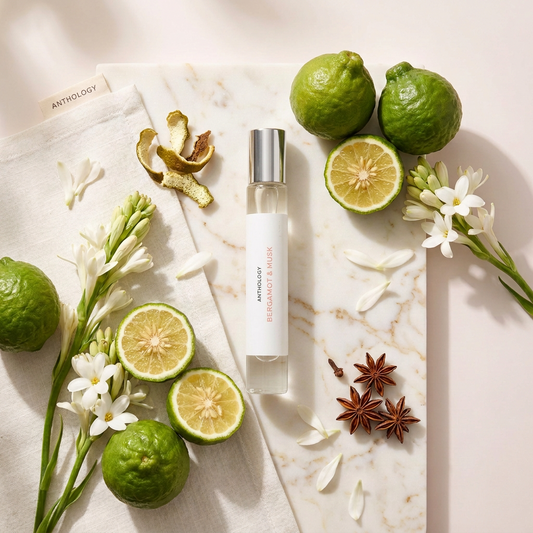
Some materials do appear to have effects beyond association. The best-studied is linalool, the floral-woody molecule abundant in lavender, bergamot and coriander. In a 2018 study from Kagoshima University in Japan, published in Frontiers in Behavioral Neuroscience, mice that breathed linalool vapour showed less anxious behaviour — but the effect disappeared in mice that had lost their sense of smell, suggesting it works through the nose rather than by entering the bloodstream. The calm appeared to involve the same GABA-A receptor system targeted by some anti-anxiety medicines.
Human research is more modest and more mixed. Citrus scents are frequently linked with feelings of freshness and alertness, and vanilla-like, ambery notes with comfort, but results vary between studies and between people — and expectation and memory always play a part. The honest conclusion is that fragrance is a gentle mood tool, not a medicine. It can nudge, soothe and brighten; it cannot cure.
One more practical note: the emotional lift of a scent is strongest when you can actually smell it. After a while your nose tunes out a familiar perfume — we explain why in our guide to olfactory fatigue — so a fresh application, or a different scent, can renew the effect.
How to Use Fragrance to Shape Your Mood
Build your own anchors. Because emotional responses are learned, you can create them on purpose. Wear one scent only when you are relaxed — reading, bathing, unwinding on a Sunday — and over time it becomes a shortcut back to that state. Keep a different one for focus or for celebrations.
Match the family to the feeling. Bright citrus and green notes tend to read as energising; lavender and soft herbs as calming; vanilla, amber and musk as comforting; resins and smoky woods as grounding and introspective. Our guide to building a fragrance wardrobe for every mood turns this into a full collection.
Keep it close. Mood scent is often most effective when it is personal rather than projected — something you catch on your own wrist as you turn a page, not something that fills the room.
Why Perfume Oil Suits Mood Scenting
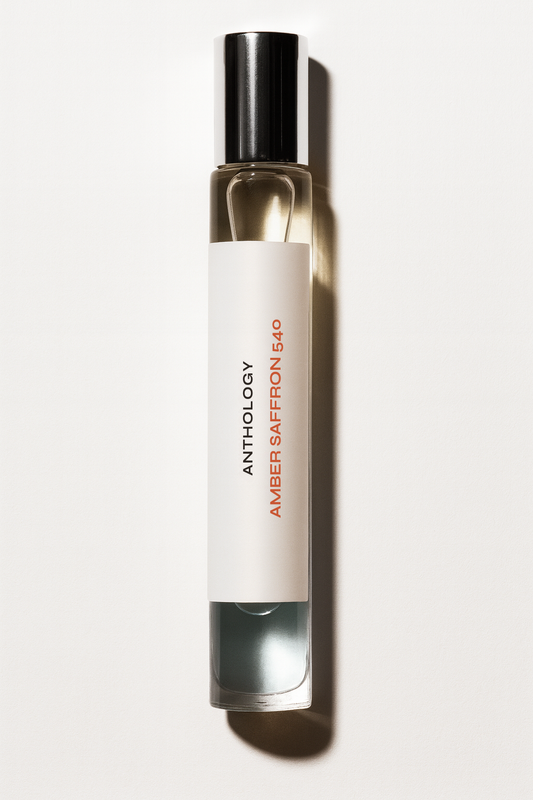
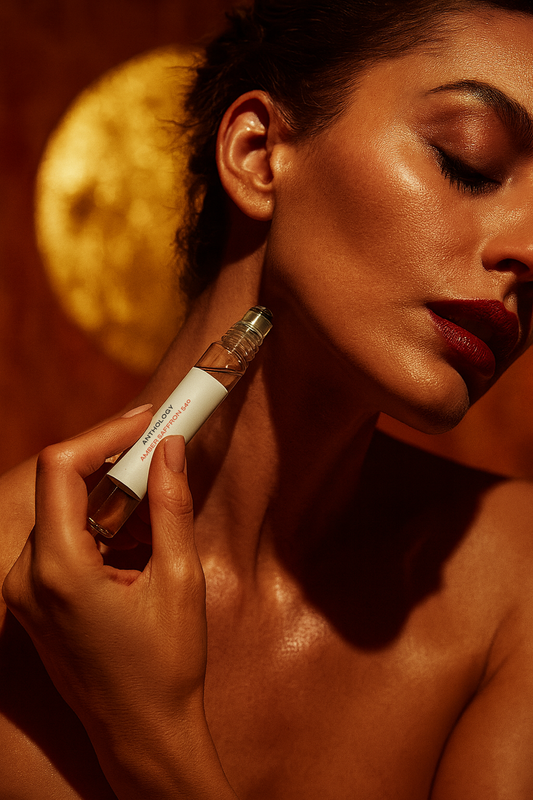
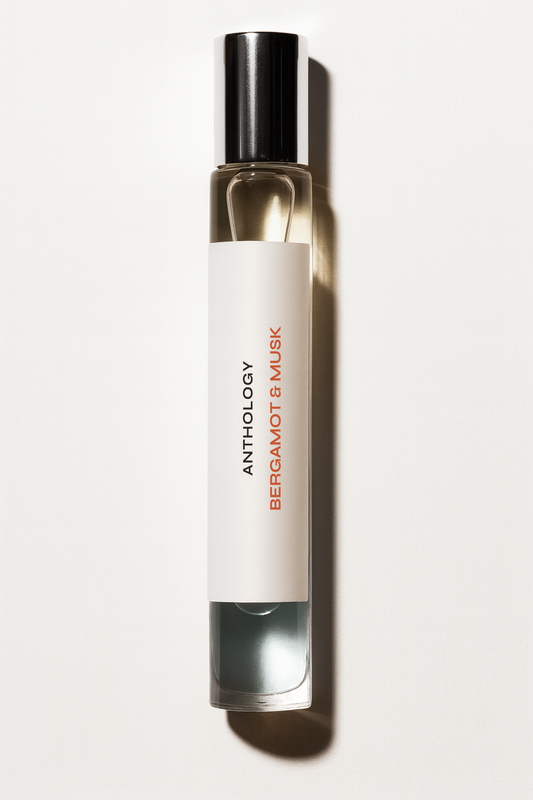
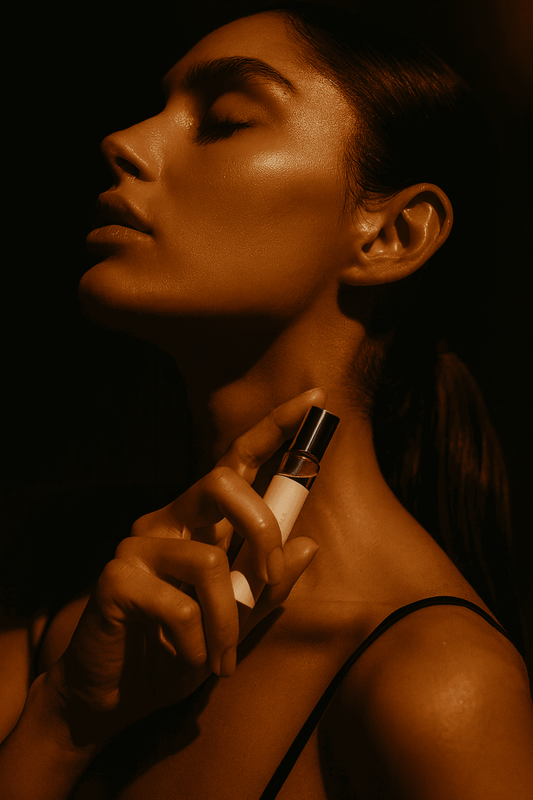
Perfume oil is made for exactly this kind of intimate, deliberate wearing. Without alcohol, it sits close to the skin and unfolds gently, so the scent stays your private signal rather than an announcement. A roll-on is easy to carry and reapply at the moment you want a lift, and a small bottle encourages you to keep a few moods on hand rather than wearing one scent for everything.
Mood Scents at Anthology
To calm: Citrus Matcha opens with matcha and citrus for a calm, fresh feel before a soft heart of bitter orange and fig and a base of vetiver and cedarwood. Sublime Bergamot pairs bergamot with lavender, elemi and cedarwood — two classic sources of linalool in one composition.
To brighten: Citrus & Cedarwood bursts with lemon, grapefruit and bergamot, lifted by pink pepper and nutmeg over cedarwood and musk — a clean, energising choice for mornings.
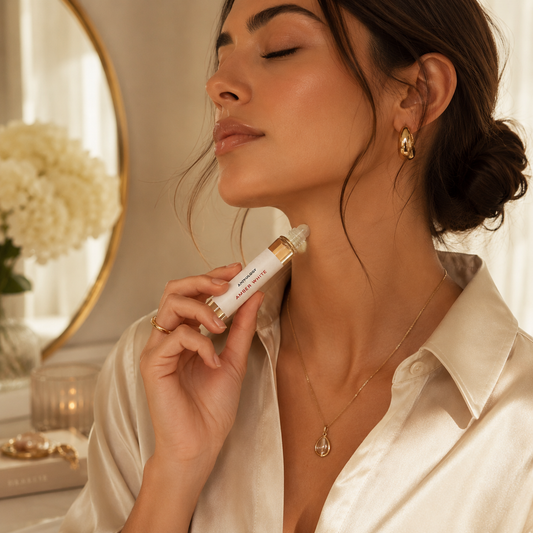
To comfort: Velvet Vanilla Musk is a soft, enveloping blend of vanilla and musk, and Amber White wraps creamy vanilla orchid and jasmine in brown sugar, amber and tonka — the olfactory equivalent of a warm blanket.
Choose one for each mood you want to call on, and let your own memories do the rest. Explore the full Anthology Collection to find the scents that will become your emotional shortcuts.