Why Do I Stop Smelling My Own Perfume? Olfactory Fatigue Explained
Anthology BeautyShare
You apply your favourite perfume in the morning, catch a beautiful cloud of it as you button your coat, and by the time you reach your desk it seems to have vanished. Then a colleague leans over and asks what you are wearing. The scent has not disappeared at all. Your nose has simply stopped reporting it. This is olfactory fatigue, also called olfactory adaptation or, more casually, being "nose blind", and it is one of the most common reasons people over-apply fragrance or decide a perfectly good scent "doesn't last".
What Is Olfactory Fatigue?
Olfactory fatigue is the temporary drop in your ability to perceive a smell after continued exposure to it. It is not a fault and it is not a sign that your sense of smell is failing; it is your nervous system doing exactly what it was designed to do. The effect is specific: you stop noticing the scent you have been surrounded by, while remaining perfectly able to smell new ones. Walk into a bakery and the bread is glorious; work there for a morning and you barely register it. The same thing happens with the fragrance sitting a few inches from your nose all day.
It is also temporary, which separates it from anosmia, the loss of smell. Step away from the odour for a while and sensitivity returns.
Why It Happens: Your Nose and Your Brain
Adaptation begins in the nose itself. When odour molecules bind to receptors on the olfactory neurons lining the upper nasal cavity, calcium flows into those cells and a signal is sent to the brain. That same influx of calcium switches on a feedback loop that gradually dials the neuron's sensitivity down, so a steady, unchanging stimulus produces a weaker and weaker signal. The process starts almost immediately, which is why a fragrance can seem to fade within a few minutes of applying it.
The brain then adds a second layer. Researchers such as Pamela Dalton of the Monell Chemical Senses Center in Philadelphia have explained adaptation as part of the brain's job of watching for change. A new smell might mean smoke, spoiled food or danger; a smell that has been present and harmless for a while is filed away as background so attention is free for whatever comes next. Your own perfume, your home and even your own skin all fall into that background category.
Short-Term and Long-Term Nose Blindness
There are really two timescales at work. Short-term adaptation happens within minutes of exposure and recovers fairly quickly once you leave the scent behind for a while, which is why you may suddenly notice your perfume again when you come in from the cold or pull on a scarf you wore yesterday.
Long-term habituation builds up over days and weeks of repeated exposure. In a 1996 study published in Perception & Psychophysics, Dalton and Charles Wysocki exposed volunteers to an odour in their own homes over an extended period and found their sensitivity to that specific smell fell markedly, recovering only gradually once the exposure stopped. It is the same reason you cannot smell your own house but notice a friend's immediately. For fragrance lovers, the lesson is clear: wear one signature scent every single day and your nose may slowly learn to ignore it, even though everyone around you still can.
Is My Fragrance Fading, or Is It Me?
Often it is you. A few quick checks help tell the difference. Ask someone you trust whether they can smell it. Sniff the inside of your wrist after stepping outside for a few minutes, or smell a scarf or jumper collar where the scent has settled. Many fragrances also project less as they move into the base, so the softer, closer trail of the dry-down can be mistaken for nothing at all; our guide to sillage explains why some scents sit close to the skin by design, and how long perfume oil lasts on skin covers what genuine fading looks like.
Certain materials are more prone to disappearing from your own perception. Clean musks and ambery woody molecules are famously subtle up close, and some people have a specific anosmia to particular musks, meaning they barely detect them at all while others find them obvious. This is why skin scents can feel invisible to the wearer and yet earn compliments all day.
How to Reset Your Nose (and Myths to Skip)
The most famous trick, sniffing coffee beans between fragrances, has surprisingly little evidence behind it. In a small study led by psychologist Alexis Grosofsky at Beloit College, published in 2011, participants smelled perfumes, then sniffed coffee beans, lemon slices or plain air before trying to identify a new scent. Coffee beans performed no better than air. What helps more is simpler: step into fresh air, give your nose a few minutes away from the fragrance, or smell your own skin, such as the crook of your elbow, which is a familiar, neutral background. A little movement can help too, and some perfumers are said to walk around between sniffs.
When sampling, limit yourself to three or four scents in one session and leave time between them. Your nose is an instrument, and like any instrument it performs better when it is rested.
Wear Smarter: Rotation, Restraint and Perfume Oil
The single best defence against olfactory fatigue is not reapplying more and more, which risks overwhelming everyone around you. Instead, rotate. Keeping two or three contrasting scents on the go, perhaps a fresh one and a warm one, stops your brain from filing any single fragrance as background. Our guide to building a fragrance wardrobe for every mood is a good starting point.
Perfume oil is particularly well suited to this. It wears close to the skin rather than shouting across a room, so a little goes a long way, and a roll-on lets you add a precise touch at the pulse points later in the day if you genuinely need it, rather than spraying blindly because you can no longer smell the morning's application.
Anthology Picks for a Smarter Rotation
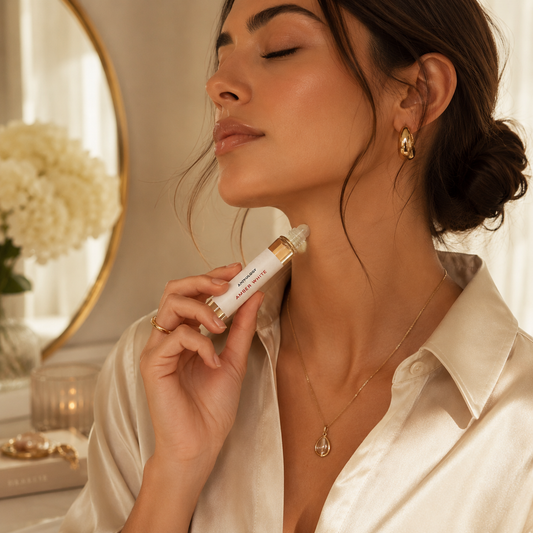
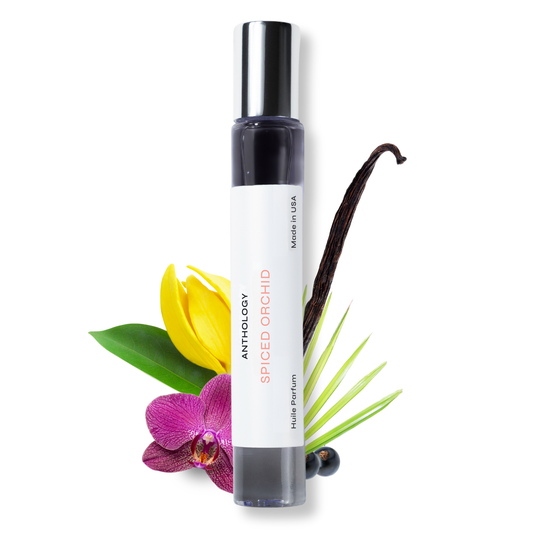
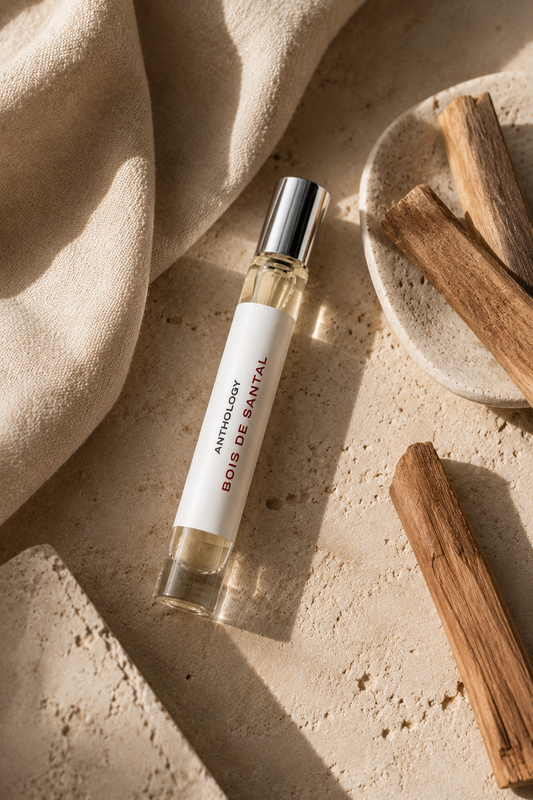
For a soft, comforting base that you may stop noticing long before others do, Velvet Vanilla Musk pairs vanilla with musk, while Amber White layers vanilla orchid and jasmine over brown sugar, amber, tonka and soft musk. Bois de Santal wraps cardamom, pink pepper and creamy sandalwood in a close-to-skin aura of cedar, leather and musk: a classic example of a scent that reads quietly to the wearer.
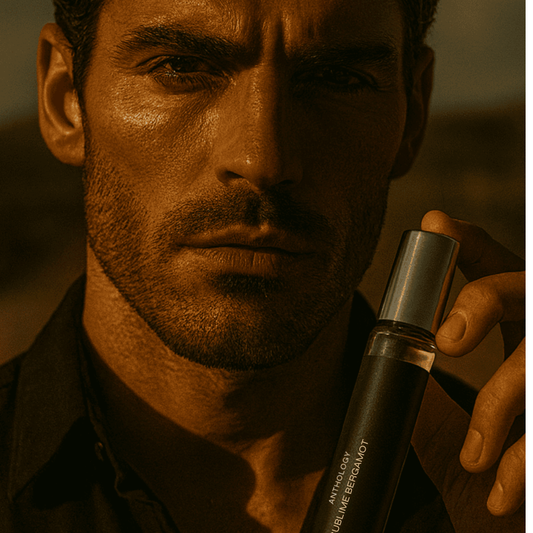
To keep your nose alert, rotate one of those with something brighter. Citrus Matcha opens with matcha and citrus over a soft fig heart and vetiver, Chilly Pacific brings blackcurrant, citron, mint and basil, and Sublime Bergamot pairs bergamot and Sichuan pepper with lavender, cedarwood and ambroxan. Switching between a warm and a fresh scent from day to day is the easiest way to keep smelling what you love.
Explore the full range in the Anthology Collection and build a rotation your nose will never tire of.