How Do I Blind Buy a Fragrance Without Regret?
Anthology BeautyShare
To blind buy a fragrance without regret, do three things before you pay: identify the fragrance family you already love, check the notes and accords against scents you have actually worn, and keep the financial risk small – a sample, a decant or an affordable perfume oil rather than a full luxury bottle. A blind buy is simply a fragrance bought without smelling it first. Done carelessly, it is a gamble. Done with a little homework, it becomes one of the great pleasures of collecting scent.
Why Blind Buying Is So Tempting (and So Risky)
Most of us now discover fragrance online: a glowing review, a beautifully written description, a friend who will not stop talking about a new favourite. The trouble is that words and pictures are a translation of scent, never the scent itself. A note list can sound like a dream – fig, cashmere, warm amber – and still settle on your skin as something you would never choose. Fragrance is also personal in a way that clothing is not; the same composition can feel radiant on one person and flat on another. The aim of a good blind buy is not to remove that uncertainty entirely, but to narrow it until the odds are firmly in your favour.
Start With What You Already Love
Your existing collection is the most reliable guide you have. Line up the fragrances you reach for most and look for what they share. Are they mostly warm and vanillic? Fresh and citrusy? Woody and quiet? Most perfumes belong to a broad family – floral, woody, amber (once called oriental), fresh, gourmand, chypre or fougère – and people tend to love one or two families far more than the rest. If every bottle you finish is a creamy amber, a sharp green chypre is a risky purchase however enthusiastic the reviews. If you are unsure how families work, our guide on how to read a perfume description like an expert explains how to decode them.
Equally useful is knowing what you dislike. Many people discover that one particular note – heavy oud, sharp aquatic notes, powdery iris, a certain kind of musk – spoils a scent for them every time. Make a short list of your "never again" notes and treat it as a filter: if one of them sits prominently in a description, move on.
Read Notes as a Timeline, Not a Shopping List
A note pyramid tells you how a fragrance moves. The top notes are the first impression and fade within minutes; the heart is the character of the scent for the next few hours; the base is what lingers on your skin and clothing at the end of the day. When blind buying, pay most attention to the heart and base, because that is what you will actually live with. A bright bergamot opening is lovely, but if the base is a smoky leather you dislike, the bergamot will not save it.
Look too at the words that describe texture and strength – creamy, powdery, resinous, airy, intimate, projecting. These tell you how a scent wears as much as what it smells of. Someone who loves close-to-skin fragrances will be happier with a "soft, intimate" sandalwood than with a "bold, room-filling" one, even if the note lists look similar.
Use Reviews Wisely
Community sites and fragrance forums are invaluable, but read them as data rather than verdicts. Look for patterns across many reviews instead of a single passionate opinion, and pay particular attention to reviewers who mention fragrances you know. If someone writes that a scent reminds them of a perfume you already own, that comparison is worth more than a paragraph of poetry. Be wary of hype: a fragrance that is everywhere on social media may be wonderful, but popularity tells you that many people like it, not that you will.
Finally, remember that climate, skin and season all play a part. A dense gourmand that reviewers adore in winter may feel cloying in a heatwave, and a scent described as lasting all day on one person may be gentler on drier skin.
Lower the Stakes
The single best way to avoid blind buy regret is to make each blind buy small. Before committing to a full bottle of something expensive, try a sample or a decant; a millilitre or two is enough to wear a fragrance properly over a couple of days. Our guide to the best way to sample perfume oils before buying explains how to test properly – on skin, over several hours, and more than once.
Perfume oils are another sensible route. A compact roll-on lets you explore a whole fragrance family for a fraction of the cost of a designer or niche bottle, and because oils sit close to the skin, they are forgiving if a scent turns out to be stronger or sweeter than you expected. A disappointing oil is a minor lesson; a disappointing full bottle is an expensive ornament.
The Safest Blind Buys: Families That Rarely Disappoint
Some styles are simply easier to love. Soft vanilla-and-amber compositions, clean musks, creamy woods and fresh citrus scents tend to be widely wearable and rarely polarising. Challenging territory – animalic notes, smoky birch tar, heavy oud, bitter green galbanum, sharp aldehydes – is better explored with a sample first. If you are buying for yourself and have no clear favourite yet, start in the crowd-pleasing families and branch out once you know your taste. And if you are working towards a true signature, our guide to choosing a signature scent that is truly yours is the natural next step.
Low-Risk Blind Buys at Anthology
If you want to try a new direction without the risk of a full bottle, these perfume oils are a good place to begin:
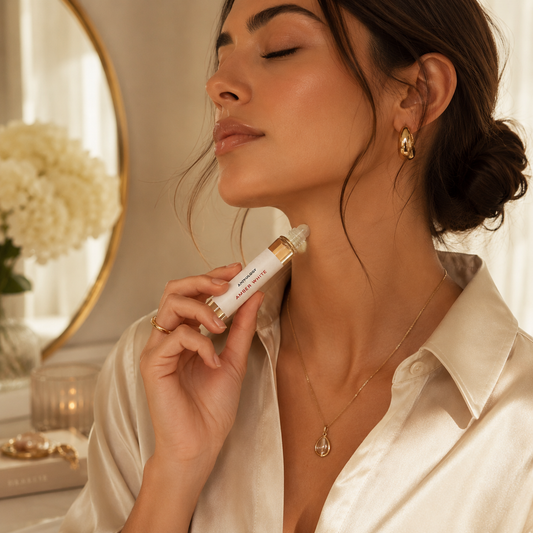
Amber White is an easy introduction to the warm, sweet side of perfumery, with vanilla orchid and jasmine over brown sugar, amber, tonka and soft musk. If you already enjoy vanilla, this is about as safe as a blind buy gets.
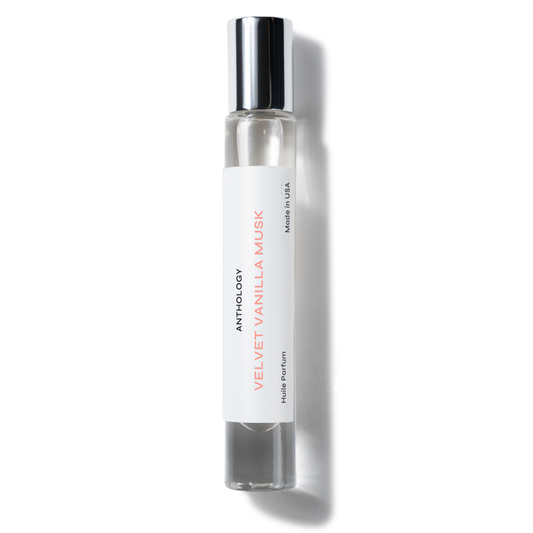
Velvet Vanilla Musk keeps things simpler still: vanilla and musk, soft and comforting, ideal for anyone who prefers a scent that stays close.
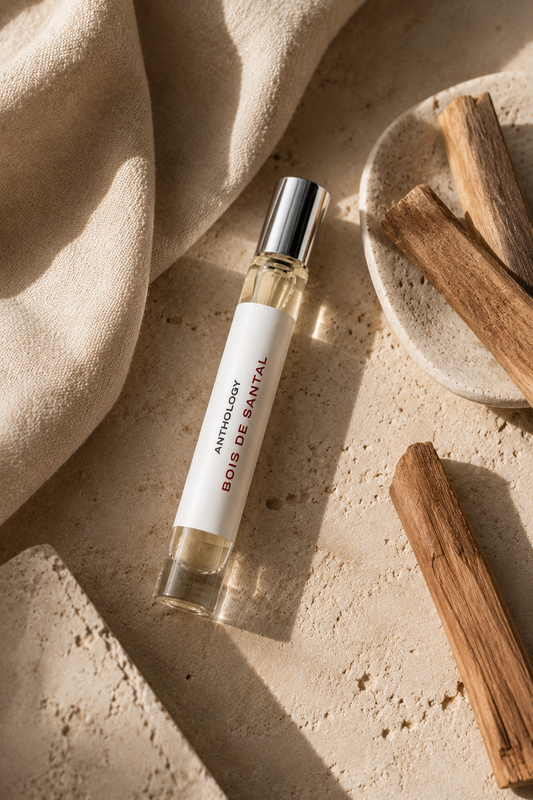
Bois de Santal suits lovers of quiet, creamy woods – cardamom, bergamot and pink pepper open onto sandalwood, violet leaf, papyrus and cedar, resting on leather and musk.
Citrus & Cedarwood is a fresh aromatic woody: lemon, grapefruit and bergamot with lavender, pink pepper and nutmeg, settling into cedarwood, musk and incense. A sound choice if your collection leans clean and bright.
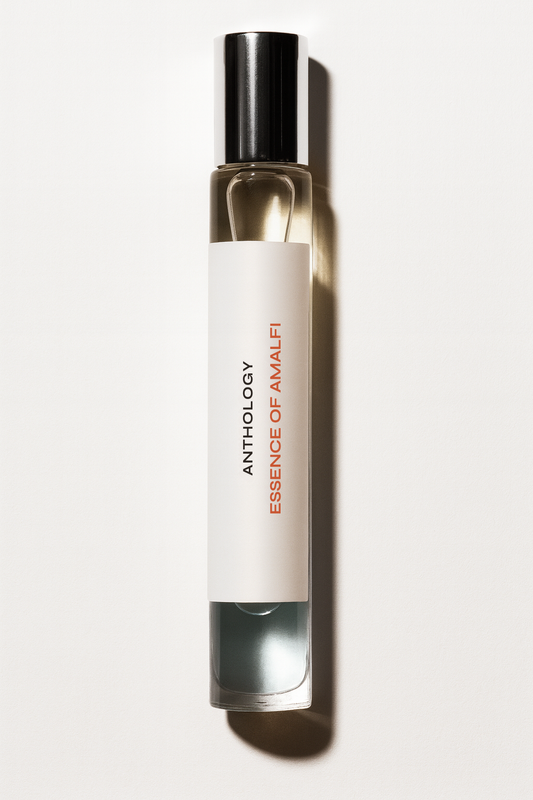
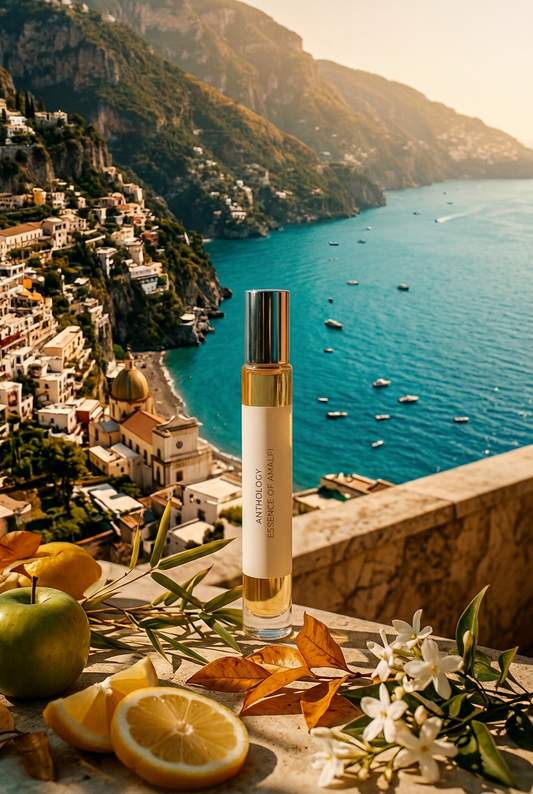
Essence of Amalfi captures sunny freshness with Amalfi lemon, green apple and jasmine over bamboo, cedarwood and amber – a cheerful, uncomplicated everyday scent.
Blind buying will never be entirely predictable, and that is part of its charm. Know your families, read the heart and base, trust patterns over hype and keep the stakes low, and most of your discoveries will be happy ones. Explore the full Anthology Collection to find your next one.