How Do I Read a Perfume Description Like an Expert?
Vandana MagnaniShare
To read a perfume description like an expert, look past the poetry and decode four things: the fragrance family, the structure of the notes (opening, heart and base), the words that describe texture and strength, and the concentration. The romantic copy tells you the mood a house wants to sell; the note list, the family and a handful of technical clues tell you how the scent will actually behave on your skin. Once you know which is which, a short paragraph can tell you almost as much as a sniff.
Start With the Family, Not the Adjectives
Before reading a single note, find the family. Words such as woody, floral, amber (once called oriental), fougère, chypre, gourmand, citrus or aromatic are the broad strokes of perfume classification, and most modern systems descend from the Fragrance Wheel that perfume writer Michael Edwards first published in 1983. A family tells you the overall shape of a scent before the details arrive: an "aromatic woody" will be dry and herbal, an "amber gourmand" warm and edible, a "fresh citrus" bright but brief.
Many descriptions now give this in a line of their own — a "Fragrance Profile" or "Olfactive Family". Read it first.
Read the Notes as a Timeline
The note list is usually arranged as a pyramid of top, heart and base notes — a structure taught to generations of perfumers and explained in more depth in our guide to fragrance notes: top, heart and base. The trick is to read it as a timeline rather than a shopping list.
The top notes are the first impression and the most fleeting: citrus, light spices, green and aqueous notes that lift off the skin within minutes. The heart is the character of the fragrance, usually florals, spices or fruits that hold the stage for a few hours. The base is what you will live with: woods, resins, musks, vanilla, amber and leather. An experienced reader weights the base most heavily, because that is what lingers on a scarf the next morning. A fragrance that opens with "sparkling bergamot" but rests on patchouli, incense and oud is not a citrus scent; it is a dark woody scent with a bright greeting.
Phrases such as "opens with", "at the heart" and "as it settles" are the pyramid in prose; translate them back into three tiers.
Know That Not Every Note Is an Ingredient
This is where most people are misled. A note list is a description of what you will smell, not a list of what is in the bottle. "Sea salt", "cashmere", "clean linen", "suede" and "amber woods" do not come from salt, goats, laundry or trees. They are accords — combinations of materials built to evoke an impression — or poetic shorthand for an aroma molecule. Our piece on the difference between a note and an accord covers this in detail.
Some clues are worth learning. "Amber" in perfumery is a warm, resinous accord, usually built around labdanum, vanilla and benzoin, rather than fossilised tree resin. "Amber woods" or "woody amber" usually signals powerful modern woody molecules that feel dry, radiant and long-lasting. "Musk" today almost always means clean synthetic musks. "Suede" and "leather" suggest a soft, slightly smoky, skin-like texture. Read these as sensations, not ingredients, and the description becomes far more useful.
Decode the Texture Words
The adjectives that seem decorative often carry real information about how a fragrance feels. A short glossary helps:
Fresh, crisp, sparkling, zesty — citrus or green top notes; expect a bright opening that fades fastest. Creamy, milky, velvety — sandalwood, coconut, lactonic or fig notes; soft and rounded. Powdery — iris, violet, heliotrope or musks; cosmetic and soft-focus. Resinous, balsamic — benzoin, labdanum, frankincense; warm, sticky and long-lasting. Smoky, leathery — birch tar, incense, guaiac wood; dark and textured. Close to the skin, intimate, skin scent — low projection by design; the scent stays near you rather than filling a room.
Words about strength are just as important. "Intense", "radiant" and "trail" point to noticeable sillage. "Soft", "airy", "sheer" and "whisper" mean the opposite.
Check the Concentration and the Label
The format matters as much as the notes. Extrait or parfum is the most concentrated spray form, eau de parfum sits in the middle, eau de toilette is lighter and eau de cologne lighter still; exact percentages vary from house to house, so treat the names as a guide rather than a guarantee. Perfume oils are different again: there is no alcohol to flash off, so the opening is gentler and the scent sits closer to the skin while lasting well.
On the box itself, the ingredient list will usually show "parfum" or "fragrance" as a single entry, followed by named allergens such as linalool, limonene, citral or coumarin. In the EU that list of declarable fragrance allergens has been expanded from 26 to more than 80 substances, so labels are becoming longer. Useful for sensitive skin, but no guide to smell: linalool appears in lavender, bergamot and countless florals.
Separate the Story From the Scent
Finally, learn to enjoy the marketing without being steered by it. "A moonlit walk through a Moroccan garden" is mood: the feeling the creator wanted. But the evidence lives in the family, the base notes and the texture words. A useful habit is to summarise any description in one line of your own — for example, "warm vanilla on smoky woods, soft suede, evening" — then compare that line with what you smell on skin after an hour. Over time you will find which families and base notes you return to, and our guide on whether a fragrance suits your personality can help you join the dots.
Practise on Anthology Perfume Oils
The best way to train your eye is to read a description and then test it. A few Anthology oils make good practice:
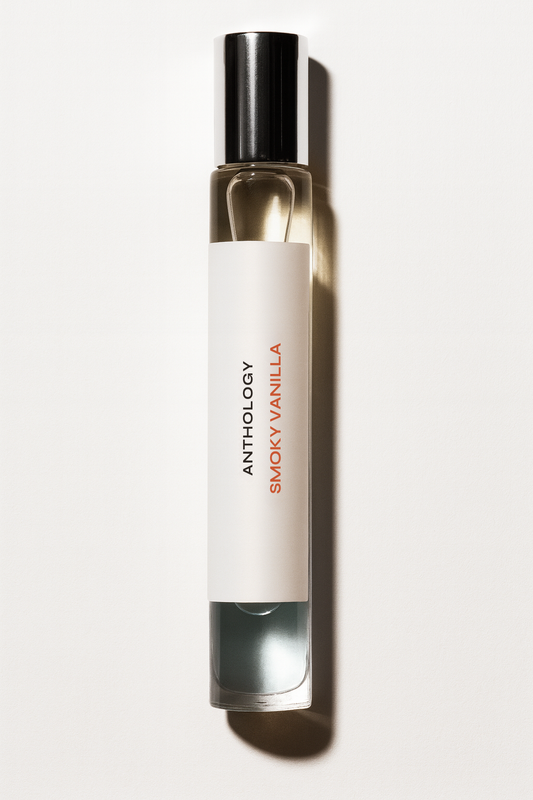
Smoky Vanilla lists its profile plainly — smoky, warm spicy, vanilla, resinous, leathery — with key notes of black pepper, vanilla absolute, suede, amber, incense and cedarwood. Note the "absolute" flagging the star ingredient.
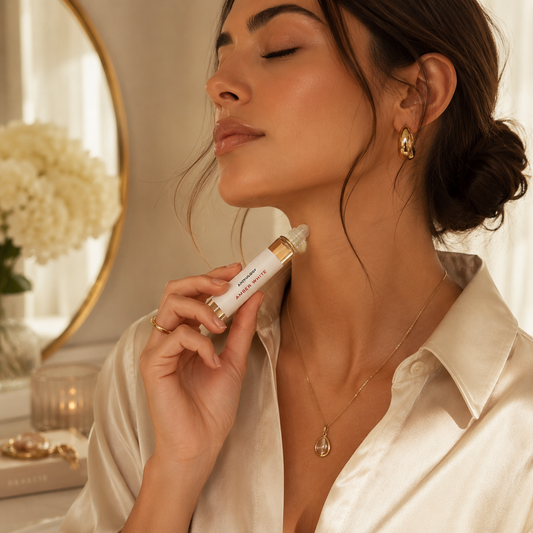
Amber White reads as a classic pyramid: vanilla orchid and jasmine to open, brown sugar and amber at the heart, then tonka bean, amber woods and soft musk in the dry-down. Its base tells you it is a warm gourmand, not a floral.
Citrus Matcha opens with matcha and citrus, moves to bitter orange and creamy fig, and settles on vetiver and cedarwood. "Soft sillage" and "stays close to the skin" are your strength clues.
Citrus & Cedarwood is described as an aromatic woody: lemon, grapefruit and bergamot up top, with lavender, pink pepper, nutmeg and geranium, and cedarwood, musk and incense beneath — a textbook example of a family name matching its notes.
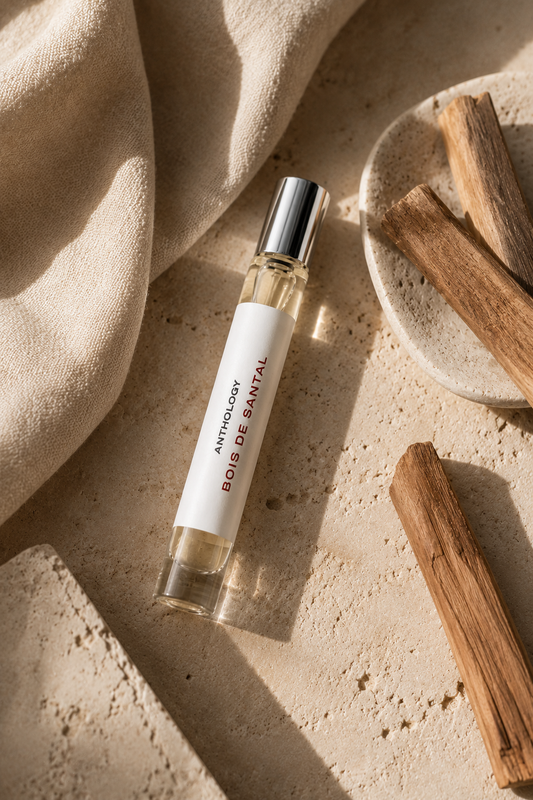
Bois de Santal describes "a warm, addictive sandalwood accord" with a sparkling, spicy opening and a close-to-skin aura — the word accord telling you it is an impression of creamy sandalwood, built with airy woods.
Read, wear, compare, and the language of perfume soon becomes your own. Explore every scent in the Anthology Collection and put your new vocabulary to work.