Note Deep Dive: Cinnamon and Clove — The Spices of the Season
Anthology BeautyShare
Some notes whisper. Cinnamon and clove announce themselves. Open a jar of either and the room changes: mulled wine on the hob, an orange studded for the windowsill, a slice of spiced cake, the hush of a candlelit church in December. Few materials carry quite so much memory, and few are so easily misunderstood in perfumery, where these kitchen-cupboard spices become something darker, drier and far more glamorous than their culinary reputation suggests.
What Are Cinnamon and Clove?
Clove is the dried, unopened flower bud of Syzygium aromaticum, an evergreen tree in the myrtle family. Picked while still pink and dried in the sun until they turn rusty brown, the buds take the shape of tiny nails, which is where the name comes from: the Latin clavus, the French clou. Cinnamon, by contrast, is bark. True cinnamon comes from the inner bark of Cinnamomum verum, native to Sri Lanka, peeled and rolled into fragile, papery quills; its tougher, more pungent cousin cassia (Cinnamomum cassia) comes largely from China and South-East Asia. One is a flower that never opened, the other the skin of a tree, yet in the nose they sit side by side as the two great warm spices.
A History Written in the Spice Trade
Cloves grew for most of history on just a handful of small volcanic islands in the northern Moluccas of present-day Indonesia, including Ternate and Tidore. That did not stop them travelling extraordinary distances. Archaeologists excavating a Bronze Age house at Terqa, in modern Syria, found cloves dating to around 1700 BCE, thousands of kilometres from where they grew. In Han-dynasty China, courtiers are said to have held a clove in their mouths to sweeten their breath before addressing the emperor.
Cinnamon's story is equally old. It appears among the ingredients of the holy anointing oil in the Book of Exodus, and the Greek historian Herodotus repeated a fabulous tale of great birds that built their nests from cinnamon sticks on inaccessible cliffs, a story almost certainly encouraged by traders keen to hide their sources and justify their prices.
From the sixteenth century, both spices became prizes of empire. The Portuguese reached Ceylon in the early 1500s, followed by the Dutch and later the British, each fighting to control the cinnamon trade. The Dutch East India Company went further with cloves, attempting to confine cultivation to a few islands it controlled and destroying trees elsewhere to protect its monopoly. That grip was famously broken by the French administrator Pierre Poivre, who smuggled clove seedlings to Mauritius around 1770. From there cloves spread across the Indian Ocean, and by the nineteenth century Zanzibar had become one of the world's great clove producers.
The Smell of Cinnamon and Clove
Clove's scent is dominated by eugenol, which makes up the large majority of clove bud oil. Eugenol is warm, sweet, slightly medicinal and woody, the smell many people associate with a dentist's surgery as well as with Christmas baking. Perfumers distinguish between clove bud oil, the richest and roundest, and the harsher, cheaper oils distilled from leaves and stems. Eugenol is also the secret behind one of perfumery's classic illusions: the carnation. Carnation flowers yield very little usable extract, so the spicy, peppery-floral carnation accord of classic perfumery is largely built on eugenol and its relatives. Caron's Bellodgia (1927), Ernest Daltroff's celebrated carnation, is the textbook example.
Cinnamon bark oil owes its character to cinnamaldehyde: sweet, hot, almost sugary, the unmistakable smell of cinnamon buns. It is also a potent skin sensitiser, so its use in fragrance is tightly restricted under IFRA standards. Perfumers therefore tend to use it in tiny amounts, lean on the gentler, clove-like cinnamon leaf oil (which is rich in eugenol), or build a cinnamon effect from other materials. The result in a finished perfume is less bakery, more glow: a warm, golden shimmer around the heart.
Cinnamon and Clove in Perfumery
These spices are rarely the star; they are the spark. In the oriental (or amber) tradition they lend heat to vanilla, tonka, labdanum and benzoin, and the 1970s and 1980s were their golden age, with YSL Opium (1977) wrapping its resinous heart in clove and spice. With rose, clove creates one of the oldest pairings in perfumery, sharpening the petals and giving them a velvety, almost peppery depth. With citrus, they recall the Tudor pomander and the Christmas orange stuck with cloves. In boozy and gourmand compositions, cinnamon adds the warmth of mulled wine or a spiced cognac, as in Kilian Angels' Share, which places cinnamon at its heart beside tonka and oak. Even in fougères and aromatic scents, a touch of spice can warm the cool edges of lavender, as it does in Tom Ford Lavender Extreme, where cinnamon sits alongside lavender, geranium and rose.
The craft lies in restraint. Too much clove reads as medicinal; too much cinnamon feels like a scented candle. In the right dose, both create the sensation perfumers love most in winter fragrance: radiance that feels like heat on the skin.
Why Warm Spices Shine in Perfume Oil
Spices are volatile and bright in the opening of an alcohol-based spray, often flashing past in minutes. In a perfume oil, there is no alcohol blast, so the spice unfolds more slowly and stays nestled in the warmth of the base notes. Applied to pulse points, a spiced oil warms with your skin and reads as a soft, golden aura rather than a sharp burst, which is exactly how these notes are meant to be worn on a cold evening.
Cinnamon and Clove at Anthology
For the most direct taste of cinnamon, reach for Angels' Elixir, our boozy amber gourmand: golden cognac opens onto a heart of spicy cinnamon, oak and tonka, before praline and creamy vanilla settle in. It pairs naturally with our journey through the cognac cellars in Kilian Angels' Share: Cognac, Cinnamon and Pure Indulgence.
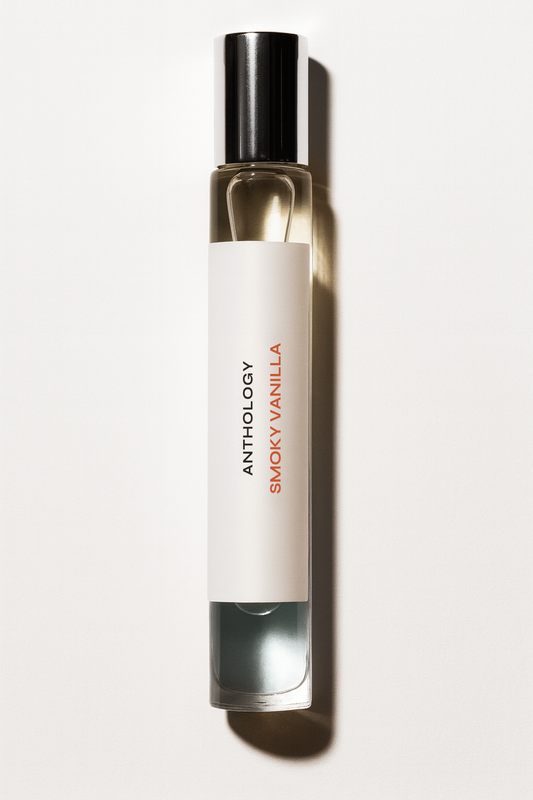
If you love the darker, more resinous side of spice, Vanilla Woods wraps rich vanilla in warm spices and dark, resinous tones, with saffron, coriander, plum, coffee, leather and smoky woods. Smoky Vanilla opens with a spark of black pepper and warm resins before melting into vanilla, suede, amber and incense: the candlelit church in a bottle.
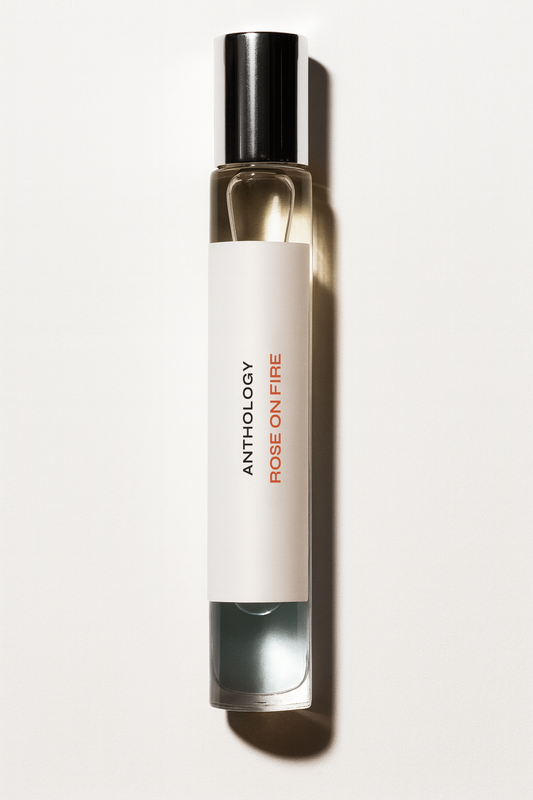
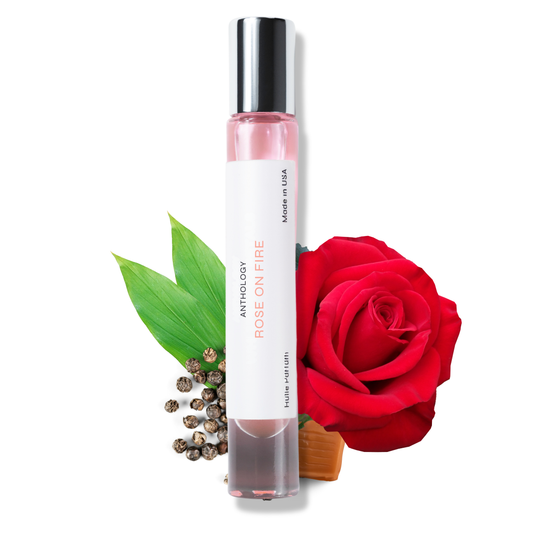
For spice with a more aromatic accent, Dapper Secrets brings star anise and sweet, spicy nutmeg to a heart of lavender over tonka, guaiac wood and tobacco. And for the classic rose-and-spice pairing, Rose on Fire sets Bulgarian and Turkish rose and Rose de Mai ablaze with Sichuan pepper and turmeric over patchouli, tonka and musk.
To explore the wider spice cabinet, read our Note Deep Dive on Cardamom and our guide to the difference between spicy and warm fragrances.
As the evenings draw in and the season of mulled wine begins, let a little spice do what it has done for thousands of years: bring warmth, light and a touch of luxury to the darkest months. Discover your winter signature in the Anthology Collection.