Sweater Weather Scents: Cosy Fragrances for Cold Evenings
Vandana MagnaniShare
There is a particular evening each October when the air turns sharp, the light fails before six, and the first jumper of the season comes out of the drawer. That moment deserves a fragrance of its own. Sweater weather scents are not simply "heavier" perfumes — they are fragrances built around softness, texture and closeness: the feel of cashmere against the throat, the creaminess of warm milk, the hush of a room lit by lamps. Here is what makes a fragrance feel cosy, and how to choose one for the cold evenings ahead.
What Makes a Fragrance Feel Cosy?
Cosiness is less a fragrance family than a sensation. The Danes have a word for it — hygge, which Oxford Dictionaries defined in 2016 as "a quality of cosiness and comfortable conviviality" when it shortlisted the word for its Word of the Year. In scent, that feeling tends to come from three qualities working together: warmth (amber, resins, gentle spice), softness (musks and smooth woods that blur the edges of a composition) and familiarity (notes we associate with comfort — vanilla, toasted sugar, tea, a hint of something baked).
What a cosy fragrance avoids is just as telling. Sharp citrus, salty aquatic accords and bracing green notes feel like open windows and bright mornings. A sweater weather scent draws the curtains. It wears close to the body, rewards anyone who leans in, and smells better at arm's length than across a room.
The Cashmere Effect: Soft Woods and Musks
Perfumers have long tried to translate the feel of fine knitwear into smell, and modern chemistry gave them the perfect tool. In the late 1970s, chemists at International Flavors & Fragrances (IFF) discovered Cashmeran — a material that sits somewhere between musk and wood, with a warm, slightly powdery, faintly resinous character. Its name says everything about the effect it creates: a plush, brushed texture that perfumers now reach for whenever they want a composition to feel soft to the touch.
You will often see this effect listed in fragrance notes as "cashmere wood" or "cashmere musk". Alongside it sit the clean, skin-like musks and smooth woods such as sandalwood and cedar, which give a fragrance a gentle hum rather than a loud projection. Together they create the olfactory equivalent of a well-loved jumper: nothing showy, simply comforting. If this close, intimate style appeals, our guide to skin scents explores the same idea from another angle.
Creamy, Toasted and Edible
The second pillar of cosiness is the kitchen. Gourmand notes — vanilla, tonka, brown sugar, coffee, caramelised accords — tap into some of our deepest scent memories: hot drinks, baking, the smell of a warm house after coming in from the cold. Used with restraint, they make a fragrance feel nourishing rather than sugary.
The secret is balance. The most beautiful cosy gourmands pair their sweetness with something dry or woody, so the result smells like a cashmere blanket draped over a leather armchair rather than a bakery counter. Tonka bean is especially useful here, with its hay-like, almond-tinged warmth — we explore it in depth in our Tonka Bean Note Deep Dive.
Fragrance and Knitwear: Wearing Scent Under Layers
Cold evenings change where fragrance lives. Under a roll-neck or a thick scarf, scent is trapped in a small pocket of body warmth, so it rises gently each time you move, adjust a collar or pull a sleeve down over your wrist. This is part of the pleasure of sweater weather scents: they are released in soft waves rather than worn as a cloud.
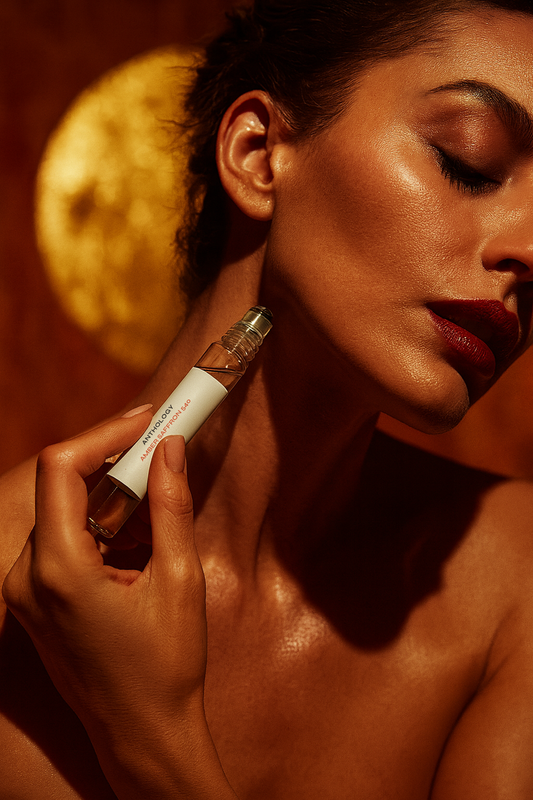
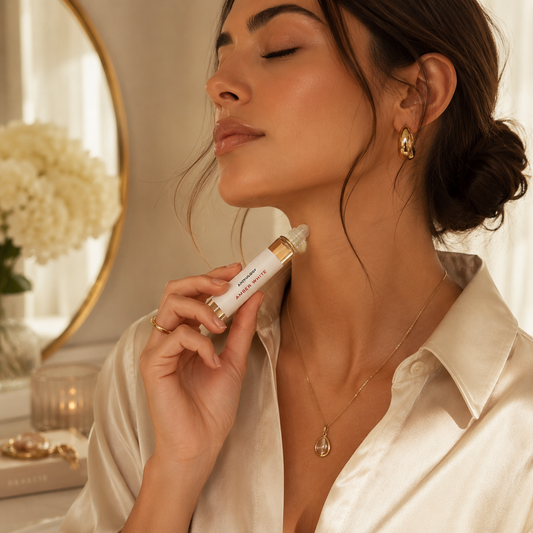
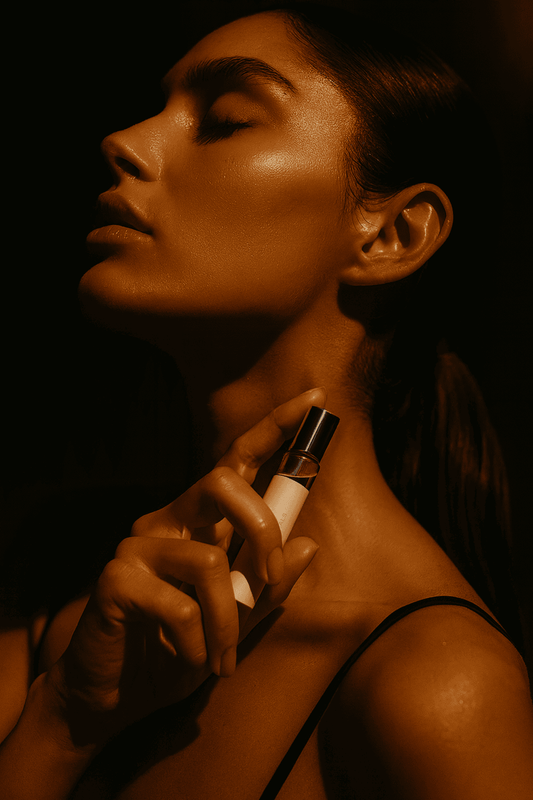
A few simple habits make the most of it. Apply to the base of the throat and the sides of the neck, where a collar will hold the warmth. Apply to the inner wrists before pulling on your jumper, so the scent greets you each time you push up your sleeves. And keep perfume oil on skin rather than directly on cashmere, wool or silk — oils can mark delicate fibres, and skin gives the fragrance the warmth it needs to unfold. Your knitwear will still carry a faint trace of you by the end of the evening, which is exactly the point.
Why Perfume Oil Suits Cold Evenings
Perfume oil is, by nature, an intimate format. Without alcohol to lift it into the air, it sits close to the skin and develops slowly with body heat — precisely the behaviour you want from a fragrance worn under layers. It is also gentle on skin that has been dried out by cold wind and central heating, and a roll-on fits neatly into a coat pocket for a quick touch-up before dinner. For a fuller picture of how temperature affects scent, see our guide to the best perfume oils for winter, and for the seasonal changeover, transitioning your wardrobe from summer to autumn.
Sweater Weather Scents at Anthology
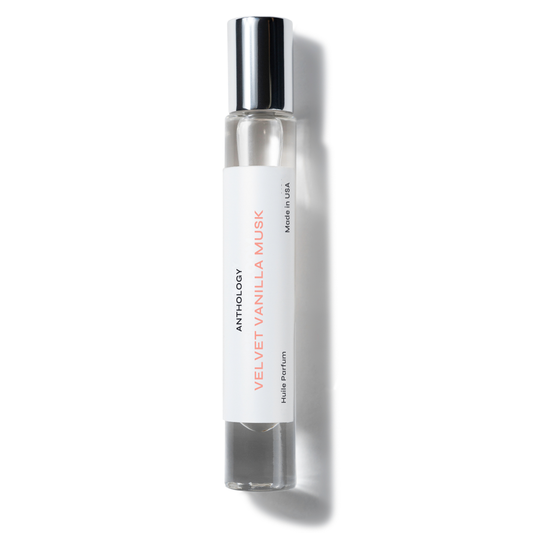
For pure, enveloping softness, our Velvet Vanilla Musk Perfume Oil pairs vanilla with musk — the fragrance equivalent of a cream knit pulled straight from a warm radiator. Our Amber White Perfume Oil layers vanilla orchid and jasmine over brown sugar, amber, tonka, amber woods and soft musk, for a glowing, blanket-like warmth.
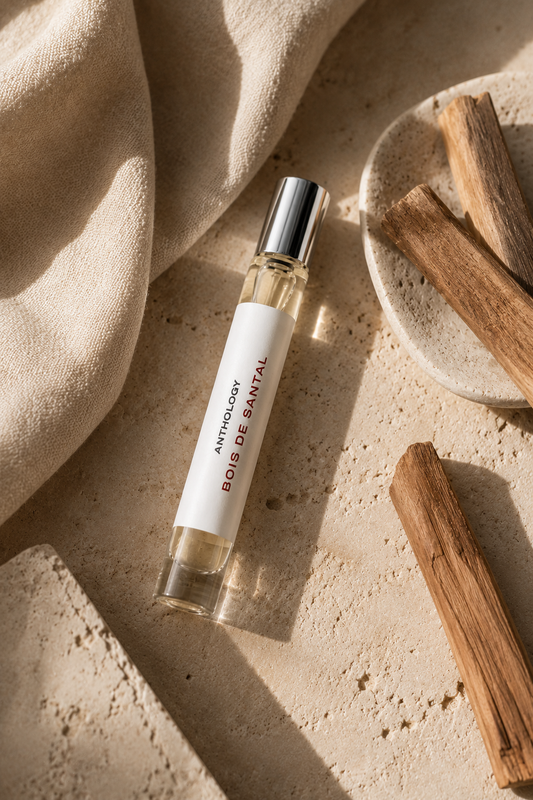
If you prefer your comfort a little drier, our Bois de Santal Perfume Oil opens with cardamom, bergamot and pink pepper before settling into sandalwood, cedar, papyrus, leather and musk — a close-to-skin aura that suits a grey afternoon with a book. Our Viva La Rose Perfume Oil brings a romantic twist, with black cherry, pink pepper, May rose and violet resting on cashmere wood, amber and musk.
For candlelit evenings, our Vanilla Woods Perfume Oil wraps vanilla in saffron, coriander, plum, coffee, leather and smoky woods, while our Dapper Secrets Perfume Oil blends lavender, star anise, nutmeg, tonka and tobacco for an aromatic warmth that feels made for a fireside armchair.
Explore the full Anthology Perfume Oils collection and find the scent you will reach for every time the jumpers come out.