Note Deep Dive: Tonka Bean — Vanilla's Darker Cousin
Vandana MagnaniShare
Crack open a dried tonka bean and the scent that escapes is almost impossible to pin down. It smells of warm hay drying in late-summer sun, of toasted almonds and a whisper of cherry, of vanilla custard with something darker and more tobacco-like running underneath. Tonka is often described as vanilla's darker cousin, and the comparison is apt: it shares vanilla's comforting sweetness but adds a bitter, almost smoky depth that makes it endlessly useful to perfumers. Few raw materials have shaped modern perfumery as profoundly, and fewer still are so quietly present in the fragrances we love.
What Is Tonka Bean?
The tonka bean is the seed of Dipteryx odorata, a towering tree native to northern South America, with Venezuela, Brazil and Colombia among its main producers. Each wrinkled, glossy black bean sits inside a single fleshy fruit. Once harvested, the beans are dried and traditionally cured, and as they mature a fine frost of white crystals blooms across their surface. Those crystals are coumarin, the aromatic compound responsible for tonka's unmistakable scent, and the beans contain only a few per cent of it.
The name itself comes from the region: "tonka" is drawn from the Galibi language of French Guiana, while the tree's old botanical name, Coumarouna, derives from the Tupi word for it. That second name would go on to give perfumery one of its most important molecules.
From Rainforest Seed to Laboratory Landmark
In the 1820s, chemists isolated the sweet-smelling crystals from tonka beans and named them coumarin, after coumarou, the French word for the bean. It was a curiosity at first, but in 1868 the English chemist William Henry Perkin succeeded in synthesising coumarin in the laboratory. That breakthrough changed the course of fragrance history.
In 1882 the perfumer Paul Parquet used synthetic coumarin in Houbigant's Fougère Royale, pairing it with lavender, citrus, geranium, oakmoss and musk. It is widely credited as the first perfume built around a synthetic material, and it gave its name to an entire fragrance family, the fougère. A few years later, in 1889, Guerlain's Jicky combined coumarin with vanillin to create a bold, abstract composition that many historians regard as the first truly modern perfume. In other words, the scent of the tonka bean sits at the very birth of modern perfumery.
The Smell of Tonka
Tonka is a note of many facets, which is precisely why perfumers adore it. At its heart is coumarin's characteristic sweetness: warm, powdery and reminiscent of freshly cut hay. Around that core you will find toasted almond and marzipan, a soft caramelised quality, hints of cherry and a faintly bitter, tobacco-leaf dryness that keeps the sweetness from becoming cloying.
Natural tonka absolute, obtained by solvent extraction, is richer and more complex than coumarin alone, carrying darker, almost leathery undertones alongside its creamy warmth. On skin it reads as comforting and intimate, a note that seems to radiate body heat rather than project across a room.
Tonka's Role in Perfumery
Because tonka sits comfortably between sweet and dry, it is one of perfumery's great connectors. In fougères it rounds out the sharpness of lavender and herbs. In ambers and orientals it deepens resins and spices, and alongside vanilla it creates a richer, more grown-up sweetness. In gourmands it adds a roasted, nutty dimension to notes such as cocoa, praline and caramel, while in masculine compositions it softens woods and tobacco without making them sugary.
Classic pairings include lavender, bergamot, tobacco, cinnamon, cocoa, sandalwood and amber. Tonka also lends warmth to florals, giving rose and jasmine a sensual, skin-like finish in the base. It is no exaggeration to say that a large share of contemporary fragrances, from fresh men's scents to dessert-like gourmands, owe part of their appeal to this humble seed.
Why Tonka Shines in Perfume Oil
Tonka is a base note by nature, slow to evaporate and quick to settle into skin. In a perfume oil, without alcohol to lift and scatter it, tonka unfolds even more gently. The oil format keeps its creamy, almond-and-hay warmth close to the body, where it melds with your own skin chemistry and develops over hours. Applied to pulse points, a tonka-rich perfume oil creates that coveted "your skin but better" effect: soft, enveloping and remarkably long-lasting. It is a note made for cooler days, candlelit evenings and the cosy months ahead.
Tonka at Anthology
Several of our perfume oils use tonka bean to add depth, warmth and that irresistible comforting quality.
Dapper Secrets is a modern take on the fougère spirit, opening with bergamot and lemon before a heart of star anise, nutmeg and lavender, and a base of tonka bean, guaiac wood and tobacco. It is a refined, magnetic scent for those who love the classic marriage of lavender and tonka.
Angels Elixir places tonka in a boozy, gourmand setting: golden cognac gives way to cinnamon, oak wood and smooth tonka bean, drying down to praline and creamy vanilla. It is perfect for autumn and winter evenings.
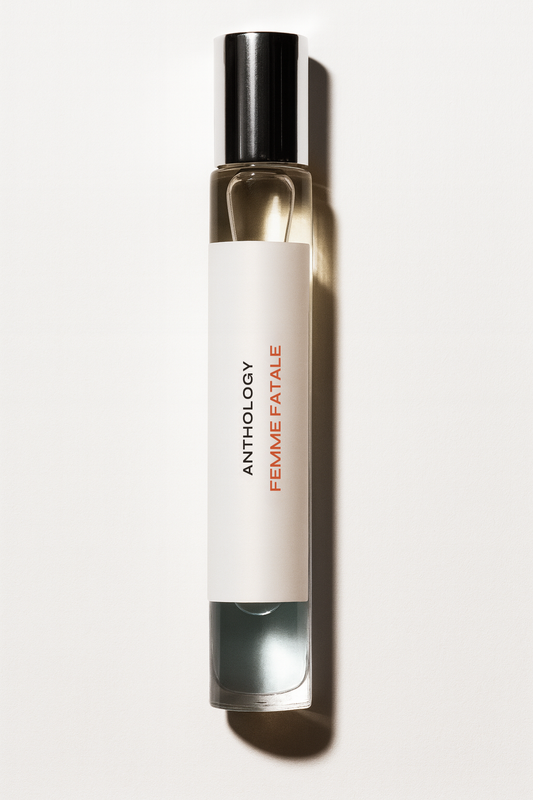
Femme Fatale shows tonka's sensual side. Bergamot and sweet almond lead into jasmine sambac, tuberose and Bulgarian rose, before a base of roasted tonka bean, warm cocoa and creamy vanilla.
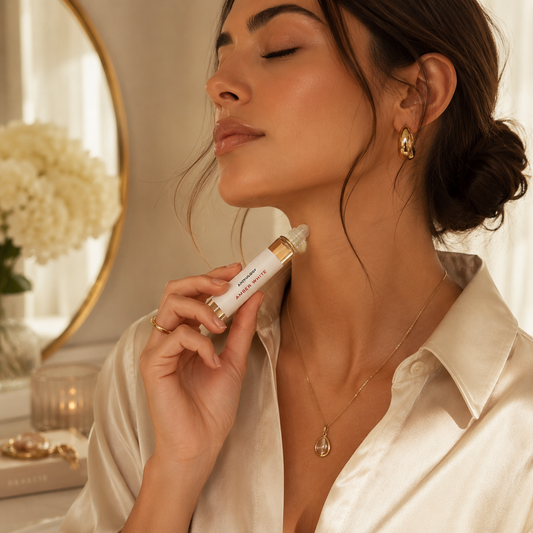
Amber Soir is a rich amber composition whose dry-down of soft vanilla, warm tonka and smooth woods leaves a refined, addictive trail. For something softer and sweeter, Amber White pairs vanilla orchid, jasmine, brown sugar and amber with a base of tonka bean, amber woods and musk.
If tonka's warmth appeals to you, you may also enjoy our guide to spicy versus warm fragrances. Discover every scent in our Anthology Collection and find the tonka-kissed perfume oil that feels most like you.