Tom Ford Oud Wood: The Fragrance That Introduced the West to Oud
Anthology BeautyShare
There are fragrances that follow a trend, and there are fragrances that start one. When Tom Ford released Oud Wood in 2007, oud was a word most Western perfume lovers had never heard — a sacred, smoky material treasured for centuries across the Middle East and South Asia, but almost absent from the department-store counter. Within a few years it was everywhere, from designer flankers to niche boutiques. Oud Wood did not invent oud, but it translated it, and in doing so it changed the vocabulary of modern perfumery.
A Fashion Designer's Private Blend
Oud Wood arrived as part of the first wave of Tom Ford's Private Blend collection in 2007, the premium line that sits above the house's mainline fragrances. Ford had already flirted with the material: as creative director at Yves Saint Laurent he had overseen M7 in 2002, a daring masculine that used an oud note at a time when the mainstream market was dominated by fresh aquatics. M7 was ahead of its moment. Five years later, with his own name on the bottle and a line designed for connoisseurs rather than the mass market, Ford returned to oud — this time with a far more polished, wearable interpretation.
The Private Blend concept, which we explore in our piece on how Tom Ford Private Blend rewrote luxury perfumery, was built on rare materials, bold themes and fashion-house glamour. Oud Wood became one of its quiet pillars: less theatrical than some of its siblings, but arguably the most influential.
The Perfumer: Richard Herpin
Oud Wood was composed by perfumer Richard Herpin. His brief was a delicate one: to capture the depth and mystery of oud for an audience unaccustomed to its more challenging facets. Traditional oud oils can be intensely animalic, medicinal or barnyard-like — qualities beloved by seasoned enthusiasts but potentially startling to newcomers. Herpin's solution was to surround a smooth, refined oud accord with familiar, comforting woods and spices, so that the oud reads as dark, dry and luxurious rather than raw.
The result is often described as a "gateway oud": recognisably smoky and exotic, yet as easy to wear as a fine cashmere jumper. If you want to understand the raw material itself — the resin that forms in infected Aquilaria trees and the centuries-old trade behind it — our Oud Note Deep Dive tells that story in full.
The Scent: Smoke, Spice and Polished Wood
Oud Wood's commonly published pyramid opens with rosewood, cardamom and Sichuan (Chinese) pepper. The cardamom brings a cool, slightly camphorous sweetness, while the pepper adds a tingling, almost citrusy fizz rather than heat. Rosewood lends a soft, rosy-woody smoothness that takes the edge off the opening.
At the heart sits oud, flanked by sandalwood and vetiver. This is the clever part of the composition: the creamy sandalwood rounds the oud's dryness, and the earthy, slightly smoky vetiver extends it, so the three woods blur into a single plush, burnished texture. There is no announced floral note — the fragrance is all wood, smoke and air.
The base settles into tonka bean, vanilla and amber, a warm, softly sweet foundation that keeps the dry-down cosy rather than austere. On skin, Oud Wood is famously close and elegant: a refined aura rather than a cloud, the kind of scent that is noticed when someone leans in. More recently, a parfum concentration has joined the original eau de parfum for those who want more depth and staying power.
Cultural Impact: The Oud Boom
It is difficult to overstate how much Oud Wood changed the market. In the years that followed, oud became one of the defining notes of luxury perfumery in the West. Designer houses released oud editions of their best-sellers, niche brands built entire collections around it, and "oud" became a byword for opulence on everything from candles to body washes.
Oud Wood is widely regarded as one of the first major Western luxury fragrances to bring oud to a mainstream audience, and it remains a benchmark against which other "approachable" ouds are judged. Its success also opened doors in the other direction: many Western wearers who started with Oud Wood went on to discover traditional oud oils and attars, and the heritage of Middle Eastern perfumery gained a far wider appreciation. If that journey appeals to you, our guide on how to find your perfect oud fragrance is a good next step.
Part of its staying power is versatility. Oud Wood is shared happily by men and women, works in a boardroom as well as at dinner, and suits cool autumn evenings especially well. It is a fragrance that signals quiet confidence rather than spectacle — very much in keeping with Ford's own polished aesthetic.
Why the Oud Wood Style Suits Perfume Oil
Dry woods, soft spices and ambery bases are a natural match for perfume oil. Without the alcohol lift of an eau de parfum, an oil sits close to the skin and unfolds slowly, which flatters exactly the kind of intimate, burnished aura that made Oud Wood famous. A touch on the pulse points and the base of the throat gives a warm, personal trail that lasts through the evening and can be refreshed discreetly with a roll-on.
Capturing the Oud Wood Mood with Anthology
If you would like to smell the original, we carry samples of Tom Ford Oud Wood — an ideal way to try it before committing to a full bottle. And if you love its smoky-woody character, these Anthology perfume oils share its spirit (they are our own compositions, not replicas):
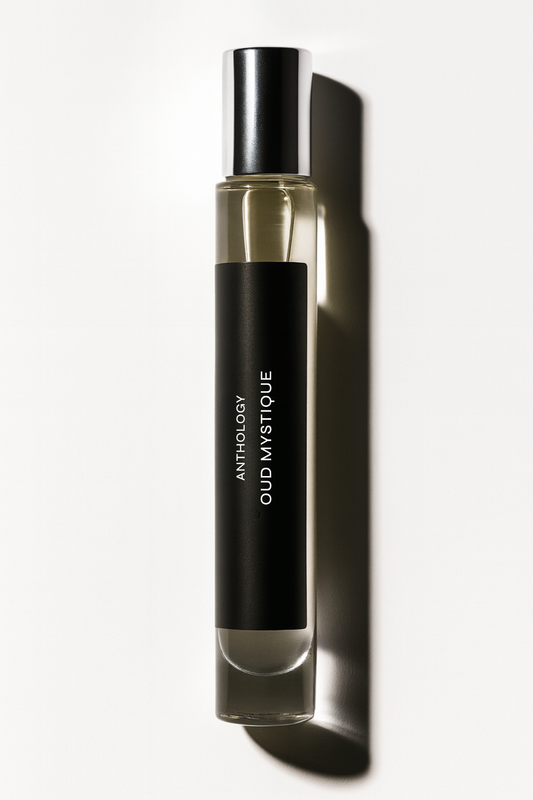
Oud Mystique Perfume Oil is the closest in mood: an opening of cardamom and pepper over a heart of oud wood and creamy vanilla, settling into amber, vetiver and sweet patchouli. It shares Oud Wood's spice-and-wood structure, with a little more sweetness and depth.
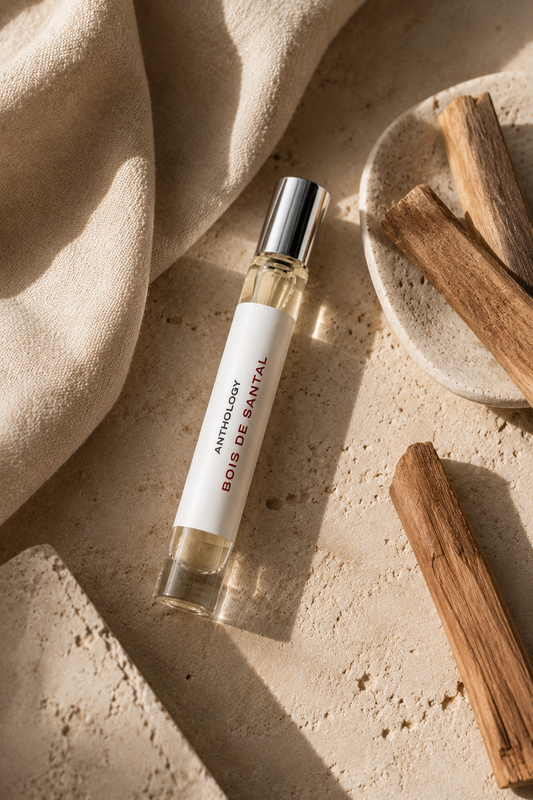
Bois de Santal Perfume Oil picks up the creamy-wood side of the story: cardamom, bergamot and pink pepper over sandalwood, violet leaf, papyrus, cedar and leather, with a soft musky close-to-skin aura. Wear it on its own or layer it under Oud Mystique for a smoother, more sandalwood-rich effect.
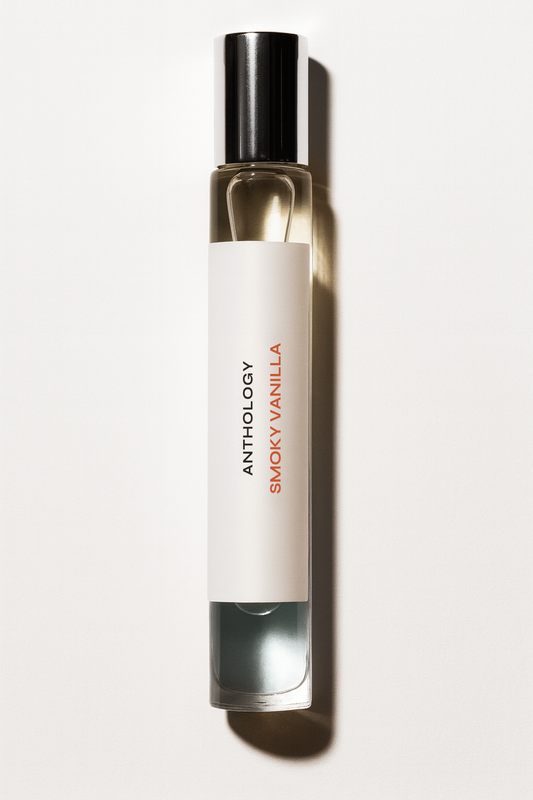
Smoky Vanilla Perfume Oil leans into the warm base: a spark of black pepper and warm resins melting into vanilla, suede, amber, incense and cedarwood. It is perfect for anyone who loves Oud Wood's cosy tonka-vanilla dry-down.
Vanilla Woods Perfume Oil offers a darker, more gourmand twist, with vanilla wrapped in saffron, coriander and plum, coffee, leather and smoky woods — a rich choice for long winter nights.
Explore the full range of our long-lasting oils in the Anthology Collection, and find the smoky, woody signature that feels like yours.