What Makes a Fragrance a Classic? The Anatomy of Timelessness
Anthology BeautyShare
A fragrance becomes a classic when it outlives the moment that made it. It has a clear, almost single-minded idea; a structure so well balanced that other perfumers borrow it for decades; and a character that still feels relevant to people who were not born when it launched. Fame helps, but fame alone is not enough — plenty of bestsellers vanish within a decade. The classics are the ones that keep being worn, copied, argued over and remembered long after the advertising has stopped.
What Do We Mean by a "Classic"?
In perfumery, "classic" is not a family or a style. A classic can be a sparkling cologne, a smoky chypre or a sweet, ambery oriental. What these scents share is a kind of gravitational pull: they become reference points. Perfumers study them, critics measure new launches against them, and whole genres trace their family tree back to them. Think of a classic less as an old perfume and more as a fixed star — something the rest of the fragrance world navigates by.
That is why age alone does not qualify a scent. Many perfumes from the early twentieth century are now forgotten curiosities. The ones that survive did something that still makes sense to the nose today.
A Clear Idea, Executed with Restraint
Nearly every enduring fragrance can be summed up in a sentence. Guerlain's Jicky (1889), created by Aimé Guerlain, set fresh lavender and citrus against a warm, animalic base and is often described as one of the first modern perfumes, built on synthetics as much as naturals. Chanel No. 5 (1921), composed by Ernest Beaux, made a then-daring overdose of aldehydes the signature of an abstract floral that smelled of no single flower. Dior's Eau Sauvage (1966), by Edmond Roudnitska, took the humble eau de cologne and gave it a luminous, airy heart — it is widely credited as the first major fragrance to use Hedione, a jasmine-like molecule that gives citrus a sense of space.
In each case the idea is legible. You can smell what the perfumer was trying to say. Classics rarely shout with twenty competing notes; they make one bold decision and support it with quiet, impeccable craftsmanship.
A Structure Others Can Build On
The truest sign of a classic is that it founds a lineage. Houbigant's Fougère Royale (1882) gave its name to an entire family — the lavender, coumarin and moss accord that still underpins countless barbershop and modern men's fragrances, as we explore in our guide to fougère fragrances. Coty's Chypre (1917) did the same for the bergamot, labdanum and oakmoss structure that became the chypre family. These perfumes were not only beautiful; they were blueprints.
A great structure is generous. It leaves room for later perfumers to swap a material, add a fruit or soften the base, and still be recognisably part of the same conversation. When a scent becomes a template, it has stepped out of fashion and into history.
Born of Its Moment, Bigger Than It
Classics capture the mood of their era without being trapped by it. Shalimar (1925), by Jacques Guerlain, arrived in the jazz-age fascination with the exotic and the opulent; the oft-told house story has it that it grew from an experiment of pouring ethyl vanillin into Jicky. Its smoky vanilla and resinous amber felt shockingly sensual at the time — and still read as plush and glamorous today. The House of Guerlain alone shows how a single family of perfumers could produce several such landmarks across generations.
The trick is balance. A scent that leans entirely on a passing trend dates as quickly as the trend. One that channels the emotion behind it — freedom, luxury, rebellion, cleanliness — keeps finding new wearers who feel the same thing.
The Test of Time: Memory, Reformulation and Archives
Surviving decades is harder than it looks. Raw materials change, natural harvests vary and safety standards evolve, so most long-lived fragrances have been reformulated, sometimes several times. Part of what makes a classic is that its character survives these adjustments: the idea is strong enough that a careful perfumer can rebuild it with different materials and still capture its soul.
The perfume world takes this heritage seriously. The Osmothèque in Versailles, founded in 1990 by perfumer Jean Kerléo, is a living archive that preserves thousands of fragrances — including many no longer sold — by keeping and recreating their original formulas. It exists precisely because the great perfumes are considered cultural works, as worthy of conservation as a painting or a score.
Memory matters too. Classics are woven into family stories: the bottle on a grandmother's dressing table, a father's aftershave, the scent of a first evening out. That emotional inheritance keeps them alive in ways sales figures never capture. It also explains why houses so often extend their icons through new versions, a strategy we unpack in our guide to fragrance flankers.
Will Today's Hits Become Tomorrow's Classics?
Every era wonders which of its favourites will last. The best clues are the same ones that worked a century ago: a distinct, easily described idea; a structure that other perfumers begin to imitate; and a feeling that is bigger than a single season. When you notice dozens of new launches quietly echoing one particular scent, you may be watching a classic being born in real time.
For your own collection, the lesson is liberating. You do not need the most fashionable bottle to smell timeless. Choose fragrances with a clear character and a well-built structure, and they will feel right for years.
Classic Character at Anthology
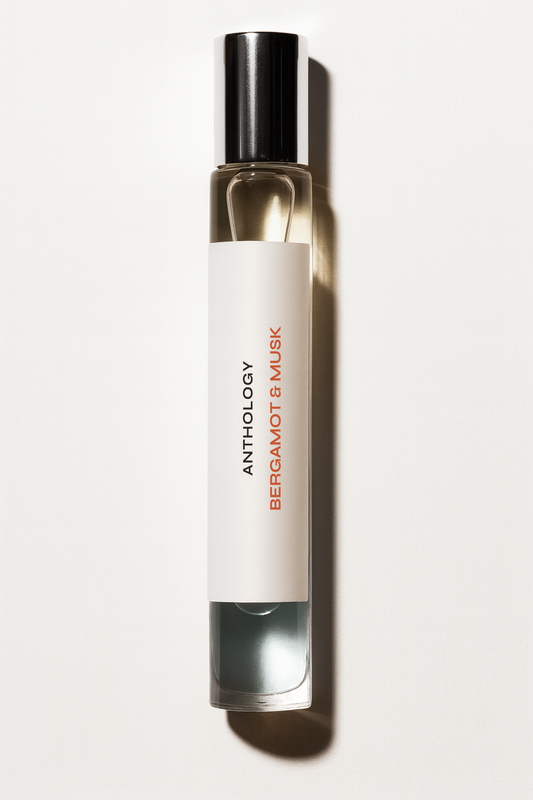
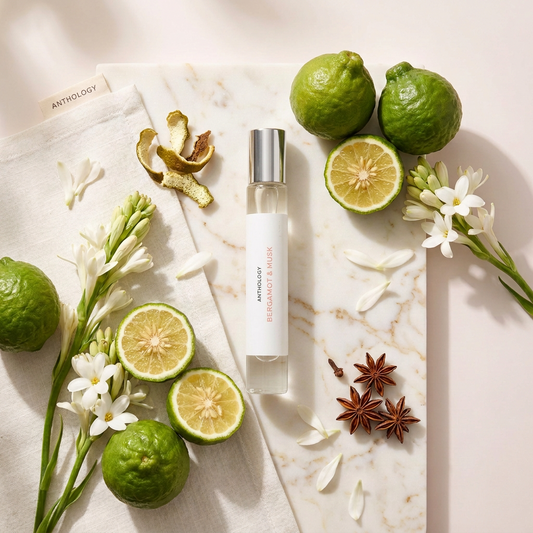
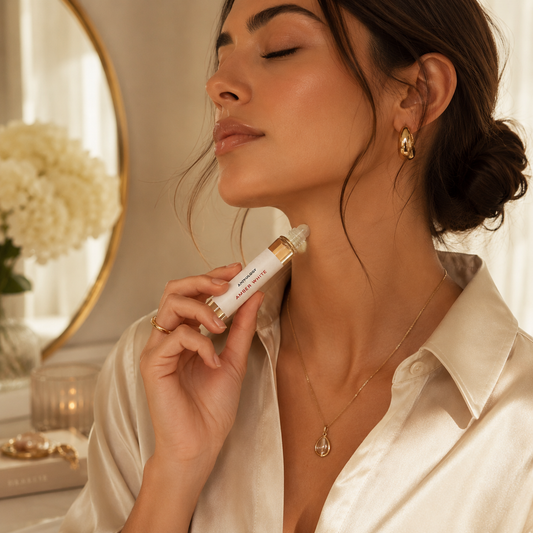
Our perfume oils are original compositions, but several draw on the great classical structures. Bergamot & Musk brings together blackcurrant, bergamot, patchouli, smoky birch, oakmoss, vetiver and musk — a polished, mossy profile with a nod to chypre tradition. Dapper Secrets pairs lavender with tonka and tobacco, warmed by star anise and nutmeg, in the spirit of the fougère. Serene Bloom sets citrus and pink pepper over jasmine and iris on a base of patchouli, amber, vanilla and white musk, for a soft, elegant floral. Amber White offers the comfort of an ambery classic, with vanilla orchid, jasmine, brown sugar, amber, tonka and soft musk. And for the clean freshness of the great colognes, Citrus & Cedarwood layers lemon, grapefruit and bergamot over lavender and cedarwood.
Perfume oil suits this kind of fragrance beautifully. Without a rush of alcohol, a well-built structure unfolds slowly and intimately on the skin, letting you follow its arc from bright opening to lasting base — exactly how the classics were meant to be experienced.
Explore the full Anthology Collection and find a scent with the kind of character that never goes out of style.