What Is a Fougère Fragrance?
Vandana MagnaniShare
A fougère is a fragrance built on one classic accord: fresh, herbal lavender over a sweet, hay-like base of coumarin and a dark, mossy undertone of oakmoss, usually with a touch of citrus and geranium. The word is simply French for "fern", which is a little ironic, because ferns have almost no scent at all. Fougère is not a smell found in nature but an idea of one, a perfumer's imagined forest floor, and it has become one of the most important fragrance families of the last 140 years, especially in men's perfumery.
Where the Fougère Began
The family takes its name from a single perfume: Fougère Royale, created by Paul Parquet for the Parisian house of Houbigant in 1882. What made it remarkable was not only its smell but its chemistry. Parquet was among the first perfumers to use a synthetic aroma molecule in a fine fragrance, building his composition around coumarin, a compound first isolated from tonka beans in 1820 and synthesised in the laboratory by the English chemist William Henry Perkin in 1868.
Coumarin gave Parquet a warm, sweet, freshly cut-hay note that no single natural oil could provide on its own. Paired with lavender, bergamot, geranium and oakmoss, it produced something entirely new: green, clean and aromatic at first, then soft, powdery and almost tender as it dried down. Fougère Royale was a success, and perfumers quickly realised that its structure could be borrowed and reinterpreted. A recipe became a family.
What Does a Fougère Smell Like?
Think of a classic barbershop: crisp, clean and pleasingly old-fashioned. A traditional fougère moves through three distinct impressions. It opens bright and aromatic, with lavender and citrus, often bergamot, giving a cool, herbal lift. The heart turns gently floral and green, with rose geranium adding a minty, rosy facet. Finally, the base settles into a warm, slightly sweet hay and almond tone from coumarin, grounded by the earthy, inky depth of oakmoss.
The magic lies in the contrast. Lavender on its own can feel medicinal; coumarin on its own can feel sugary. Together they balance one another, fresh against sweet, clean against cosy, which is why a good fougère smells polished rather than simple. If you would like to understand how several materials fuse into a single impression like this, our guide to the difference between a fragrance note and an accord explains the principle.
The Fougère Through the Decades
Few fragrance families have travelled so far. Guerlain's Jicky, launched in 1889, drew on lavender and coumarin too, and is often discussed alongside the early fougères. Through the twentieth century the structure became the backbone of the gentleman's grooming cabinet, from Brut in 1964 to Azzaro Pour Homme in 1978, a richly aromatic fougère that defined a generation of men's scents.
The 1980s pushed the family in new directions. Drakkar Noir (1982) gave it a darker, more intense edge, while Davidoff Cool Water (1988), composed by Pierre Bourdon, introduced a cool, aquatic freshness that sparked an entire wave of imitators. Today's best-selling "blue" fragrances, with their bright citrus, pepper and ambery woods, are frequently described as aromatic fougères, proof that the old barbershop accord still sits quietly at the centre of modern masculine perfumery.
The Different Faces of Fougère
Because the core accord is so adaptable, perfumers have spun it into several sub-styles. Aromatic fougères amplify the herbs, adding sage, rosemary, mint or basil for a brisk, outdoorsy feel. Fresh or aquatic fougères lighten the base and add marine or fruity notes for daytime ease. Amber or oriental fougères deepen the coumarin with tonka bean, vanilla, tobacco or spice, creating something warmer and more seductive for evening.
Modern fougères also use far less oakmoss than their ancestors. Its use is now restricted under international fragrance safety standards, so perfumers often rebuild that mossy depth with vetiver, cedar or patchouli.
Who Should Wear a Fougère?
Although the family is strongly associated with men's fragrance, there is nothing inherently masculine about lavender, hay or moss. A fougère suits anyone who enjoys scents that feel clean, composed and quietly confident. It is a superb choice for the office, for daytime in spring and autumn, and for anyone who finds sweet gourmands too heavy and pure citrus too fleeting. Warmer amber fougères come into their own on cool evenings, while fresher styles shine in warmer months.
Fougères also translate beautifully into perfume oil. Without alcohol to flash off the bright top notes, lavender and herbs sit closer to the skin and blend more smoothly into the warm base, giving a softer, more intimate trail that lasts. For more on choosing a signature scent in this style, see our edit of the best perfume oils for men, and for the citrus that so often opens a fougère, our Note Deep Dive on bergamot.
Fougère at Anthology
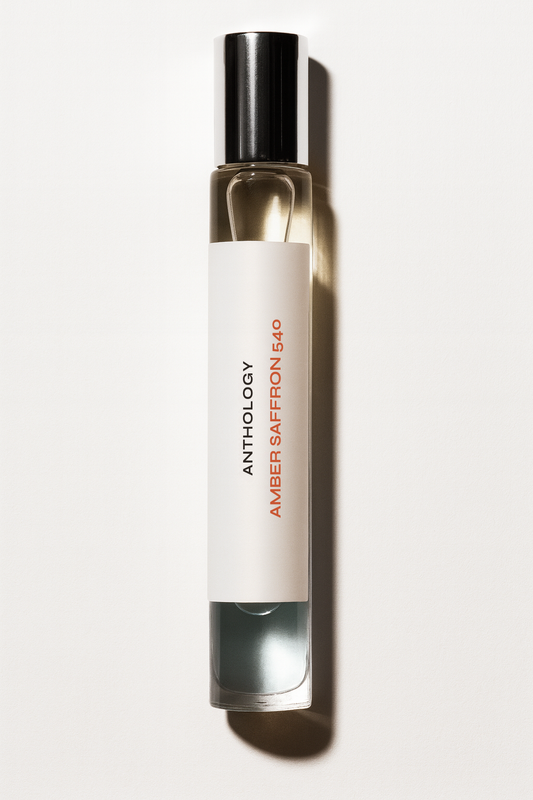
Several Anthology perfume oils carry the hallmarks of the fougère family. Dapper Secrets is perhaps the most classic in spirit: bergamot and lemon open onto a heart of lavender, star anise and nutmeg, before settling into tonka bean, guaiac wood and tobacco, an elegant amber fougère for evenings.
For a brighter, more aromatic take, Citrus & Cedarwood pairs lemon, grapefruit and bergamot with a heart of lavender, geranium, pink pepper and nutmeg over cedarwood, musk and incense. Sublime Bergamot takes the modern route, with Calabrian bergamot and Sichuan pepper leading into lavender, elemi and pink pepper, finishing on Virginian cedarwood and ambroxan.
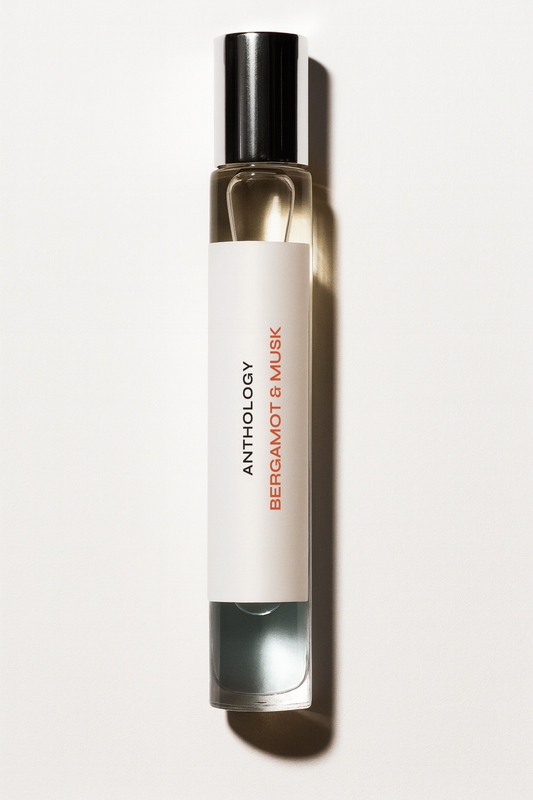
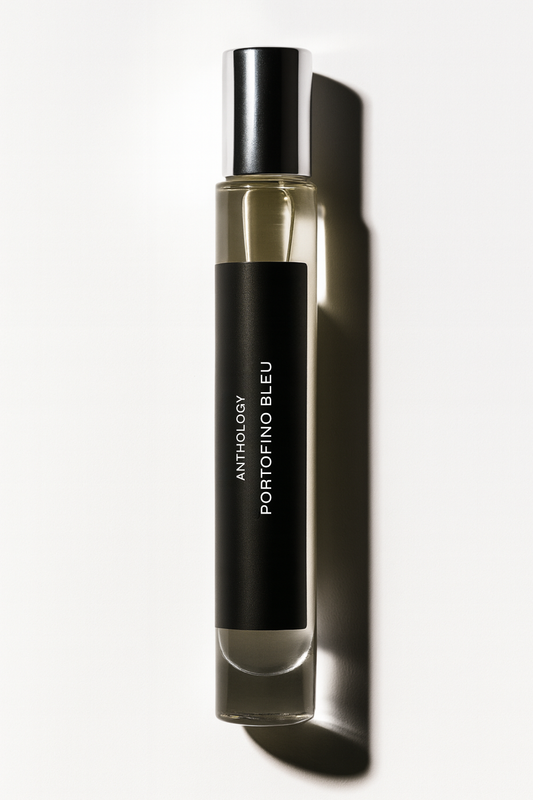
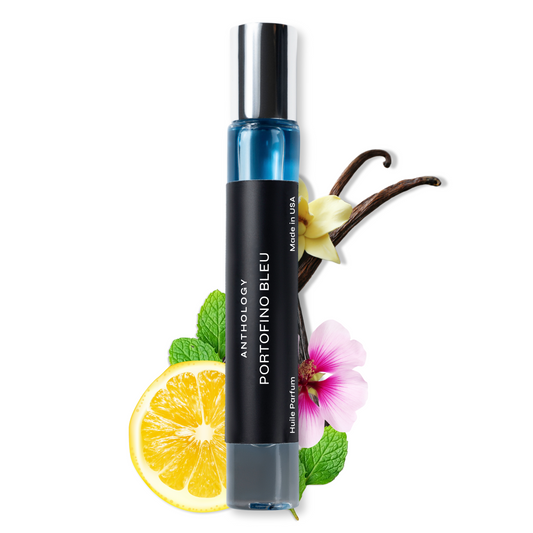
If you prefer a fresher feel, Portofino Bleu opens with green apple, lemon and mint, with tonka bean and geranium in the heart and cedarwood, vetiver and vanilla beneath. And for a nod to the mossy roots of the family, Bergamot & Musk rests on oakmoss, vetiver and musk beneath blackcurrant, bergamot and smoky birch.
Should you wish to explore a lavender fougère from a designer house, we also stock samples of Tom Ford Lavender Extreme, which pairs lavender and geranium with tonka bean and coumarin at its base.
From a nineteenth-century Parisian laboratory to today's bestselling fresh scents, the fougère has never really gone out of style. Discover your own interpretation across the Anthology Collection.