How Do Perfumers Create a Fragrance? Inside the Creative Process
Anthology BeautyShare
A finished fragrance arrives looking effortless: a few lines of poetry on the box, a tidy pyramid of notes, a scent that seems to have existed forever. Behind it, though, lies one of the most patient creative processes in any luxury craft. A perfume usually begins as a page of words, passes through dozens and sometimes hundreds of trial versions, and is judged again and again on paper and skin before a single bottle is filled. So how do perfumers actually create a fragrance? In short: they work from a brief, translate it into a formula of precisely weighed materials, refine that formula through many small modifications, and test each version until the scent behaves exactly as intended from first impression to final trace.
It Starts With a Brief, Not a Flower
Romantic stories of a perfumer inspired by a single blossom make lovely copy, but most fragrances begin with a brief. This is a document, sometimes a mood board, sometimes a handful of sentences, prepared by the brand or creative director. It sets out who the scent is for, the emotion or story it should carry, the fragrance family, the price point, the concentration and any technical constraints. A brief might ask for "a fresh, sunlit woody scent for someone who has just come in from the sea", or reference a place, a colour, a piece of music or a memory.
A good brief leaves room for interpretation while setting firm boundaries. The perfumer's first job is to read between its lines: which notes might express "sunlit"? Should "fresh" mean citrus, green or aquatic? Often several perfumers, or several houses, respond to the same brief, each submitting their own early drafts in a quiet competition for the project.
From Idea to Formula
A perfume is, at heart, a recipe written in numbers. Working at the "organ", the tiered desk of raw materials, the perfumer chooses ingredients and assigns each a precise proportion, usually by weight. A formula can hold a handful of materials or well over a hundred, mixing naturals such as essential oils and absolutes with synthetic molecules that add radiance, diffusion and longevity.
Many perfumers build from accords rather than single notes: small, balanced mini-compositions that read as one impression, such as a leather accord or an amber accord. Our guide to notes versus accords explains why this matters. The great French perfumer Jean Carles, who became the first director of the Roure perfumery school in Grasse in 1946, taught students to study materials by contrast and to explore pairings methodically, blending two ingredients in a series of changing ratios to find the sweet spot. He also advocated building a composition from the base upwards, securing the foundation before adding the brighter top notes. His methods still shape how novice perfumers are trained today, and he famously continued to compose, including Miss Dior (1947, with Paul Vacher), after losing much of his sense of smell, working from memory.
Trials, Mods and the Long Middle
The first draft is rarely the last. Perfumers call each revision a "mod" (modification) or trial, and a single fragrance can pass through dozens of them, with complex projects running into the hundreds. Each mod might nudge one material up by a fraction of a percent, swap a rose absolute for a different grade, or remove an ingredient entirely to see what the composition loses. Every change is logged so the perfumer can trace exactly which version smelt best and why.
This is the slow, unglamorous heart of the craft. A tiny adjustment to a musk or woody molecule can transform how far a scent projects, while a few drops of a bright material can lift an entire opening. It is why the process from brief to launch commonly takes months, and sometimes years.
How Fragrances Are Evaluated
Judging a perfume is a discipline of its own. In large fragrance houses, evaluators work alongside perfumers, smelling each mod on blotters at intervals over hours and days to follow its evolution, and comparing it against competitors and against the brief. Promising trials then move to skin, where body warmth and individual chemistry reveal new facets, and finally to wear tests, often in different climates and over full days.
Evaluators ask practical questions as well as artistic ones. Does the opening make a strong first impression? Does the heart hold together, or is there a dull gap? How long does the base last, and how does it smell in the final hour? Knowing how to read a perfume description like an expert is really learning to think like an evaluator, reading the pyramid as a timeline rather than a list.
Safety, Stability and Maturation
Before a fragrance can be sold, its formula must meet safety standards. In the fragrance industry, the International Fragrance Association (IFRA) sets limits on how much of certain materials can be used, and some regions also require specific allergens to be declared on the label. A perfumer may need to rework a beloved accord to stay within these limits, which is one reason classic fragrances are sometimes reformulated over the years.
The finished blend is then left to mature, or macerate, for a period that can last weeks or months, allowing the materials to settle and harmonise. Stability testing checks that colour and scent hold up under heat, light and time, so the bottle you open in a year smells as the perfumer intended.
Why the Process Shows in Perfume Oil
Perfume oil is a revealing format for all this work. Without alcohol's initial blast, the composition unfolds closer to the skin, so the transitions a perfumer laboured over, from sparkling opening to soft drydown, are easier to follow. It is also where the quality of the raw materials, the subject of our profile of Matière Première, becomes most apparent.
See the Structure at Anthology
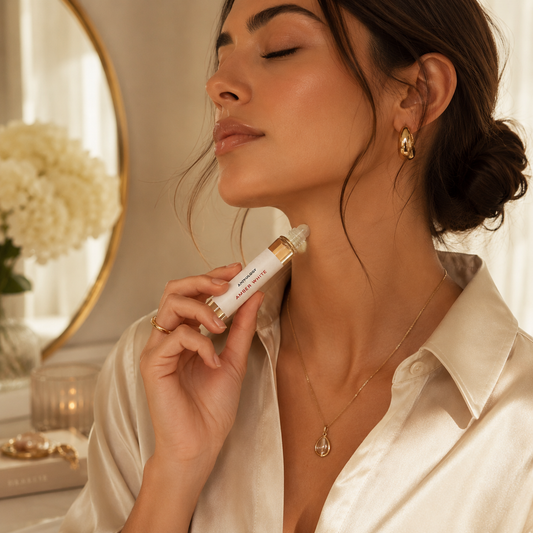
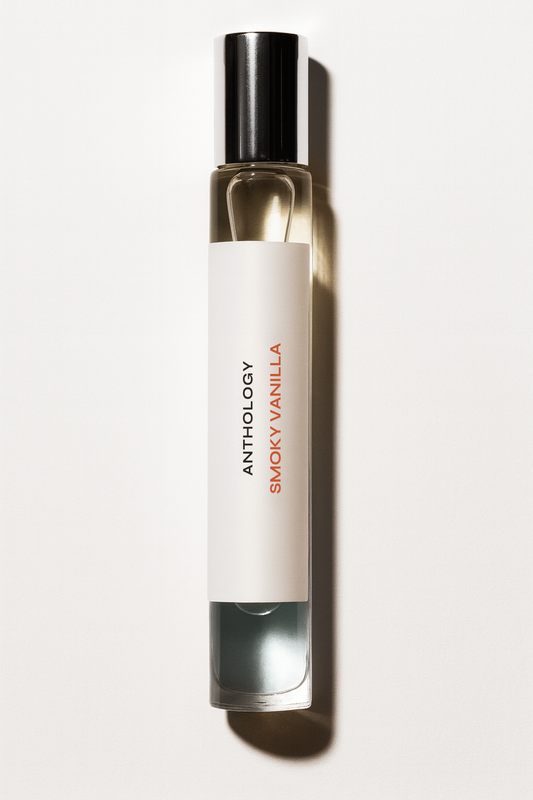
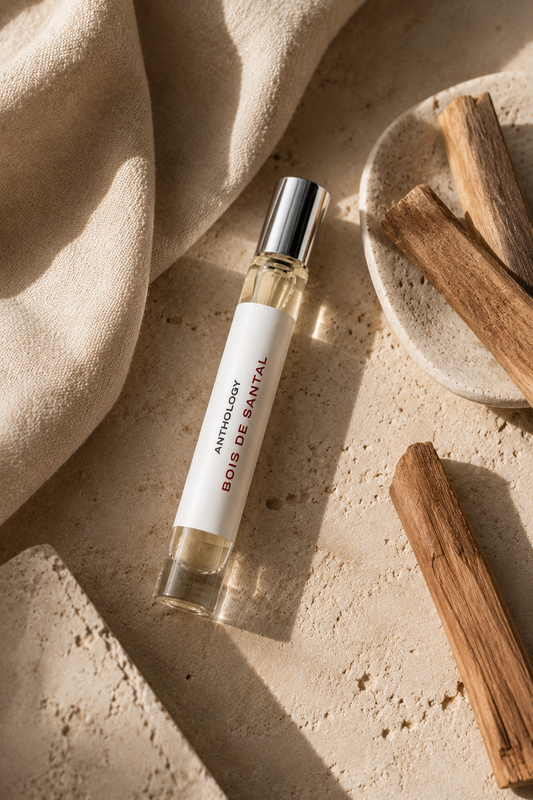
Each of these perfume oils is a good study in how a composition is built. Serene Bloom shows a classic three-part arc: citrus and pink pepper up top, a heart of jasmine and iris, and a base of patchouli, amber, vanilla and white musk. Smoky Vanilla demonstrates contrast, opening with a spark of black pepper and warm resins before melting into rich vanilla. Citrus Matcha pairs matcha and citrus with a soft fig heart, a lesson in balancing fresh and green notes. Bois de Santal wraps a creamy sandalwood accord in airy woods with a sparkling, spicy opening, while Amber White moves from creamy vanilla orchid and soft jasmine to a warm, ambery base.
Try smelling one at intervals through the day, just as an evaluator would, and you will start to notice the architecture beneath the beauty. Explore the full Anthology Collection to find the composition that speaks to you.