Le Labo Santal 33: The Scent That Defined a Generation
Vandana MagnaniShare
Some fragrances are admired. A rare few become a shorthand for an entire moment in culture. Le Labo Santal 33 belongs firmly in the second group. For more than a decade it has drifted through concept stores, hotel lobbies, creative studios and crowded bars, so recognisable that many people know the smell long before they know the name. Smoky, creamy, a little dry and faintly leathery, it became the unofficial scent of a generation that prized authenticity, craft and quiet confidence. Here is how a sandalwood from a small New York laboratory came to define an era.
The House: A Laboratory in Nolita
Le Labo was founded in New York in 2006 by Fabrice Penot and Eddie Roschi, two fragrance-industry insiders who wanted to move away from perfume sold on celebrity faces and glossy campaigns. Their first shop opened on Elizabeth Street in Nolita, and it looked less like a beauty counter than a working apothecary: raw wood, lab glass, concrete and handwritten labels.
The idea was simple and radical for its time. Each fragrance would be blended by hand, in front of the customer, at the moment of purchase. The label would be typed with the buyer's name, the date and the city where it was compounded. Even the names were stripped of marketing: each scent is called after its principal note followed by the total number of ingredients in the formula. Santal 33, then, is a sandalwood built from 33 materials. That honesty, along with the brand's slow, word-of-mouth growth, made it a cornerstone of the niche movement we explored in Why Niche Perfumery Changed Everything. In 2014 Le Labo was acquired by the Estée Lauder Companies, by which point Santal 33 was already well on its way to cult status.
The Perfumer and the Launch
Santal 33 was released in spring 2011 and composed by perfumer Frank Voelkl, who had already worked with the house on Iris 39, Baie Rose 26 and Musc 25, as well as the Santal 26 candle. The candle matters to the story: its warm, smoky sandalwood had won devoted fans, and the eau de parfum translated a similar woody mood into something wearable on skin.
The inspiration was not a place in India or a temple courtyard, as sandalwood fragrances so often are, but the American West. Le Labo described an image of solitude on wide, rugged plains, firelight on the face and indigo night skies overhead, with nothing around but the desert wind. It evoked the old, romantic imagery of the cowboy, but reimagined as something softer and entirely unisex. The house's own closing lines capture it perfectly: an open fire, the soft drift of smoke, where sensuality rises after the light has gone.
The Scent: What Makes Santal 33 Distinctive
At launch, the published notes included Australian sandalwood, papyrus, cedarwood, cardamom, iris, violet, Ambrox and a leather accord. The opening is aromatic and slightly green, with cardamom and violet leaf crackling over the woods. As it settles, sandalwood and cedar form what Le Labo calls a smoking wood alloy, before a dry-down of leather, musk and amber that sits close and warm on the skin.
The choice of Australian sandalwood is telling. Where Indian Mysore sandalwood is famed for its rich, milky creaminess (a story we told in our Sandalwood Note Deep Dive), Australian sandalwood is drier, brighter and a touch more resinous. Paired with papery papyrus, pencil-shaving cedar and the suede-like leather accord, it gives Santal 33 its signature texture: less a lush, buttery wood and more a sun-bleached plank warmed by a campfire. The cardamom, which we celebrated in our Cardamom Note Deep Dive, adds the cool, slightly camphorous sparkle that keeps the whole composition from feeling heavy.
What truly sets it apart is its balance. It is woody but not austere, smoky but not campfire-literal, leathery but not animalic. It reads as clean and intimate up close, yet it has enough diffusion to leave a recognisable trail in a room. That combination of comfort and character is exactly why it suits almost anyone who wears it.
Cultural Impact: The Smell of the 2010s
Santal 33 never relied on a big advertising campaign. Instead, it spread the way the house itself did: by people smelling it on friends and asking what it was. Through the 2010s it became a favourite of the creative class, from Brooklyn to London to Tokyo, and its signature woody-leather accord seemed to waft out of every boutique hotel and independent coffee shop. Le Labo's Santal 26 candle even appeared in Beyoncé's 2016 visual album Lemonade, and Santal 33 is worn by a character in the film Red, White & Royal Blue, a sign of just how firmly it has entered popular culture.
Its success also changed the industry. Countless brands launched their own creamy-smoky sandalwoods in its wake, and the minimalist, gender-free woody scent became a category in its own right. Its popularity has sparked debate too: some fragrance lovers now feel it is everywhere. Yet that ubiquity is the clearest proof of its achievement. Very few perfumes manage to capture the taste of a decade so precisely.
Why the Santal Style Works Beautifully as a Perfume Oil
Woody, leathery compositions like this are made for skin. In an oil base, sandalwood, cedar and musk sit closer and unfold more slowly, so the cardamom sparkle lingers longer and the dry-down melts into that intimate, second-skin warmth that people love about the santal style. If you enjoy leathery woods more broadly, our guide What Is a Leather Fragrance and How Do I Wear It? is a lovely next read.
Get the Feel of Santal 33 with Anthology
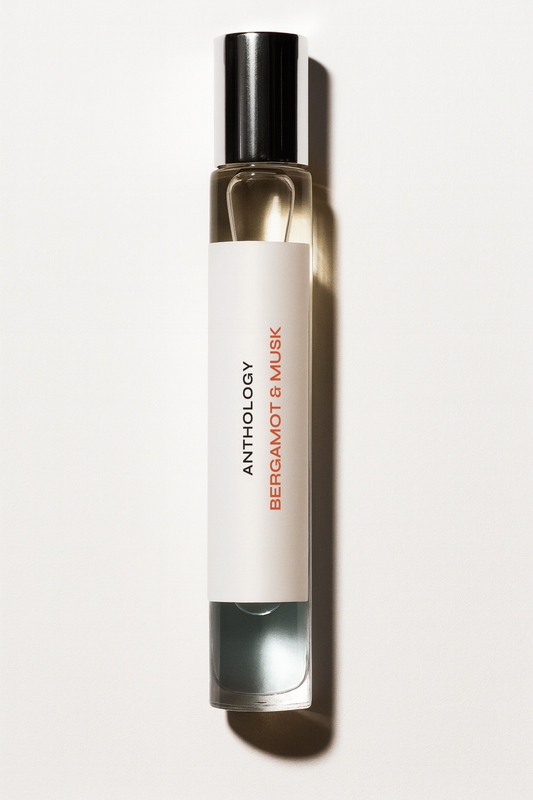
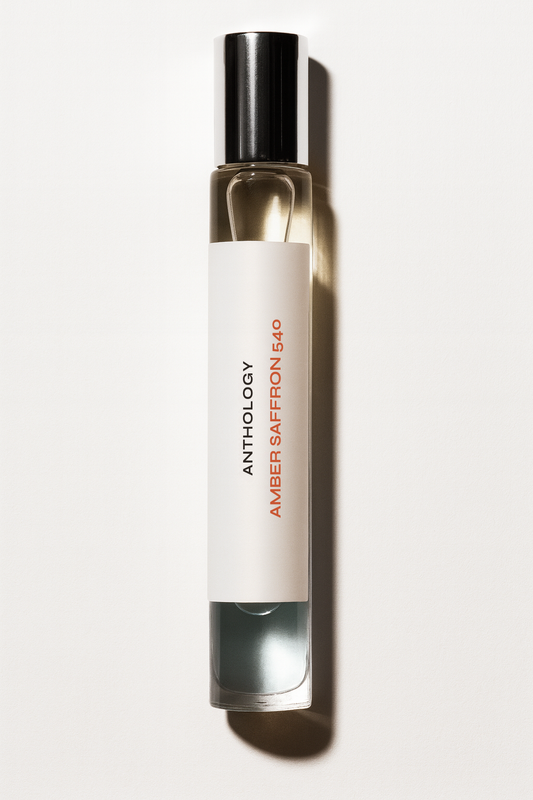
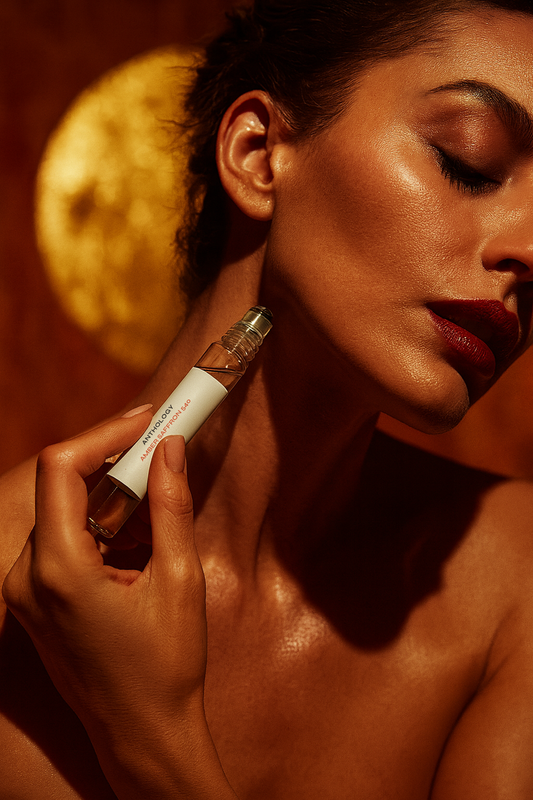
If you want to try the original, we carry Le Labo Santal 33 in sample sizes, an easy way to experience it on your own skin before committing to a full bottle. And if you love its smoky, woody mood, these Anthology perfume oils share the same spirit in their own way:
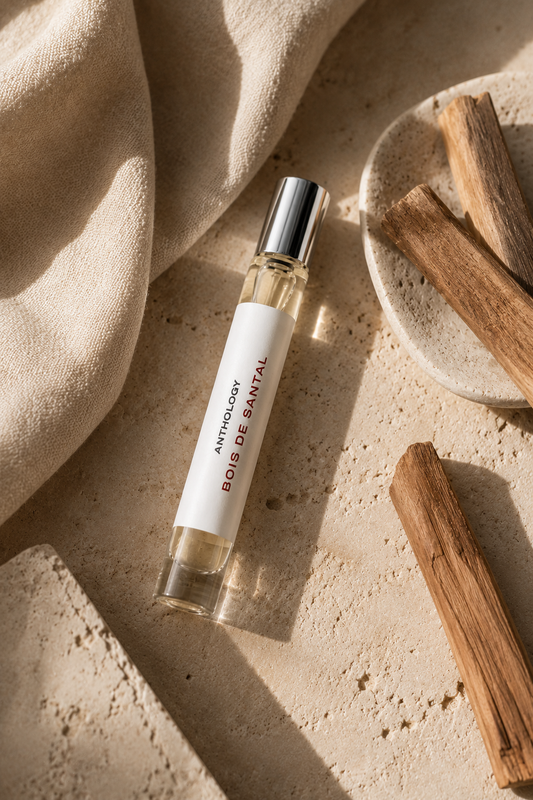
Bois de Santal Perfume Oil is our creamy, minimalist sandalwood. Bright cardamom with bergamot and pink pepper opens into smooth sandalwood textured by violet leaf and dry papyrus, before clean cedar, soft leather nuances and musk/ambrox settle into a close-to-skin aura. It is the natural starting point for any santal lover.
Citrus & Cedarwood Perfume Oil leans fresher and more aromatic, with lemon, grapefruit and bergamot over lavender, pink pepper and nutmeg, resting on cedarwood, musk and incense. Choose it if you love the dry, pencil-shaving side of Santal 33.
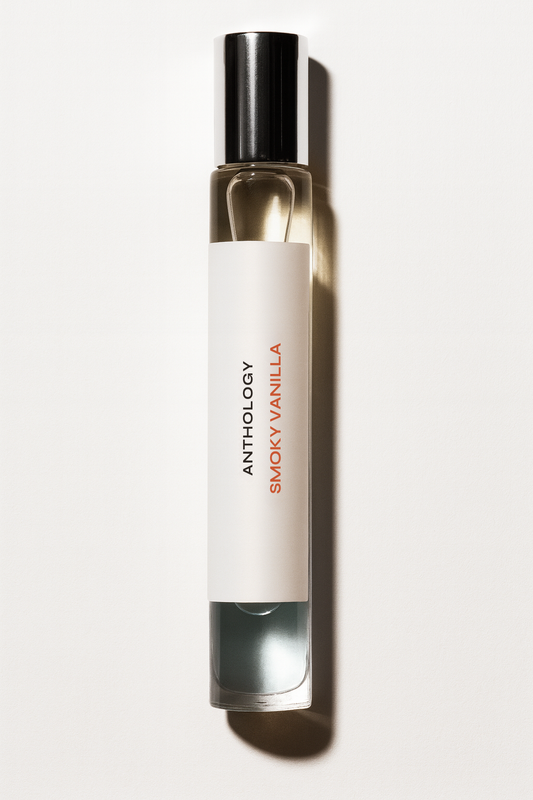
Smoky Vanilla Perfume Oil brings out the campfire. Black pepper and warm resins melt into rich vanilla, with suede, amber, incense and cedarwood for a darker, more sensual evening take on smoky woods.
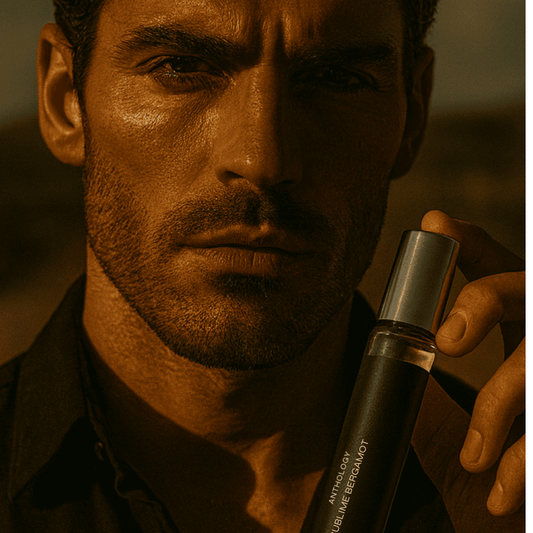
Sublime Bergamot Perfume Oil pairs bergamot and Sichuan pepper with lavender and elemi over Virginian cedarwood and ambroxan, a crisp, airy woody scent for daytime.
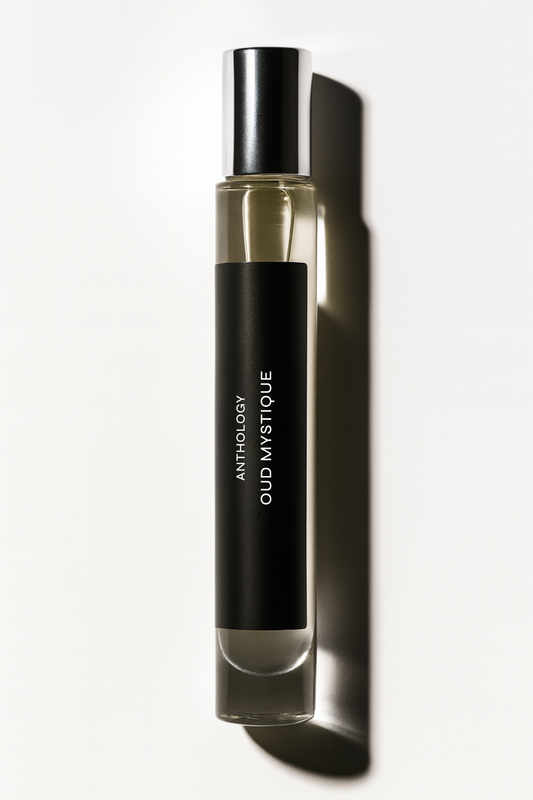
Oud Mystique Perfume Oil takes the cardamom thread somewhere more opulent, with cardamom and pepper over oud, vanilla, amber, vetiver and patchouli.
Explore the full range of hand-picked perfume oils in the Anthology Collection and find the woody signature that feels like yours.