Note Deep Dive: Cedarwood — The Backbone of Modern Perfumery
Vandana MagnaniShare
Open an old pencil box, a cigar humidor or a grandmother's blanket chest and the smell that greets you is almost always the same: dry, clean, faintly sweet and unmistakably woody. That is cedarwood, and although it rarely takes a bow, it is one of the hardest-working materials in perfumery. It sits quietly at the base of fresh colognes, spicy orientals, smoky vanillas and green teas alike, giving them structure, length and a sense of calm. If sandalwood is the cream of the woody family, cedar is its backbone.
What Is Cedarwood?
"Cedarwood" in perfumery is a family name rather than a single tree. The true cedars belong to the genus Cedrus: the Atlas cedar of Morocco and Algeria (Cedrus atlantica), the Himalayan cedar (Cedrus deodara) and the storied cedar of Lebanon (Cedrus libani). Yet the cedarwood oils used in the greatest volume are not true cedars at all. Virginian cedarwood comes from Juniperus virginiana, the eastern red cedar of North America, and Texas cedarwood from Juniperus ashei — both junipers, named "cedar" by early settlers for their fragrant, rot-resistant timber. China also produces cedarwood oil from related cypress-family trees.
Most cedarwood oil is steam-distilled from wood that would otherwise go to waste: sawdust, shavings and offcuts from the timber and pencil trades. That makes it one of the more affordable and sustainable natural woods in the perfumer's palette — a stark contrast to sandalwood or oud.
A Wood Woven Through History
Few materials have a longer pedigree. Cedar of Lebanon appears in the Epic of Gilgamesh, where the hero journeys to the Cedar Forest, and the Bible describes its timber being used in Solomon's Temple. The ancient Egyptians prized cedar for its resistance to decay, and cedar products are associated with the embalming arts of the time. Its reputation for repelling moths gave us the cedar chest and the cedar-lined wardrobe, and the eastern red cedar became the classic wood of the pencil, which is why so many people describe the note simply as "pencil shavings".
In modern perfumery, cedar's defining moment came in 1992, when Shiseido launched Féminité du Bois under the creative direction of Serge Lutens, composed by Pierre Bourdon and Christopher Sheldrake. Inspired by the Atlas cedar of Morocco and its fragrant woodwork, it wrapped cedar in plum, spice, honey and violet and presented it as a feminine fragrance at a time when woods were coded firmly masculine. It is widely credited with opening the door to the woody perfumes for everyone that followed, and to the niche aesthetic that Lutens would go on to define.
The Smell of Cedarwood
Each cedar has its own accent. Virginian cedarwood is the classic: dry, clean, slightly sweet and pencil-like, with a soft, almost powdery smoothness. Texas cedarwood is smokier and more leathery, with a hint of tar. Atlas cedar is warmer and more honeyed, with a resinous, faintly animalic depth that reads as more luxurious, while Himalayan cedar sits between the two with a gentle balsamic sweetness.
Much of that character comes from a handful of sesquiterpene compounds. Cedrol, a crystalline alcohol isolated from cedarwood oil, gives the soft, dry woodiness; cedrene and thujopsene add sharper, resinous facets. These are refined into fixatives and aroma chemicals used throughout the industry, including cedryl acetate and methyl cedryl ketone, which lend a velvety, ambery woodiness to countless modern compositions. Cedar-like notes are also part of the appeal of famous "woody amber" molecules, a story for another day.
Cedarwood's Role in Perfumery
Cedar is the great connector. In citrus and aromatic fragrances it gives bergamot, lemon and lavender something solid to stand on, so a fresh opening does not simply vanish. In spicy blends it frames pepper, cardamom and nutmeg with a dry, clean edge. Paired with vetiver it creates the earthy, mineral elegance of many modern masculines; with sandalwood it adds lift and dryness to creaminess; and with incense, vanilla and amber it builds smoky, enveloping bases.
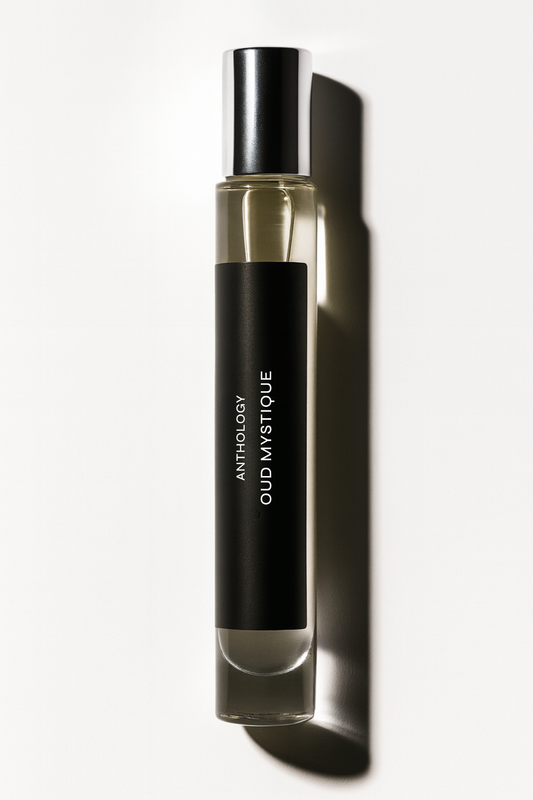
Because it is so versatile and so steady, cedar is rarely the headline. Instead it is the reason a composition feels finished. Next time a fragrance dries down to something calm, clean and quietly woody, there is a good chance cedarwood is holding it together — even in richer blends built around oud, where it often softens the edges.
Why Cedarwood Suits Perfume Oil
Cedar is a base note by nature, and base notes thrive in perfume oil. Without alcohol to flash off the brighter elements, an oil wears close to the skin and unfolds slowly, so cedar's dry, polished character has time to emerge and settle beneath the top notes rather than arriving all at once. Its natural fixative quality also helps an oil blend last, anchoring citrus and spice for hours. The result is a woody trail that feels personal and composed rather than loud — exactly what most people want from an everyday signature.
Cedarwood at Anthology
Several of our perfume oils use cedar as their foundation, each in a very different way.
Citrus & Cedarwood Perfume Oil is the most direct expression: lemon, grapefruit and bergamot over a heart of lavender, pink pepper, nutmeg and geranium, settling into warm cedarwood, smooth musk and earthy incense. It is a crisp, aromatic woody scent for every day.
Sublime Bergamot Perfume Oil pairs Calabrian bergamot and Sichuan pepper with lavender, elemi and pink pepper, before a base of Virginian cedarwood and ambroxan — a textbook example of cedar giving a fresh fragrance its staying power.
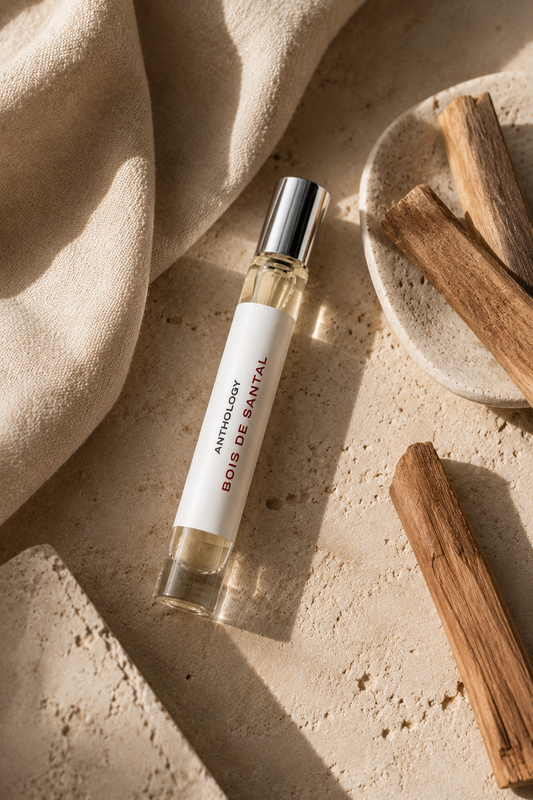
Bois de Santal Perfume Oil shows cedar as sandalwood's partner: cardamom, bergamot and pink pepper open onto sandalwood, violet leaf and papyrus, with clean cedar, soft leather and musk/ambrox in the dry-down for a close-to-skin aura.
Citrus Matcha Perfume Oil takes cedar in a serene, green direction, with matcha and citrus, bitter orange and fig, resting on vetiver and cedarwood for a soft, comforting finish.
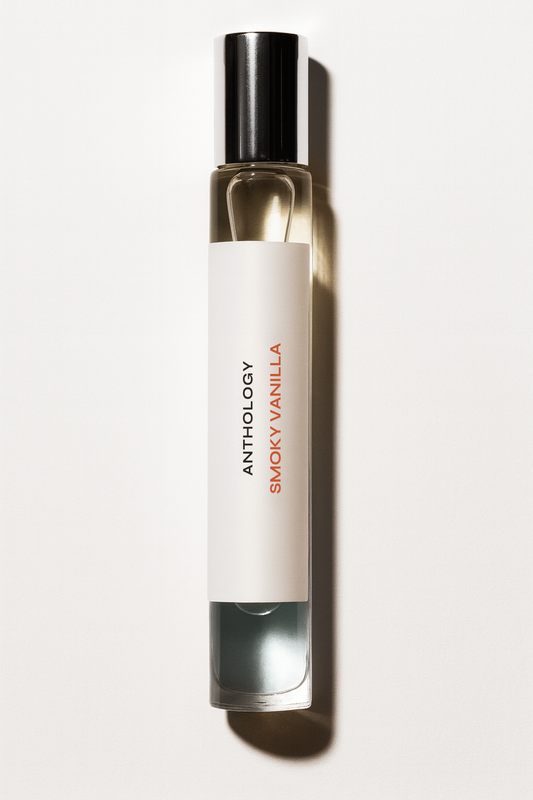
Smoky Vanilla Perfume Oil uses cedarwood among black pepper, vanilla absolute, suede, amber and incense — proof that cedar's dryness is just as useful in a dark, sensual blend, keeping the sweetness from becoming cloying.
For those curious about cedar in niche perfumery, Tom Ford Bois Marocain, available as samples, lists Atlas cedarwood with thuya wood and pink peppercorn alongside cypriol, patchouli and incense.
Whether you prefer it bright and aromatic or smoky and warm, cedarwood is the quiet foundation of a beautifully balanced scent. Explore the full Anthology Collection to find the woody perfume oil that feels most like you.