Note Deep Dive: Iris — The Most Precious Root in Perfumery
Vandana MagnaniShare
There is a note in perfumery that asks more patience of its makers than any other. It is not a flower petal but a root, dug from the stony hills of Tuscany, left to rest in the dark for years and then coaxed into a pale, waxy butter that costs more by weight than gold. That note is iris, and once you learn to recognise its cool, powdery, faintly buttery glow, you will find it hiding in some of the most elegant fragrances ever made.
What Is Iris in Perfumery?
When a perfumer speaks of iris, they almost never mean the scent of the flower itself. The blooms of the bearded iris smell only faintly, and nothing usable can be extracted from them. The treasure lies underground, in the rhizome, known as orris root. The two species that matter most are Iris pallida, the pale-flowered Dalmatian iris traditionally grown around Florence, and Iris germanica, which is also cultivated in Morocco and China.
Freshly dug, orris root smells of very little: damp earth and raw vegetable. Its famous fragrance only develops as the rhizome slowly dries and oxidises, forming a family of aromatic molecules called irones. It is this transformation, rather than anything in the living plant, that gives iris its value.
A Root Worth Waiting For
The iris takes its name from the Greek goddess of the rainbow, a nod to the many colours of its flowers, and the Greeks and Romans prized its root for perfumes and medicines. Pliny the Elder wrote that the finest iris came from Illyria, on the eastern Adriatic coast, where Iris pallida grows wild.
It was Renaissance Florence, however, that made the iris its own. The red giglio on the city's coat of arms is widely held to be an iris rather than a lily, and the hills around Florence, including the Chianti villages, became the heartland of orris cultivation. Dried orris root scented linen, powders and the perfumed gloves fashionable in European courts, and it was valued for its ability to fix and prolong other scents.
The process has changed remarkably little. Rhizomes typically spend around three years in the ground before they are harvested, peeled by hand and laid out to dry. They are then stored for a further two to five years while the irones develop. Only then are they ground and steam-distilled into orris butter, with a yield often quoted at just 0.1 to 0.2 per cent of the dried root. From planting to finished material can take six years or more, which is why the finest orris is often said to cost tens of thousands of euros per kilogram.
The Smell of Iris
Iris is one of the most distinctive and least obvious notes in the perfumer's palette. It is cool rather than warm, dry rather than juicy, and it tends to whisper rather than announce itself. The key facets are:
Powdery. The classic iris impression recalls face powder, cosmetics and the soft hush of a vintage dressing table.
Violet-like. Irones are chemically close to the ionones that give violet its sweetness, so iris and violet sit naturally side by side.
Earthy and rooty. Beneath the powder there is a subtle, almost carrot-like earthiness that reminds you this is a root.
Buttery and suede-like. Good orris butter has a rich, soft texture on the skin, sometimes compared to suede or cool cashmere.
Iris's Role in Perfumery
Iris is a natural companion to flowers such as rose, violet and jasmine, softening their sweetness and lending them a polished, grown-up finish. With musks it creates the clean, skin-like "second skin" effect so prized in modern fragrance. Alongside woods such as sandalwood, cedar and vetiver it becomes grounded and elegant, while vanilla and amber turn it plush and comforting.
It has also defined some of perfumery's most admired compositions. Chanel No. 19 (1970) paired iris with green notes for a famously cool, poised character. Frédéric Malle's Iris Poudre, created by Pierre Bourdon in 2000, built an aldehydic, powdery portrait around it, and Prada's Infusion d'Iris (2007) made a crisp, luminous iris the centre of a modern classic. Each shows a different face of the same precious root.
Iris also shares a surprising kinship with another rooty note: vetiver. If you love the refined, earthy character of our Vetiver deep dive, iris is its softer, more powdery counterpart.
Why Iris Suits Perfume Oil
Iris is a quiet note, and quiet notes reward intimacy. In an alcohol-based spray, the first burst of ethanol can briefly overpower its delicate, powdery nuances. In a perfume oil, there is no alcohol blast: the fragrance sits close to the skin from the first moment, allowing iris's soft, suede-like texture to unfold slowly and gently.
Oil also mirrors the way iris is traditionally worn: as a skin scent, discovered by those close to you rather than broadcast across a room. Paired with musk, it melts into the skin's natural warmth; see our Musk deep dive for why that combination works so beautifully. And because iris is so closely associated with polish and quiet luxury, it is one of the notes that makes a fragrance smell expensive.
Iris at Anthology
If you are curious to explore iris and its powdery, violet-tinged family, these Anthology perfume oils are a lovely place to begin:
Serene Bloom Perfume Oil places exquisite iris at its heart alongside romantic jasmine and patchouli, opening with zesty citrus and pink pepper and settling into amber, creamy vanilla and white musk. It is the most direct way to experience iris in our collection.
Viva La Rose Perfume Oil pairs May rose with delicate violet, iris's closest scent relative, framed by juicy black cherry, pink pepper and cashmere wood over a base of amber and musk.
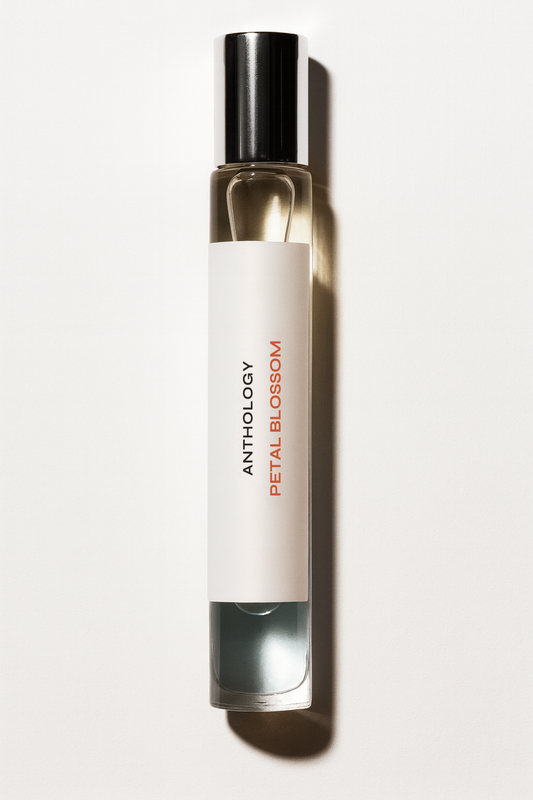
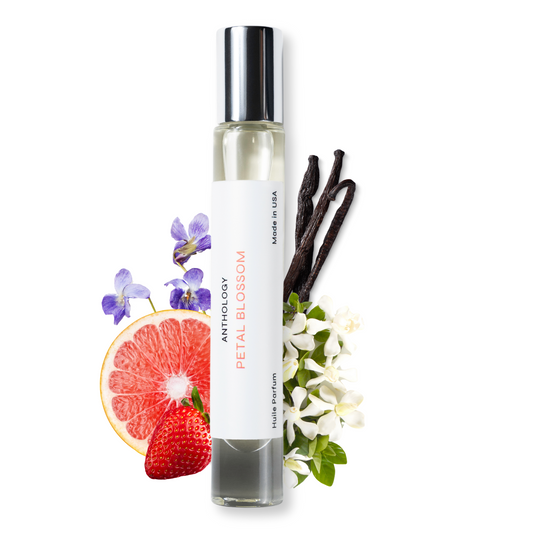
Petal Blossom Perfume Oil brings violet petals together with jasmine and gardenia, lifted by wild strawberry and grapefruit and softened by vanilla, musk and white woods: a brighter, more playful take on the powdery floral mood.
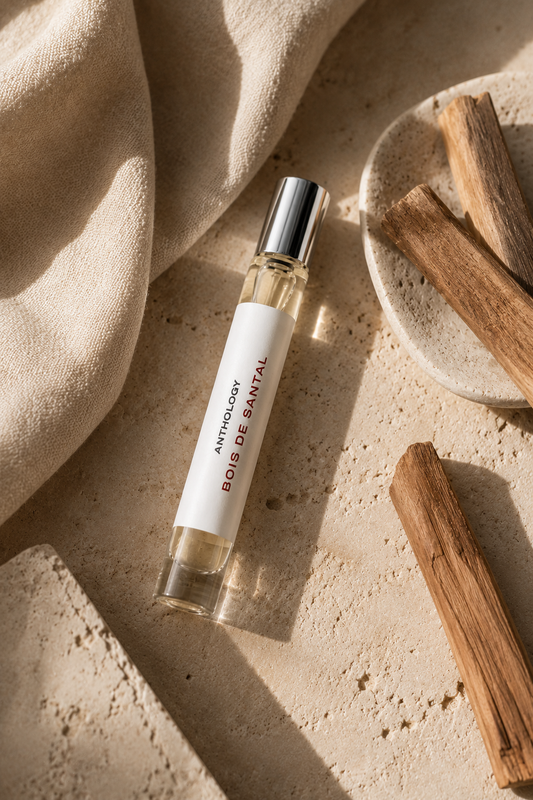
Bois De Santal Perfume Oil shows the woody side of the story, with creamy sandalwood textured by violet leaf and papyrus, over cedar, soft leather nuances and musk.
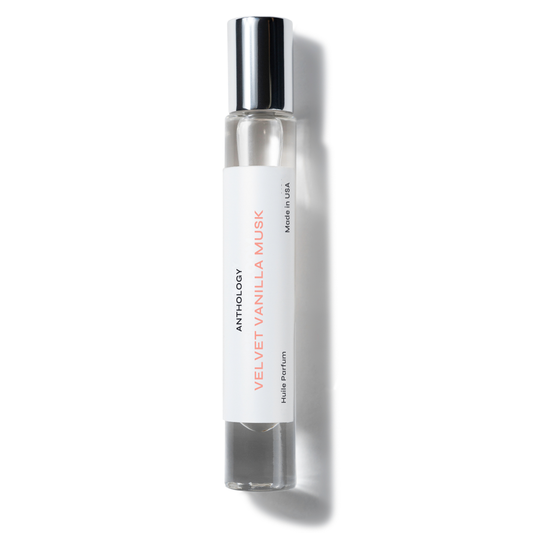
Velvet Vanilla Musk Perfume Oil is a soft, skin-close blend of creamy vanilla and warm musk, and a beautiful layering base for anyone who wants to wrap a floral scent in the plush comfort that iris lovers adore.
Iris teaches us that the most beautiful things are often the slowest to arrive. Discover your own quiet luxury in the full Anthology Collection.