Note Deep Dive: Lavender — From Barbershop to Haute Parfumerie
Vandana MagnaniShare
Few scents are as instantly recognisable as lavender. Crush a sprig between your fingers and you are somewhere else entirely: a sun-baked hillside in Haute-Provence, a grandmother's linen cupboard, the hot-towel hush of an old-fashioned barbershop. Lavender has been the scent of cleanliness, calm and grooming for centuries, which is precisely why it is so often underestimated. In the right hands it is anything but simple. It is herbal and floral, fresh and warm, clean and quietly sensual, and it sits at the very foundation of modern perfumery.
What Is Lavender?
Lavender belongs to the genus Lavandula, a family of aromatic shrubs in the mint family native to the Mediterranean. Perfumers work chiefly with three forms. True or fine lavender, Lavandula angustifolia, grows at altitude and gives the sweetest, most refined oil. Spike lavender, Lavandula latifolia, grows lower down and smells sharper and more camphoraceous. Lavandin, Lavandula x intermedia, is a natural hybrid of the two: hardier, far more productive and fresher in character, it supplies the great majority of the lavender used in soaps, detergents and everyday fragrance.
The essential oil is steam-distilled from the flowering tops, harvested in high summer when the blooms are at their richest. A solvent-extracted lavender absolute also exists, darker and more hay-like than the oil, prized for the depth it lends to a composition.
A Scent Older Than Perfumery Itself
The Romans scented their baths and linens with lavender, and the plant's name is often traced to the Latin lavare, "to wash" — a link that has shaped its reputation ever since. Medieval monastery gardens grew it for medicine and for strewing on floors; Tudor laundresses spread linen over lavender bushes to dry. By the eighteenth and nineteenth centuries, lavender waters were a staple of every respectable dressing table on both sides of the Channel.
Provence became its spiritual home. Shepherds and farmers had long gathered wild lavender on the high, stony slopes above Grasse, and as the perfume industry grew in the nineteenth century, cultivation spread across the plateaus of Haute-Provence. The violet rows of the Valensole plateau are now among the most photographed landscapes in France. In the early twentieth century the French chemist René-Maurice Gattefossé championed lavender oil in his research on essential oils, and his 1937 book Aromathérapie popularised the word itself.
Lavender's most important moment in perfumery, however, came in 1882, when Paul Parquet created Fougère Royale for Houbigant. By pairing lavender with synthetic coumarin and oakmoss, he invented an entirely new fragrance family — the fougère — and with it the template for classic masculine perfumery. Seven years later, Aimé Guerlain's Jicky (1889) wrapped lavender in vanillin, coumarin and animalic warmth, proving the note could be daring, sensual and worn by anyone bold enough.
The Smell of Lavender
Close your eyes and smell good lavender oil slowly. The first impression is fresh and herbaceous, almost minty, with a faint camphor coolness. Beneath it lies a soft, sweet, slightly fruity floralcy and, given time, a warm, hay-like, almost powdery facet that hints at tonka and dried grass.
Much of this comes down to two molecules. Linalool brings a fresh, floral, faintly woody lift, while linalyl acetate adds the soft, sweet, pear-like roundness that makes fine lavender so comforting. Lavandin and spike lavender carry more camphor and cineole, which is why they smell brisker and more medicinal. Altitude, soil and the distiller's skill all change the balance, so a high-altitude Provençal lavender and a lowland lavandin can feel like two different materials.
Lavender's Role in Perfumery
Lavender is one of perfumery's great connectors. It bridges the bright top of a fragrance and its warm base, and it gets along with almost everything:
Tonka bean and coumarin turn lavender soft, sweet and almond-tinged — the heart of every fougère. Citrus, especially bergamot and lemon, sharpens it into crisp eau-de-cologne freshness. Woods such as cedar and guaiac give it backbone. Spices — nutmeg, star anise, cinnamon, pink pepper — warm it into something richer. Vanilla, amber and tobacco take it into the evening, revealing a velvety, almost gourmand side that surprises people who think of lavender only as a soap note.
In recent years, niche and luxury houses have rediscovered the note, overdosing it, darkening it and reframing it as a statement in its own right. The barbershop accord has gone from nostalgic to fashionable, and lavender is no longer only for men: its calm, clean warmth works beautifully on any skin.
Why Lavender Shines in Perfume Oil
Lavender's freshest facets are its most fleeting, and alcohol-based sprays tend to flash them off in minutes. In an oil base, lavender unfolds more slowly. The herbal brightness lasts longer, and the sweet, hay-like heart has time to melt into whatever sits beneath it. Worn close to the skin, a lavender perfume oil feels less like a clean-laundry note and more like a soft, intimate aura — calm, polished and quietly confident.
Lavender at Anthology
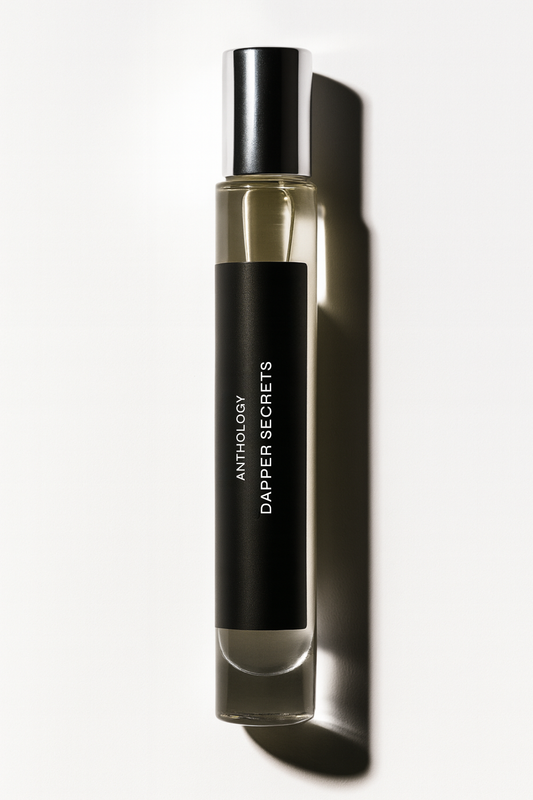
Several Anthology perfume oils use lavender as an aromatic heart. Dapper Secrets is our most classic take: bergamot and lemon open onto star anise, nutmeg and soothing lavender, settling into tonka bean, guaiac wood and tobacco — a modern barbershop with an evening glow. Citrus & Cedarwood sets aromatic lavender beside pink pepper, nutmeg and geranium, between a burst of lemon, grapefruit and bergamot and a base of cedarwood, musk and incense.
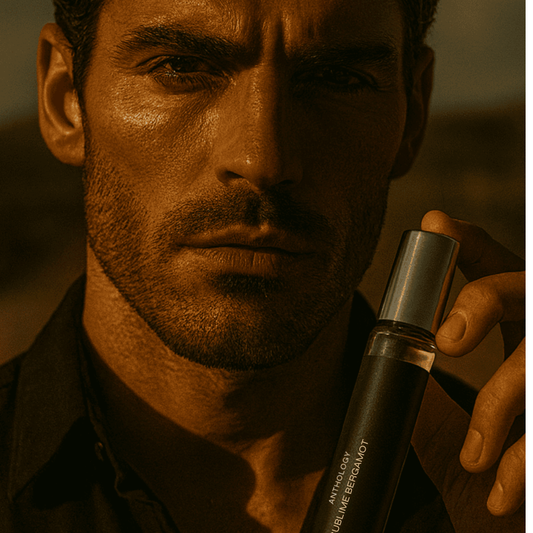
For something fresher, Sublime Bergamot pairs Calabrian bergamot and Sichuan pepper with a heart of lavender, elemi and pink pepper over Virginian cedarwood and ambroxan. Ambery Grapefruit takes lavender somewhere warmer, with red grapefruit and cranberry, saffron and lavender at the heart, and cedarwood, amber and coffee below.
If you would like to explore lavender at its most luxurious, our curated selection also includes samples of Tom Ford Lavender Extreme, an aromatic fougère of lavender, violet, lemon, cinnamon and geranium over tonka and coumarin, and Roja Scandal Pour Homme, a barbershop-style fougère opening with lemon, spearmint and lavender.
To understand lavender's place in the bigger picture, read our guide What Is a Fougère Fragrance?, meet its sweetest partner in Note Deep Dive: Tonka Bean, and discover the house behind Jicky in The House of Guerlain.
From Provençal hillsides to the barber's chair and back to haute parfumerie, lavender has never gone out of style — it has simply waited to be rediscovered. Explore the full Anthology Collection and find the lavender that feels like yours.