What Are Green Fragrances and Who Are They For?
Vandana MagnaniShare
Green fragrances are perfumes built to smell like living plants: snapped stems, crushed leaves, cut grass, sap and the bitter, dewy freshness of a garden after rain. They are for anyone who finds sweetness cloying and wants a scent that feels clear-headed, elegant and quietly alive, and they are far more varied than their reputation for being sharp or austere suggests.
What Makes a Fragrance "Green"?
In perfumery, "green" describes an effect rather than a single ingredient. It is the smell of chlorophyll and crushed foliage, and it sits on a spectrum. At one end are the sharp, almost painful greens of galbanum resin and violet leaf; in the middle the tender greens of fig leaf, tomato leaf, basil and green tea; at the other, the damp, mossy greens of oakmoss and vetiver that lead towards the chypre family. A perfume is called green when this verdant quality is the main character rather than a passing accent in the opening.
Much of the effect comes from a handful of materials. Galbanum, a gum-resin from Ferula plants native to Iran and Central Asia, smells intensely of freshly snapped green pepper and pine sap. Violet leaf absolute is cucumber-cool and watery. And cis-3-hexenol, aptly known as "leaf alcohol", is the very molecule plants release when grass is mown, which is why a single trace of it can make a composition smell instantly outdoors.
A Short History: From Vent Vert to No. 19
The modern green fragrance has a precise birthplace. In 1947, as Paris emerged from the war, the house of Pierre Balmain launched Vent Vert, created by Germaine Cellier, one of the boldest perfumers of the twentieth century. Cellier used galbanum in a dose no one had dared before, producing a startling, bitter-fresh blast that felt like an open window after years of heavy, powdery florals. Its name, "green wind", became the manifesto for a new family.
Others followed. In 1971, Chanel released No. 19, composed by the house perfumer Henri Robert and named after Gabrielle Chanel's birthday, 19 August. It paired a sharp galbanum opening with cool iris and a mossy base, and remains the definitive green chypre: aloof, polished and unmistakably grown-up. Through the 1970s green scents became the signature of the liberated, sporty woman, before the opulent orientals of the 1980s pushed them aside. Today they are enjoying a revival, as quieter, more natural-feeling perfumes return to favour.
The Many Shades of Green
Sharp greens lean on galbanum and violet leaf for a bracing, bitter snap. Herbal greens use basil, mint and coriander for a crisp, spa-like freshness. Tea greens are softer and meditative, built around green tea, matcha or maté. Fruity greens pair leaves with green apple, fig or blackcurrant bud, which has a famous leafy, slightly feral tang. Mossy greens sink into oakmoss and vetiver for a damp forest-floor depth, overlapping with the classic chypre structure. Knowing which shade you are drawn to is the quickest way to find a green scent you love rather than merely admire.
Who Are Green Fragrances For?
Green perfumes suit people who like their scent to feel composed rather than seductive: those who prefer linen to velvet, gardens to boudoirs, and the first hour of the morning to the last hour of the night. They are excellent for the office, where a sweet gourmand can feel overbearing, and they are naturally unisex, since leaves and stems carry none of the gendered codes of vanilla or rose.
They are also a gift for anyone who finds citrus too fleeting. Green materials tend to be more tenacious than lemon or bergamot, so a green fragrance gives that same clean lift with far better staying power. If you love the earthiness of vetiver, you are already halfway there.
When and How to Wear Them
Spring and summer are the obvious seasons, and green scents are among the most refreshing choices on a hot day (see our guide to perfume oils for summer). But do not pack them away in autumn. Mossy and woody greens, anchored by vetiver, cedar or patchouli, feel wonderful on a crisp, bright October morning, like a walk through wet leaves.
Green notes are especially beautiful in perfume oil. Without alcohol to flash off the volatile top notes, the leafy freshness unfolds more slowly and stays closer to the skin, softening the sharp edges that can make some green perfumes feel severe. Apply to pulse points, let it settle for a minute, and the green will bloom gently rather than shout.
Green Fragrances at Anthology
Citrus Matcha is our most serene green: matcha and citrus open into bitter orange and creamy fig, drying down to vetiver and cedarwood with a soft, close sillage. For a herbal green, Chilly Pacific sets basil, mint and coriander over blackcurrant and citron, finishing on fig, ambrette and subtle woods.
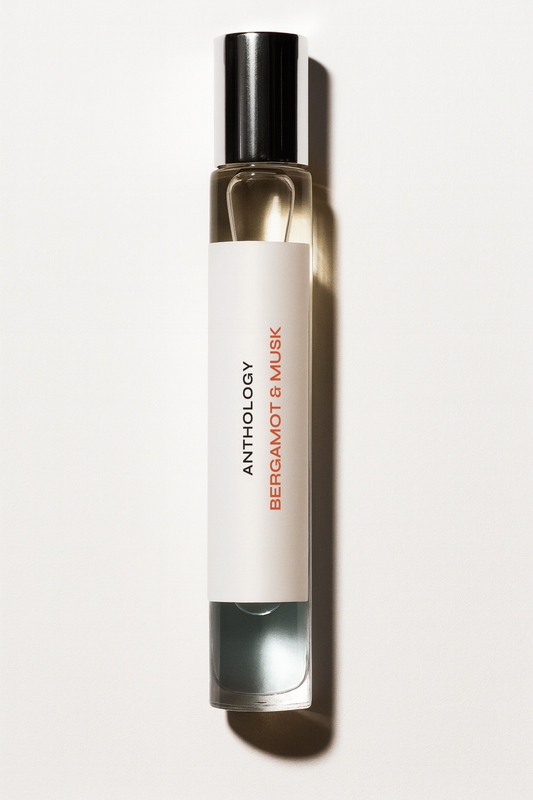
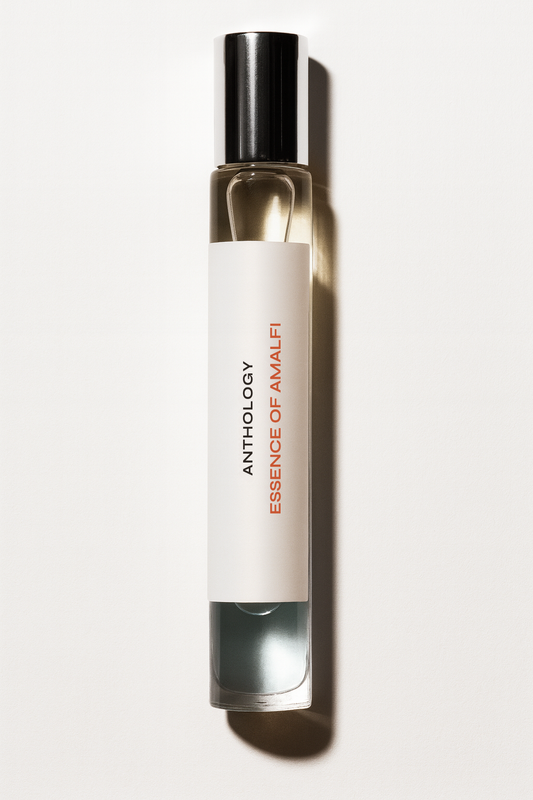
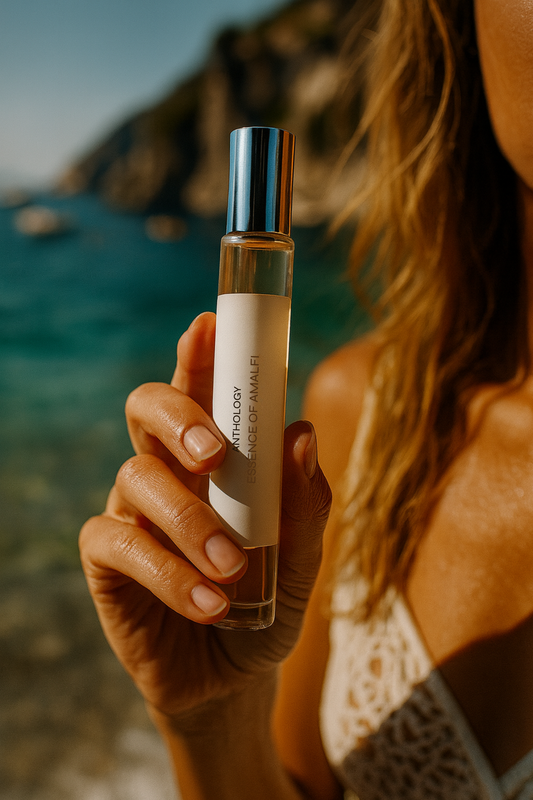
Essence of Amalfi is a fruity green, with Amalfi lemon and crisp green apple giving way to jasmine and the subtle floral greenness of bamboo over cedarwood and amber. Whispering Petals opens on green tea and bergamot before a bouquet of jasmine, rose and orchid. For the mossy end of the spectrum, Bergamot & Musk moves from blackcurrant and bergamot through patchouli and smoky birch to a base of oakmoss, vetiver and musk.
If you would like to explore the classic register, we also stock Roja Vetiver Cologne, whose base layers galbanum and oakmoss with vetiver and cedar, and Kilian Bamboo Harmony, a tea green of white and green tea, maté and fig leaves.
Whichever shade of green calls to you, you will find your next fresh signature in the Anthology Collection.