What Are Powdery Fragrances?
Anthology BeautyShare
A powdery fragrance is one that smells soft, dry and velvety — like the cloud that lifts from a vintage compact, a dusting of talc on warm skin or the inside of a grandmother's handbag. Powder isn't a single ingredient but an effect, created mainly by iris, violet, heliotrope, musks and vanilla working together. Powdery scents feel comforting, polished and quietly intimate, and they suit anyone who prefers elegance to volume.
What Does "Powdery" Actually Mean?
When perfumers call a fragrance powdery, they are describing texture rather than a particular note. Imagine the difference between a glossy, juicy pear and a matte, chalky sugared almond: both are sweet, but one feels wet and the other dry. Powdery fragrances sit firmly on the dry, matte side. They blur edges, soften sharp florals and leave a hazy halo on the skin rather than a bright trail.
The association is partly cultural. For more than a century, face powders, talcum and cosmetic creams were themselves scented with violet, iris and heliotrope, so those materials became the smell of the boudoir. Today, a powdery accord can read as nostalgic and lipstick-chic, or — in modern hands — as clean, soft and very close to the skin.
The Building Blocks of Powder
Iris (orris). The aged, dried rhizome of the iris gives orris butter, one of the most precious materials in perfumery. Its scent is cool, rooty and suede-like, with the buttery, cosmetic quality that defines classic powder. We explored it fully in our iris deep dive.
Violet and the ionones. Real violet flowers yield almost no usable oil, so the violet we smell in perfume comes largely from ionones — molecules first synthesised by the German chemists Ferdinand Tiemann and Paul Krüger in 1893. Ionones smell of violet petals, raspberry and, crucially, of orris itself, which is why they sit at the heart of so many powdery compositions.
Heliotrope. This small purple flower smells of almond, cherry pie and vanilla. Perfumers usually recreate it with heliotropin (also called piperonal), which adds a fluffy, marzipan-like softness.
Musks. Clean, synthetic white musks give powder its skin-like warmth and longevity. Our musk deep dive explains why these invisible notes make everything around them feel smoother.
Vanilla, tonka and aldehydes. Vanillin and coumarin add a sweet, comforting dust to the base, while aldehydes — the sparkling, soapy materials made famous in the 1920s — can make a powdery floral feel airy and luminous.
A Short History of Powder in Perfume
Powdery fragrance was born alongside modern chemistry. Once ionones, heliotropin, vanillin and coumarin became available in the late nineteenth century, perfumers could build soft, abstract effects that no single flower could produce. François Coty's L'Origan (1905) wrapped spice and violet-tinged florals in a warm, powdery haze, and Jacques Guerlain's L'Heure Bleue (1912) — with its iris, heliotrope and vanilla — remains the textbook example of melancholic, twilight powder.
Through the twentieth century, powder became shorthand for refinement: the scent of lipstick, silk scarves and evening gloves. After a spell in the 1990s when fresh, aquatic and fruity scents dominated, powder returned in a lighter, more modern form — paired with musks, woods and cashmere textures, and often worn as a soft "skin scent".
The Many Shades of Powdery
Cosmetic or lipstick powder leans on violet and iris for that rosy, make-up-bag effect. Gourmand powder uses heliotrope, almond and vanilla to smell like a dusting of icing sugar. Clean powder relies on white musks for a freshly laundered, baby-soft feel. Woody powder sets iris or violet against sandalwood and cashmere woods for something more grown-up and gender-neutral. Knowing which shade you enjoy is the quickest way to find your powdery match — our guide to skin scents covers the softest end of the spectrum.
Who Are Powdery Fragrances For?
Powdery scents suit people who like to be discovered rather than announced. They are superb for the office, for close-quarters occasions and for anyone who finds bold gourmands or loud fruity florals too much. They also layer beautifully: a touch of powder softens a sharp rose or a smoky wood. If you have ever disliked a fragrance because it felt "old-fashioned", try a modern powder built on musk and cashmere woods — the texture is the same, but the mood is fresh and contemporary.
Why Powder Works So Well as a Perfume Oil
Powdery accords are delicate and intimate by nature, which makes them a natural fit for perfume oil. Without alcohol to flash off, the soft musks and vanillic notes melt into the skin and develop slowly, creating that hazy, second-skin glow. Applied to the pulse points and inner elbows, a powdery oil stays close and comforting all day.
Powdery Picks at Anthology
Serene Bloom Perfume Oil places exquisite iris at its heart beside jasmine and patchouli, settling into amber, creamy vanilla and white musk — a lovely introduction to iris-led powder.
Viva La Rose Perfume Oil pairs May rose with delicate violet, warmed by cashmere wood, amber and musk, for a rosy, lipstick-soft finish.
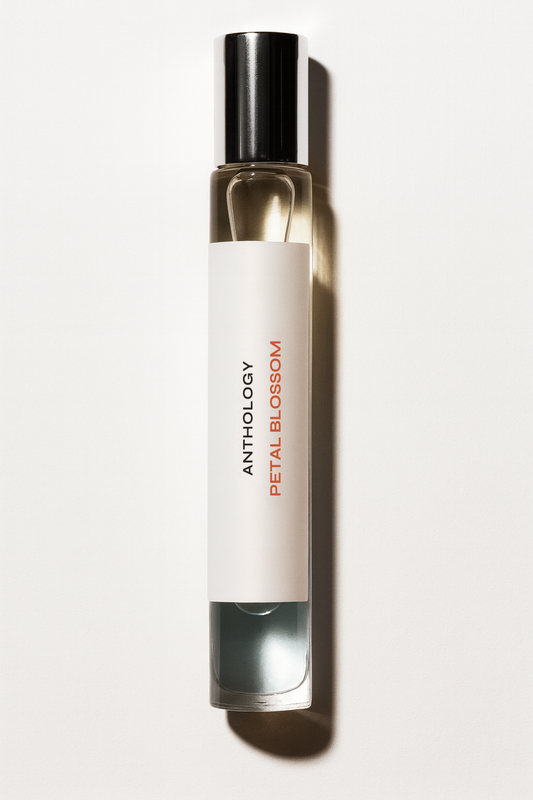
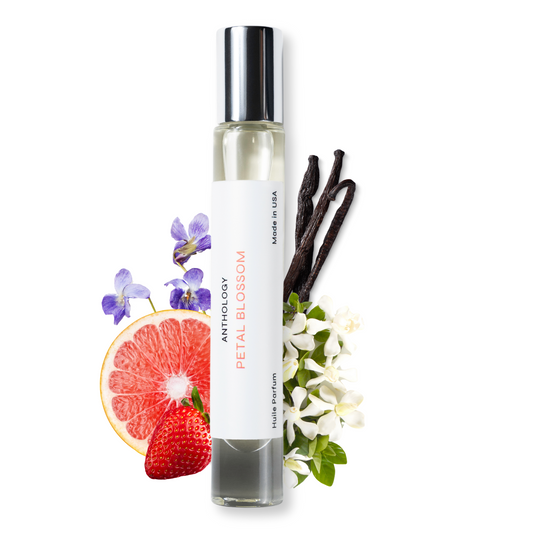
Petal Blossom Perfume Oil brings violet petals, jasmine and gardenia together over creamy vanilla, musk and white woods.
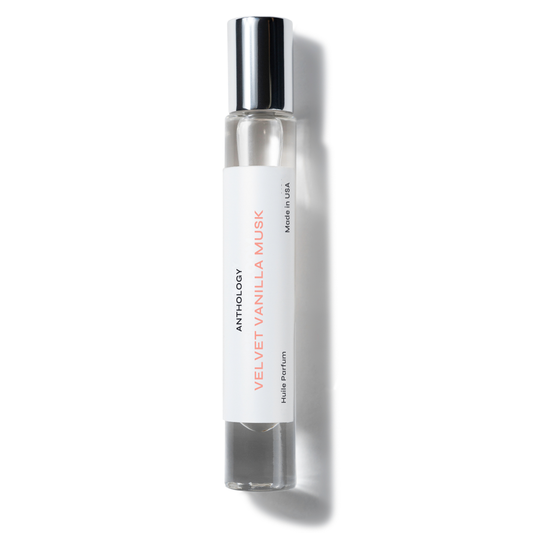
Velvet Vanilla Musk Perfume Oil is pure, skin-soft comfort: creamy vanilla and sensual musk — perfect for layering beneath a floral to add a powdery base.
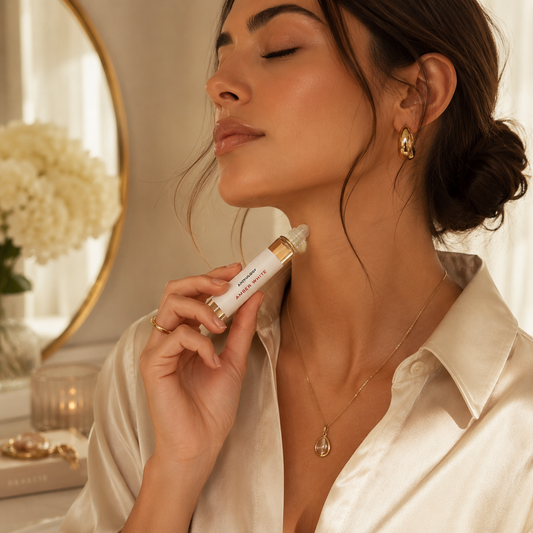
Amber White Perfume Oil blends vanilla orchid and jasmine with brown sugar, amber, tonka bean and soft musk for a warmer, gourmand take on powder.
For a designer exploration, our curated selection also includes Matière Première Vanilla Powder, where Madagascan vanilla, palo santo, coconut powder and white musks create a clean, powdery elegance, and Tom Ford Rose d'Amalfi, which sets rose against almond-like heliotrope, available as samples.
Ready to find your own soft signature? Explore the full Anthology Collection and discover how beautifully powder can wear.