Note Deep Dive: Benzoin — The Resin That Smells Like Warm Vanilla
Anthology BeautyShare
Some materials announce themselves. Benzoin prefers to be discovered. Warm the skin where it has been laid down and it rises slowly, like the last sweetness in an emptied cup of vanilla custard, soft, balsamic and faintly smoky, the scent of a church long after the incense has burned out. It is one of perfumery's great quiet workers, holding together ambers, gourmands and orientals, and yet very few people could tell you what it is.
What Is Benzoin?
Benzoin is a balsamic resin gathered from the bark of trees in the genus Styrax, native to South-East Asia. Two main grades reach the perfumer. Siam benzoin comes from Styrax tonkinensis, harvested principally in Laos, with smaller amounts from Vietnam and northern Thailand; it is the paler, finer grade, sweet, powdery and rich in vanillin. Sumatra benzoin comes from Styrax benzoin and related species on the Indonesian island of Sumatra; it is darker and more balsamic, with a sharper, spicier edge from its cinnamic acid content.
Despite the name, the resin's most important constituent is not the chemical called benzoin but benzoic acid and its esters, alongside vanillin and, in the Sumatra grade, cinnamic acid and cinnamates. In perfumery the hardened resin is usually dissolved in a solvent to make a resinoid, a dense, honeyed material that blends easily into a fragrance base.
A Name Carried by Traders
The word itself is a record of the spice routes. Arab merchants knew the resin as lubān jāwī, "frankincense of Java", a loose geographic label for the islands of the East Indies. Over centuries of retelling it softened into the medieval benjui and benzoe, the French benjoin, and finally the English benzoin. In older apothecary books you will also find it as "gum benjamin", a corruption that briefly made a resin sound like a gentleman.
The resin left a larger mark on science than its quiet character suggests. Benzoic acid was first isolated from it in the sixteenth century, and the family of chemistry that grew from it, including benzene and the benzoates, still carries its name. Every time a chemist says "benzene ring", they are, at a distance, saying "frankincense of Java".
Tears from Silver Bark
Harvesting benzoin is slow, patient work. Styrax tonkinensis is a medium-sized tree with smooth, silvery bark, and it needs around seven to ten years of growth before it yields resin in useful quantities. Harvesters make shallow cuts in the bark, and a pale, creamy-white sap seeps from the wounds. Exposed to the air, it hardens into brittle, fragrant tears that are gathered by hand and graded by colour and purity.
In the uplands of northern Laos, benzoin gathering is woven into village life and has been practised for generations. That small-scale, hand-tended origin is part of why good Siam benzoin feels so precious: each tear is the product of a tree's slow response to a wound.
Incense, Medicine and Ritual
Long before it reached a perfumer's organ, benzoin was burned. It is a major component of the church incense of Russia and other Orthodox traditions, and it appears in Catholic liturgical blends alongside frankincense and myrrh. It perfumes Hindu temples in India, where it is known as sambrani or loban; it is burned in Buddhist temples across South-East Asia; and it is part of Arabian bakhoor, Japanese and Chinese incense. In France it scents the famous papier d'Arménie, the folded strips of incense paper burned to sweeten a room.
Medicine claimed it too. Dissolved in alcohol, benzoin became Friar's Balsam, a pungent tincture inhaled over steaming water, and tincture of benzoin is still used in medicine as an adhesive to help dressings stay in place. The same resin flavours sweets, baked goods and chewing gum.
The Smell of Benzoin
Siam benzoin smells of vanilla before vanilla: sweet, balsamic, slightly powdery and creamy, with a warm, woody undertone and a whisper of incense smoke. Sumatra benzoin is drier and spicier, closer to cinnamon bark and storax, with a faintly medicinal, resinous bite. Both are remarkably tenacious. On a blotter, benzoin can still be found days after the brighter notes have gone, which is why perfumers prize it as a fixative, a material that slows the evaporation of the notes around it and gives a composition a longer, smoother finish.
Benzoin's Role in Perfumery
Benzoin is a cornerstone of the amber accord. Paired with labdanum's dark, leathery sweetness and the creaminess of vanilla, it supplies the soft, glowing balsamic middle that makes an amber feel golden rather than heavy. With frankincense and myrrh it builds incense accords; with tonka and vanilla it pulls a fragrance towards the gourmand; with rose and oud it rounds off sharp edges into velvet.
It also works as a discreet finishing touch in fragrances that don't smell "ambery" at all. Terre d'Hermès, for example, sets benzoin quietly beneath its vetiver, cedar and patchouli, where it warms the mineral, woody base without ever announcing itself. Roja Parfums' Amber Aoud lists sweet benzoin and fig countering a salty ambergris base beneath rose, saffron and oud, a textbook example of benzoin as the bridge between spice, flower and wood.
Why Benzoin Suits Perfume Oil
Resins and oils are natural companions. Benzoin is dense and slow to move, and in an alcohol spray its warmth can take time to surface. In a perfume oil there is no rush of evaporating alcohol, so balsamic notes sit close to the skin, warm gradually with body heat and unfold steadily over many hours. The result is the intimate, lingering radiance that resinous fragrances are loved for, with the sweetness rising gently rather than all at once.
Balsamic Warmth at Anthology
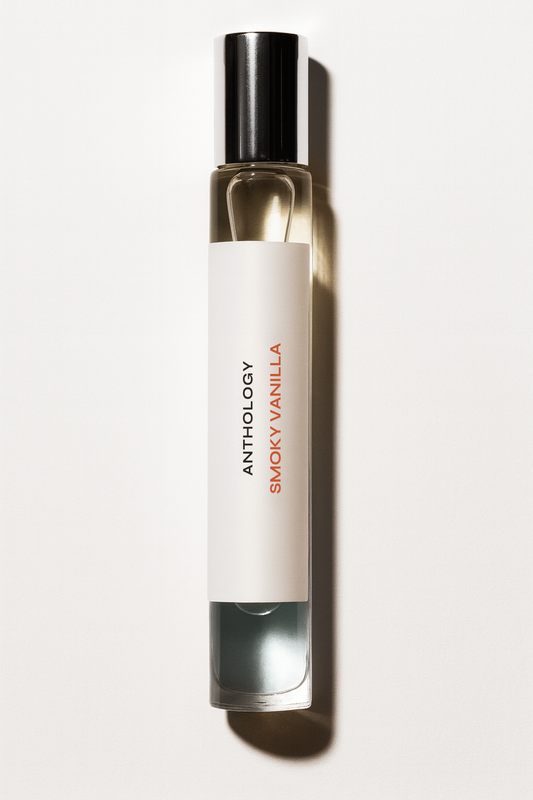
None of our oils lists benzoin by name, but several share its world of resin, balsam and soft vanilla warmth. Smoky Vanilla opens with black pepper and warm resins before settling into vanilla, smoky woods, suede, amber, incense and creamy balsams, the closest in spirit to benzoin's church-and-custard character. Amber Soir unfolds rich resins and smooth gourmand warmth over a dry-down of soft vanilla, warm tonka and smooth woods.
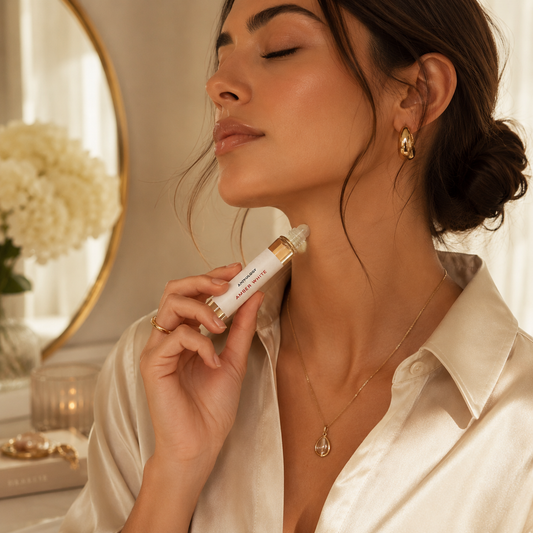
For a sweeter, golden take, Amber White pairs creamy vanilla orchid and jasmine with brown sugar, amber, tonka bean, amber woods and soft musk. Angels' Elixir layers cognac, spicy cinnamon, oak wood and tonka over praline and creamy vanilla, the boozy, spiced side of a balsamic amber. And if you would like to smell benzoin itself at work within a grand composition, Roja's Amber Aoud is available in sample sizes.
To go deeper into the resins that sit beside benzoin, read our Labdanum deep dive, discover the sacred smoke of Frankincense, or trace the orchid that benzoin so often imitates in our Vanilla deep dive.
Explore the full range of warm, resinous and gourmand perfume oils in the Anthology Collection.