Note Deep Dive: Labdanum — The Secret Heart of Amber
Anthology BeautyShare
Walk a Cretan hillside at noon in high summer and the air itself seems to grow sticky. The low, grey-green shrubs underfoot, dotted with crumpled white and pink flowers, are sweating a dark, fragrant gum into the heat. Brush past them and your clothes come away perfumed with something warm, leathery and faintly sweet, like honey left in the sun beside an old saddle. This is labdanum, the resin hidden at the heart of almost every amber fragrance you have ever loved, and one of the oldest perfume materials known to humankind.
What Is Labdanum?
Labdanum (also written ladanum) is a sticky brown resin produced by rockrose shrubs of the genus Cistus. Two species matter most: Cistus creticus of the eastern Mediterranean, the plant of the ancient trade, and Cistus ladanifer, the gum rockrose of the western Mediterranean, which supplies almost all of today's perfume industry. The plants secrete the resin onto their leaves and stems to protect themselves from the fierce summer sun, which is why the gum flows most freely in the hottest part of the day. Despite the similar name, it has nothing to do with laudanum, the Victorian opium tincture.
Combed from the Beards of Goats
Labdanum's history is gloriously strange. In the fifth century BC the Greek historian Herodotus described how this precious gum was gathered from the beards of he-goats, which picked it up as they browsed among the shrubs. For centuries that was exactly how it was done: shepherds combed the resin from the beards and thighs of goats and sheep that had grazed on cistus. On Crete and Cyprus, collectors also used a rake-like tool fitted with leather thongs, known as a ladanisterion, which was dragged across the bushes in the midday heat until the straps were clotted with gum. The practice survived on Crete into the nineteenth century and beyond, with shepherds selling their haul to coastal traders.
The resin was burned as incense and used as a remedy for coughs, colds and aching joints. Many scholars believe the fragrant gum carried from Canaan to Egypt in the Book of Genesis was labdanum, and some have identified it with onycha, one of the ingredients of the sacred incense described in Exodus. The Egyptologist Percy Newberry even speculated that the stylised false beards worn by the pharaohs might have begun life as resin-laden goats' beards. It is a theory rather than a fact, but it tells you how deeply this material is woven into the story of scent.
Today the romance has given way to agriculture. Most labdanum now comes from Cistus ladanifer grown in Spain, near the Portuguese border, with a little from southern France. Young stems are harvested mechanically and the gum is extracted by boiling, then refined into a resinoid, an absolute by solvent extraction, or an essential oil by steam distillation, often called cistus oil.
The Smell of Labdanum
Few materials are as multifaceted. The raw gum is almost black and smells dark, sweet and smoky. Refined into an absolute, a thick amber-green syrup, it becomes rich, complex and astonishingly tenacious. Perfumers describe it as ambery, sweet, woody, powdery, fruity, leathery and animalic all at once, with a dry, musky warmth that recalls ambergris. Some batches lean towards dried plums and honey; others towards tanned leather, warm skin or the smoke of a church censer.
That ambergris-like quality is no accident of language. Labdanum belongs to the chemistry of the labdane family of molecules, named after the resin itself, and it is prized as a natural route to the warm, salty-sweet glow that perfumers once sought from whale ambergris. Cistus essential oil, by contrast, is greener and more herbaceous, with a sharp, almost medicinal brightness that makes it useful at the top of a composition.
Labdanum's Role in Perfumery
If you love amber fragrances, you already love labdanum. The classic amber accord is, at its simplest, labdanum softened with vanilla or vanillin and often rounded with benzoin. Labdanum gives the depth, the darkness and the leathery growl; vanilla gives the glow. Read more about how that accord evolved in our Amber deep dive.
Labdanum is equally essential to the chypre. When François Coty launched Chypre in 1917, he set the template that defined a family: a bright citrus top of bergamot, a warm, resinous heart of cistus labdanum and a mossy base of oakmoss, usually with patchouli. Without labdanum there is no chypre, just citrus and moss with nothing to bind them. Our guide to chypre and oriental fragrances explores both families.
Beyond these, labdanum is a favourite partner for frankincense and myrrh in incense compositions, gives leather accords their suede-like warmth, deepens tobacco and rose, and acts as a superb fixative that slows the evaporation of lighter notes. It pairs beautifully with the sacred resins covered in our Frankincense deep dive.
Why Labdanum Suits Perfume Oil
Resins and oils are natural companions. Labdanum is heavy, slow and built to last, and in an oil base it melts into the skin rather than flashing off in a cloud of alcohol. The result is closer, warmer and more intimate: the resinous, honeyed facets bloom with body heat and linger for hours, which is exactly how ambery scents are meant to be worn. A single stroke on the wrist on a cold evening is often all you need.
Labdanum and Amber at Anthology
To experience labdanum in its most celebrated form, explore Tom Ford Amber Absolute, whose composition spins around a traditional labdanum amber accord with olibanum, vanilla, spices and balsamic notes. Clive Christian Blonde Amber sets labdanum in its base alongside tonka bean, myrrh, patchouli and vanilla, beneath blonde tobacco and dried fruits.
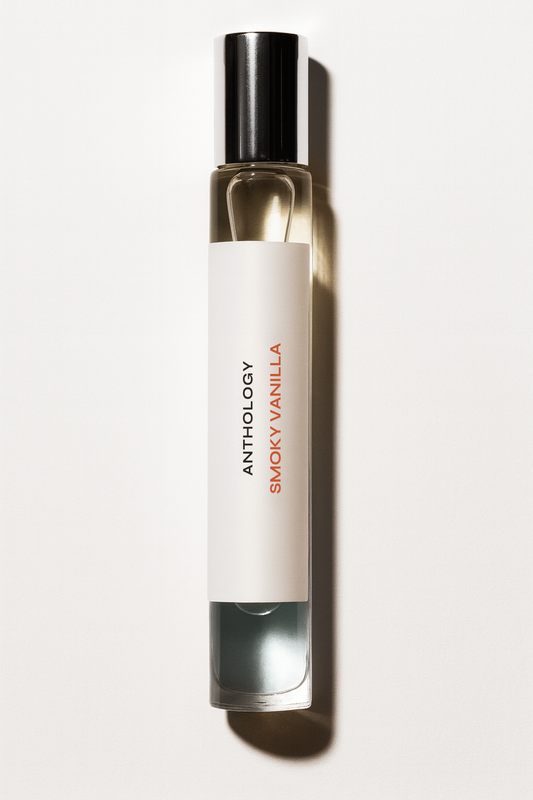
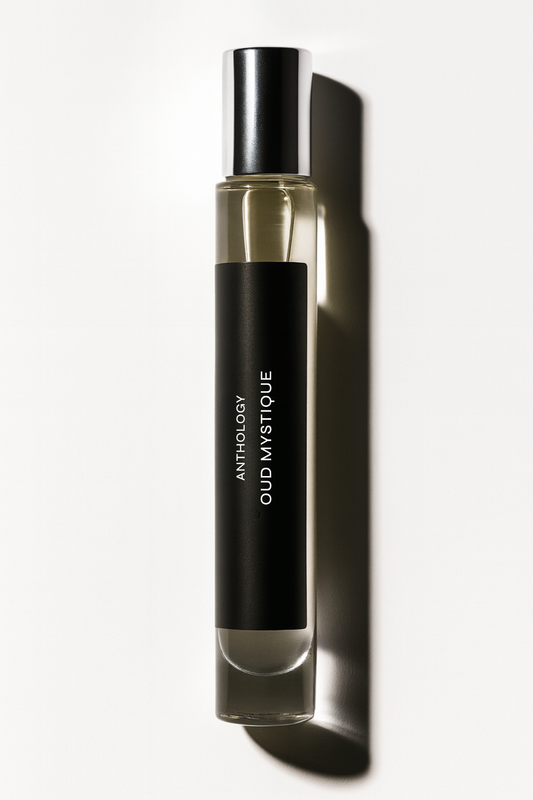
Among our own perfume oils, the resinous amber mood is easy to find. Amber Soir opens with luminous amber accords before rich resins unfold into soft vanilla, warm tonka and smooth woods. Smoky Vanilla pairs black pepper and warm resins with vanilla, suede, incense and deep amber over creamy balsams. Oud Mystique sets cardamom and pepper over oud and creamy vanilla on a base of amber, vetiver and sweet patchouli, while Amber White offers a softer, sweeter take, with vanilla orchid, brown sugar and smooth amber settling into tonka, amber woods and musk.
Discover more warm, resinous and ambery scents in the Anthology Collection.