Note Deep Dive: Pink Pepper — The Sparkle in Modern Perfume
Anthology BeautyShare
Some notes arrive slowly, unfurling over hours. Pink pepper does the opposite. It bursts onto the skin in the first seconds of a fragrance like light catching champagne bubbles: bright, rosy, faintly spicy and impossibly fresh. It has become one of the most recognisable openings in modern perfumery, yet its story in the perfumer's palette is surprisingly recent, and the berry itself is not quite what its name suggests.
What Is Pink Pepper?
Despite the name, pink pepper is not a pepper at all. True black, white and green peppercorns come from the climbing vine Piper nigrum. Pink pepper comes from two entirely different trees: the Peruvian pepper tree, Schinus molle, and its cousin the Brazilian pepper tree, Schinus terebinthifolius. Both belong to the cashew family, which is why the dried berries are papery, hollow-feeling and only gently pungent rather than fiery. The French call them baies roses, simply "pink berries", and you will often see that name on perfume note lists.
For perfumery, the berries are usually steam-distilled to produce an essential oil; CO2 extracts are also used to capture a rounder, fruitier profile. The fragrance house Givaudan, for example, sources a pink peppercorn oil from Peru, where Schinus molle is native.
From Andean Valleys to the Spice Route
The Peruvian pepper tree is a graceful, weeping evergreen with feathery leaves and drooping clusters of rose-coloured berries. It has grown across the Andes for millennia, thriving in dry valleys where little else gives shade. Andean communities have long used almost every part of it, and the berries are still fermented into a traditional drink known as chicha de molle.
European travellers brought the berry home in the colonial era, and the tree was later planted widely in warm, dry regions around the world, from California to the Mediterranean, where it is admired as an ornamental. In the kitchen, pink peppercorns became a fashionable garnish in the late twentieth century, prized as much for their colour as their delicate, sweet heat.
In perfumery, pink pepper is a young note. The perfume critic Victoria Frolova of Bois de Jasmin describes it as "of recent vintage", and credits Estée Lauder Pleasures (1995), composed by Annie Buzantian and Alberto Morillas, with popularising it: a generous dose of pink pepper essence gave radiance to the fragrance's rose, jasmine and peony accord. From there, the note spread rapidly. Michael Edwards's Fragrances of the World database now lists well over a thousand fragrances featuring pink pepper in some form.
The Smell of Pink Pepper
Close your eyes over a freshly crushed handful of baies roses and you will notice several facets at once:
Peppery sparkle. There is the recognisable lift of crushed peppercorns, but with no real bite. Pink pepper tingles rather than burns.
Citrus zest. The oil carries a zesty, almost lime-like brightness, which is why it pairs so naturally with bergamot, grapefruit and mandarin.
Resinous, piney freshness. Like many berry oils, it is rich in terpenes, the same family of aromatic molecules found in conifers and citrus peel. Givaudan describes its own oil as having coniferous facets and balsamic undertones reminiscent of elemi.
A rosy, fruity glow. This is the facet that gives the note its name in many minds. Pink pepper has a soft, fruity, slightly liqueur-like warmth with a hint of violet, which flatters rose and other florals beautifully.
Because its aromatic molecules are light and volatile, pink pepper lives mainly at the top of a composition. It flashes brightly for the first half hour or so, then steps aside to reveal the heart beneath. Our guide to notes and accords explains why that opening moment matters so much.
Pink Pepper's Role in Perfumery
Perfumers reach for pink pepper when they want to add air and light. A little goes a long way, and it plays several roles:
With rose and peony. This is its classic partnership. Pink pepper's rosy facet and spicy sparkle make a rose feel modern, crisp and less powdery, which is why so many contemporary floral fragrances open with it.
With citrus. Alongside bergamot or grapefruit, it adds a peppery edge that stops citrus feeling too sweet or too cologne-like. Our bergamot deep dive shows how naturally the two belong together.
With woods. In woody fragrances, pink pepper is the bright spark over cedar, sandalwood or vetiver, often working beside other spices. It sits particularly well with cardamom, another note that is fresh and warm at once (see our cardamom deep dive).
With gourmands and ambers. A touch of pink pepper keeps vanilla, praline and amber from becoming cloying, adding a flicker of brightness on top of all that warmth.
Why Pink Pepper Suits Perfume Oil
Bright top notes can vanish quickly in alcohol-based sprays, where the solvent flashes off and takes the most volatile molecules with it. In a perfume oil, there is no burst of alcohol to carry the opening away. The sparkle of pink pepper unfolds more gently and close to the skin, and it blends seamlessly into the heart notes rather than disappearing in a single puff. Rolled onto pulse points, it gives a soft, radiant shimmer rather than a sharp blast, which is exactly how this delicate berry is best enjoyed.
Pink Pepper at Anthology
Several Anthology perfume oils use pink pepper to bring light into very different compositions:
Viva La Rose Perfume Oil shows the note in its classic role: black cherry and pink pepper open onto May rose and violet, resting on cashmere wood, amber and musk.
Serene Bloom Perfume Oil pairs citrus and pink pepper with jasmine and iris, softened by patchouli, amber, vanilla and white musk, for a fresh, elegant floral.
Citrus & Cedarwood Perfume Oil uses pink pepper among lemon, grapefruit, bergamot, lavender and nutmeg over geranium, cedarwood, musk and incense: an aromatic, woody take on the note.
Sublime Bergamot Perfume Oil combines bergamot, Sichuan pepper and pink pepper with lavender and elemi, grounded by cedarwood and ambroxan.
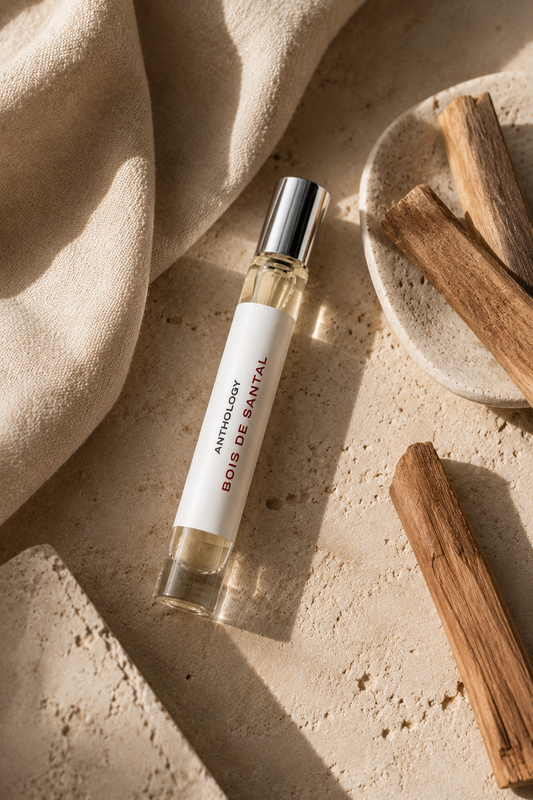
Bois de Santal Perfume Oil opens with cardamom, bergamot and pink pepper before settling into creamy sandalwood, papyrus, cedar, leather and musk.
If you would like to explore pink pepper in a designer composition, Tom Ford Bois Marocain combines peppercorn with Atlas cedarwood, thuya and incense, and is available in sample sizes.
From rosy florals to sunlit woods, pink pepper is proof that a single bright berry can change the whole mood of a fragrance. Discover the full range in the Anthology Collection.