YSL Opium (1977): The Scandal That Changed Perfume
Anthology BeautyShare
Few perfumes have arrived with the force of a scandal. In 1977 Yves Saint Laurent released a fragrance in a lacquer-red flacon and gave it the most provocative name he could think of: Opium. Protesters demanded it be renamed, newspapers devoured the story, and women queued at counters to buy it. Nearly fifty years on, Opium remains the benchmark for the spicy oriental — a perfume that proved how powerfully a name, a bottle and a mood could sell a scent.
The Couturier and the Dream of the East
By the mid-1970s Yves Saint Laurent was the most celebrated couturier in Paris. His 1976 collection, inspired by the Ballets Russes and imagined Orients, was a sensation of brocade, silk and jewel colours, and he wanted a fragrance to match its opulence. The result was not an authentic portrait of any real place but a fantasy of the East filtered through Parisian glamour — lavish, theatrical and deliberately intoxicating. The name, quite deliberately, promised surrender.
The Perfumers and the Composition
Opium is credited to the perfumers Jean Amic and Jean-Louis Sieuzac (Sieuzac would later compose Dior's Dune). Together they built a dense, glowing oriental around spice and resin. The commonly published original pyramid opens with mandarin, plum, clove, coriander, pepper and bay leaf; moves into a heart of jasmine, rose, lily of the valley, carnation, cinnamon, peach and orris; and settles into a deep base of sandalwood, cedarwood, myrrh, opopanax, labdanum, benzoin, tolu balsam, amber, musk, patchouli, vetiver and castoreum.
What makes it distinctive is the way the spices are fused with the resins. Clove and carnation lend a hot, almost medicinal edge (we explore that warm spice family in our cinnamon and clove deep dive), while myrrh, opopanax and labdanum give a dark, balsamic sweetness that seems to radiate rather than simply sit on the skin. It is not delicate, and it was never meant to be.
A Bottle Inspired by the Inro
The flacon, designed by Pierre Dinand, was based on the Japanese inro — a small lacquered case of compartments traditionally worn hanging from the obi sash. Rendered in red with black and gold detailing and a silken tassel, it looked less like a perfume bottle than an objet from a collector's cabinet. Like the name, it made Opium instantly recognisable on a dressing table.
The Party on the Peking
To mark the American launch in September 1978, Saint Laurent hosted one of the most extravagant parties of the decade aboard the Peking, a tall ship moored in New York. Accounts describe a vessel dressed in red, gold and purple banners, a vast bronze Buddha and thousands of white orchids. Some 800 guests attended, among them Cher, Diana Vreeland and Halston, with Truman Capote famously seated at the ship's helm. The night carried on at Studio 54. It is still remembered as a high-water mark of 1970s glamour — and as the template for the modern fragrance launch as spectacle.
Controversy and Cultural Impact
The name provoked real anger. In the United States, Chinese Americans formed the American Coalition Against Opium and Drug Abuse, demanding that the perfume be renamed and that Saint Laurent apologise for his insensitivity to Chinese history — the Opium Wars and the drug's devastating legacy. The house kept the name, and the press attention only drove sales higher. The debate it raised about exoticism and marketing has never entirely gone away.
Opium also reshaped the market. It ushered in the era of big, sillage-heavy orientals that defined the late 1970s and 1980s, and a wave of rivals followed, including Estée Lauder's Cinnabar. Its advertising stayed provocative: in 2000 a Steven Meisel campaign starring Sophie Dahl drew hundreds of complaints in Britain and was withdrawn from billboards. Later came Opium pour Homme (1995) and, much later, the very different Black Opium, which borrowed the name for a coffee-vanilla gourmand. Like many classics, the original has been revised over the decades as ingredient regulations changed, yet it remains a reference point — exactly what we mean when we ask what makes a fragrance a classic.
Why Spicy Orientals Suit Perfume Oil
A composition built on resins, balsams and warm spices is perfectly at home in an oil base. Without alcohol's initial blast, the spices unfold gradually on warm skin and the resinous base lingers close and glowing for hours. A few touches on the wrists and collarbone give the richness of an oriental without the cloud of sillage that made 1980s lifts notorious.
Capturing the Spirit of Opium with Anthology
Anthology's perfume oils are original compositions, not reproductions of Opium, but several share its love of spice, resin and dramatic warmth:
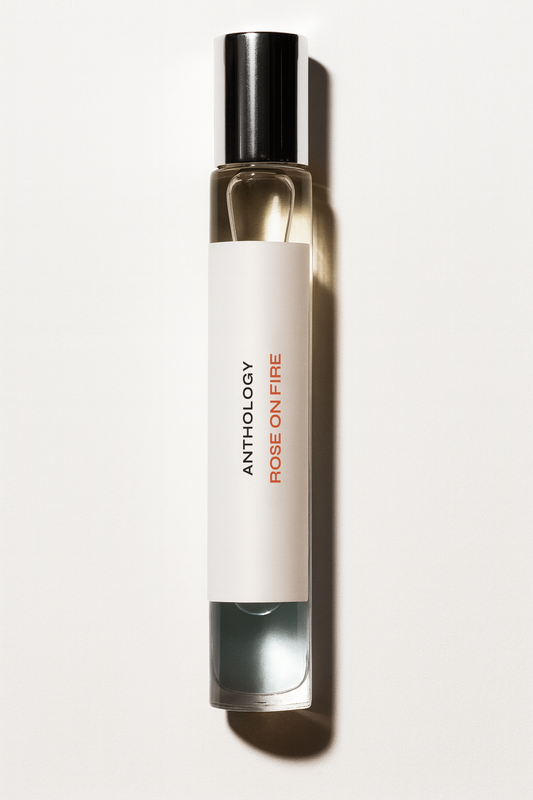
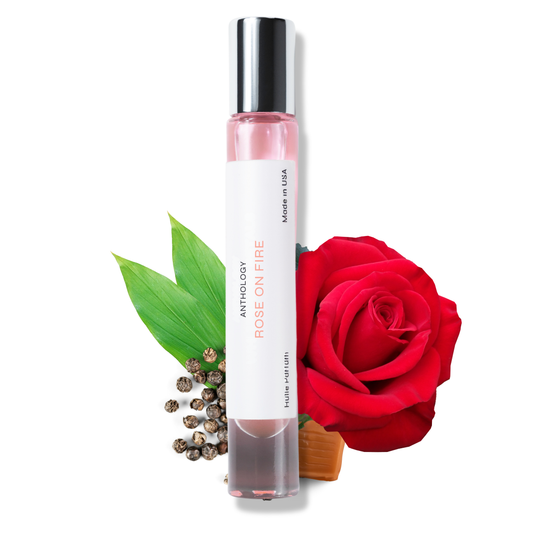
Rose on Fire sets rose varieties ablaze with Sichuan pepper and turmeric over patchouli, tonka and musk — the spice-and-flower tension at the heart of Opium.
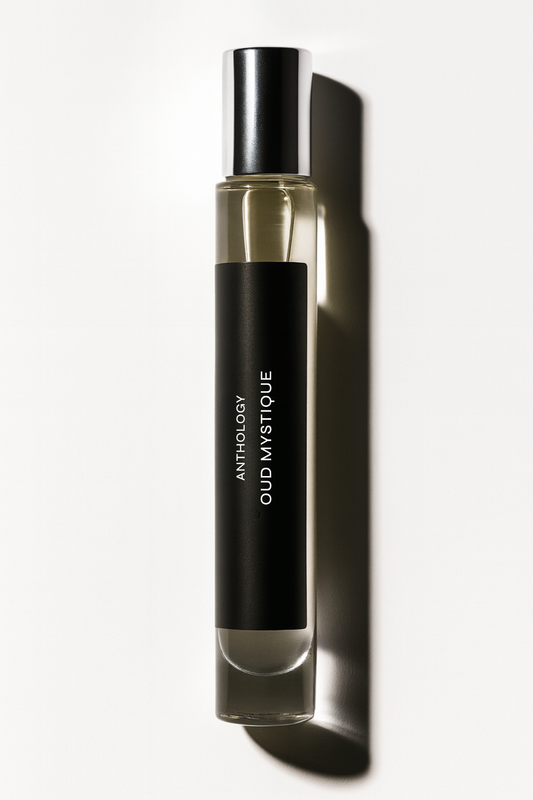
Oud Mystique layers cardamom and pepper over oud, vanilla, amber, vetiver and patchouli for a dark, resinous evening scent.
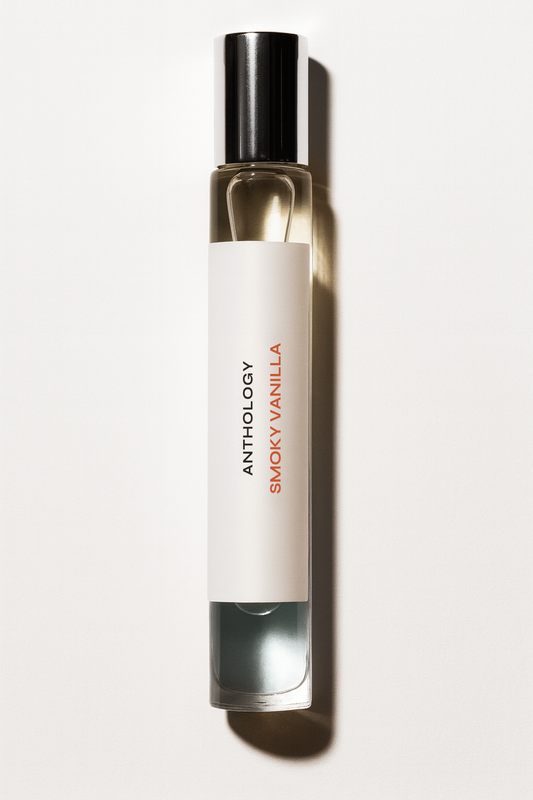
Smoky Vanilla opens with black pepper and warm resins, melting into vanilla, suede, amber, incense and cedarwood — a modern take on the balsamic glow.
Angels' Elixir brings cinnamon together with cognac, oak, tonka, praline and vanilla for a spiced, gourmand amber.
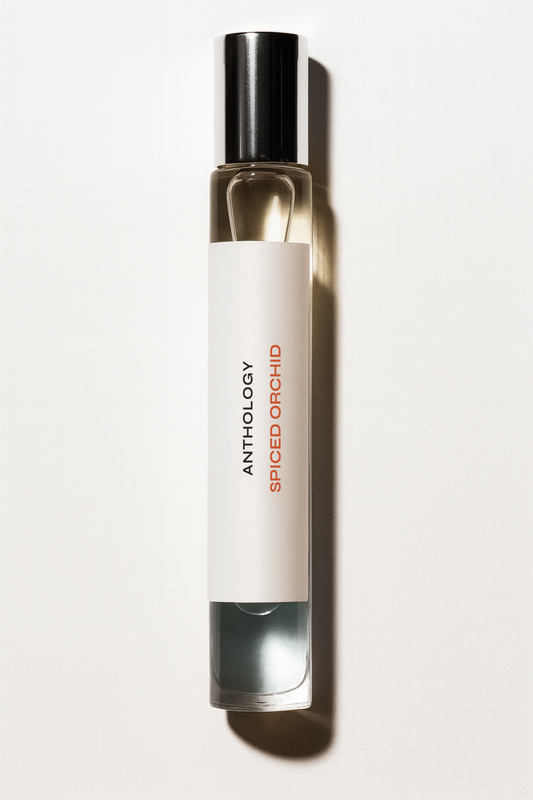
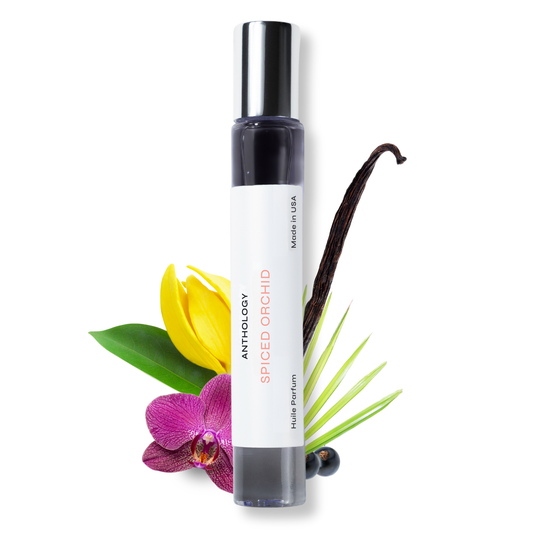
Spiced Orchid pairs spicy florals and orchid with patchouli, sandalwood, vetiver, vanilla and incense — opulent, mysterious and made for the night.
Amber Soir offers rich resins and luminous amber for anyone who loves the warm base of a classic oriental.
Explore the full range of spice, resin and amber in the Anthology Collection.